
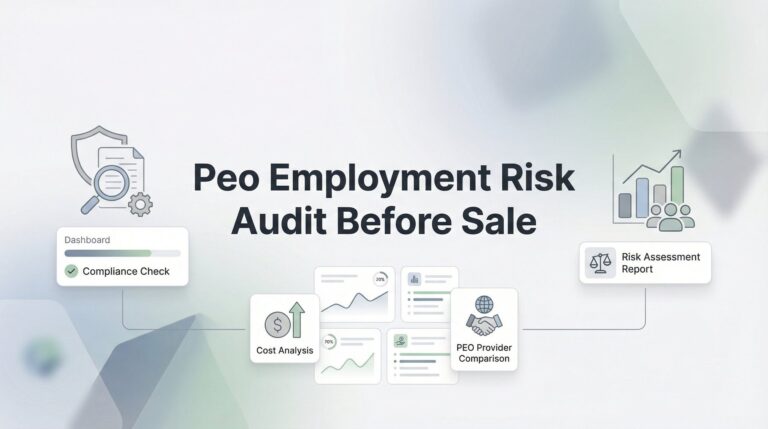
Before selling your business, conducting a PEO employment risk audit is critical because co-employment arrangements create shared liability issues that buyers scrutinize intensely during due diligence. This comprehensive guide helps business owners identify and remediate hidden employment liabilities—from misclassified workers to unresolved benefits obligations—that could derail your sale or significantly reduce your valuation.
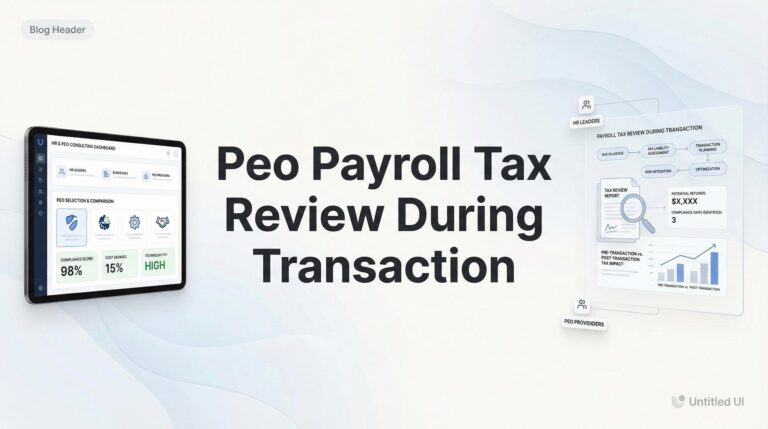
Buying or selling a business that uses a PEO requires specialized attention to payroll tax liabilities that standard M&A due diligence often overlooks. This guide outlines seven critical strategies for conducting a thorough PEO payroll tax review during transaction, helping both buyers and sellers identify split tax obligations, uncover hidden exposures between multiple FEINs, and resolve successor liability issues before closing to prevent deal-breaking surprises.

Medical practices face unique compliance challenges where healthcare regulations intersect with employment law—HIPAA overlaps with HR records, OSHA training requirements, credentialing documentation, and standard employment obligations. A PEO for medical practices enterprise compliance risk management can help by shifting certain responsibilities to specialized third-party infrastructure through co-employment, though understanding liability transfer and limitations is critical before implemen…
Medical practices facing 18% annual health insurance increases and fierce competition from hospital systems for talent can leverage PEOs (Professional Employer Organizations) for benefits cost containment through group purchasing power and strategic plan design. This guide cuts through vague promises to reveal realistic savings scenarios, actual trade-offs, and when a PEO for medical practices benefits cost containment strategy makes financial sense versus when staying independent is smarter.

Medical practices facing 18% annual health insurance increases and fierce competition from hospital systems for talent can leverage PEOs (Professional Employer Organizations) for benefits cost containment through group purchasing power and strategic plan design. This guide cuts through vague promises to reveal realistic savings scenarios, actual trade-offs, and when a PEO for medical practices benefits cost containment strategy makes financial sense versus when staying independent is smarter.
Most home services businesses overpay for workers comp by lumping all employees into broad risk categories, regardless of whether they’re doing routine maintenance or high-risk installation work. A PEO for home services advanced workers comp structuring allows you to separate coverage by actual job activities—distinguishing installation from service work and office staff from field technicians—so you pay only for your real exposure instead of subsidizing industry averages that don’t reflect y…
Home services companies with crews working across state lines face complex payroll challenges that standard multi-state employment solutions don’t address—from daily withholding adjustments for techs crossing borders mid-week to workers’ comp classifications that vary by job location. A PEO for home services multi-state payroll governance handles the compliance burden of tracking where work actually happens, managing state-specific withholding requirements, and coordinating workers’ comp cove…
Acquiring home services companies means inheriting messy workforce structures—misclassified contractors, outdated payroll systems, and inconsistent benefits that can derail post-merger operations. A PEO for home services M&A workforce integration strategy streamlines payroll, benefits, compliance, and workers’ comp while addressing the unique needs of field technicians who prioritize paycheck reliability and uninterrupted health coverage over corporate communications.
Enterprise HVAC companies face complex compliance challenges spanning multiple states, OSHA standards, EPA certifications, and workers’ comp regulations that can quickly erode profit margins. A PEO for HVAC companies enterprise compliance risk management offers strategic support for payroll taxes and benefits administration, but owners must understand which critical compliance areas—like trade-specific licensing and multi-state field operations—require specialized oversight beyond standard PE…
Home services companies with 20-50 employees face a critical challenge: they need competitive health benefits to retain skilled tradespeople, but their size locks them into expensive small-group insurance rates. A PEO for home services benefits cost containment strategy solves this by pooling your workforce with thousands of other employees to access large-group pricing—potentially saving 15-30% on health insurance while offering the coverage quality that keeps your best technicians from jump…
Pharmaceutical mergers and acquisitions require specialized workforce integration strategies to handle research teams in active trials, FDA-certified staff, and licensed sales forces. This step-by-step guide explains how to strategically deploy a PEO for pharmaceutical M&A workforce integration, addressing the unique regulatory compliance requirements, talent retention challenges, and operational complexities that distinguish pharma deals from standard corporate mergers.
HVAC contractors facing high workers’ comp premiums can leverage PEO arrangements to restructure and reduce costs, but success depends on proper negotiation and understanding the mechanics beyond basic co-employment. This guide shows experienced HVAC business owners how to audit their current situation and structure PEO for HVAC companies advanced workers comp structuring that actually improves experience modification rates and competitive positioning.