
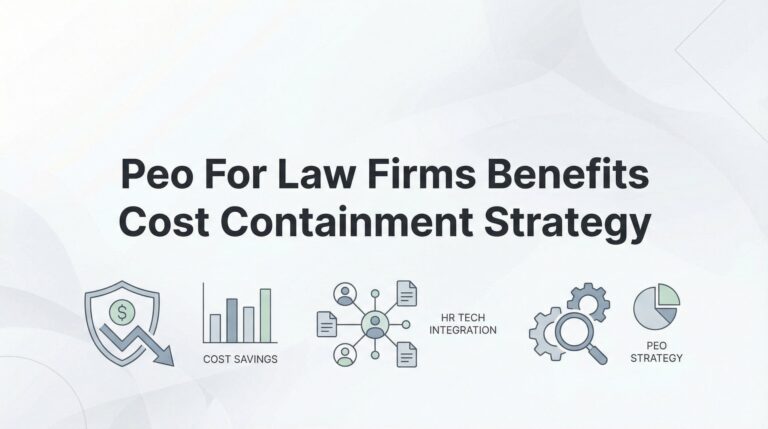
Law firms face unique cost pressures from highly compensated professionals expecting premium benefits amid unpredictable revenue cycles. This guide provides a strategic framework for building a PEO for law firms benefits cost containment strategy that addresses the specific needs of professional services firms, from talent retention economics to the intersection of malpractice and employment liability, with approaches tailored for firms ranging from 5-person boutiques to 50-attorney practices.
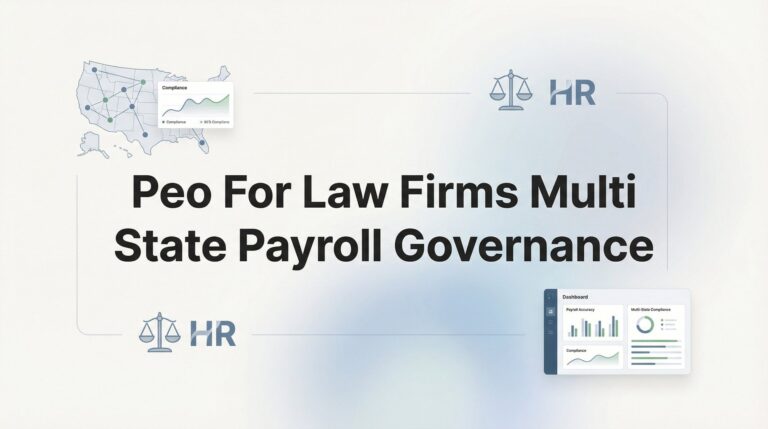
Law firms with multi-state operations face unique payroll challenges that generic PEO solutions don’t address—partner draws create complex state tax withholding issues, remote staff trigger unexpected registration requirements, and bar association fee-sharing rules restrict how PEO relationships can be structured. Unlike standard businesses, law firms need PEO partners who understand hybrid compensation models (equity partners, W-2 associates, remote support staff), trust account separation r…
Medical practices face significant employment litigation exposure, with wrongful termination lawsuits averaging $125,000 in defense costs alone. While most practices prioritize malpractice insurance, employment-related claims create a dangerous blind spot. A PEO for medical practices litigation risk mitigation framework addresses this vulnerability by providing professional HR infrastructure, compliance expertise, and risk management systems specifically designed to protect healthcare employe…
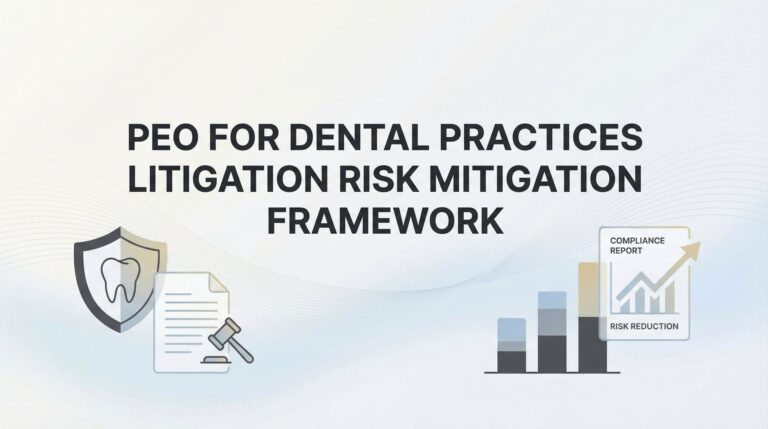
Dental practice owners face unique employment litigation risks—from wrongful termination and wage disputes to HIPAA violations—that most aren’t prepared to handle. A PEO for dental practices litigation risk mitigation framework does more than streamline HR tasks; it strategically shifts employment liabilities away from your practice while providing robust insurance coverage and compliance support that protects both your business and your ability to focus on patient care.
Home services businesses face constant litigation exposure from workplace injuries, vehicle accidents, and wage claims that office-based companies never encounter. This practical framework explains how a PEO for home services litigation risk mitigation actually works in real-world scenarios—covering what PEOs genuinely protect against versus what they don’t—so you can build a comprehensive risk management strategy that goes beyond sales promises and protects your business when incidents inevi…
Accounting firm M&A success hinges on seamless workforce integration, but merging payroll systems, benefits packages, and multi-state licensing requirements creates chaos that threatens talent retention. A PEO for accounting firms M&A workforce integration strategy provides a neutral consolidation platform that standardizes HR infrastructure while preserving the client relationships and credentialed professionals you acquired, helping you navigate conflicting policies and compliance complexit…
Home services enterprises with 100+ employees across multiple trades face complex compliance challenges including varying workers’ comp classifications, multi-state licensing, OSHA field crew regulations, and wage-and-hour rules. This guide evaluates the best PEOs for home services enterprise compliance risk management in 2026, focusing on providers with proven workers’ comp expertise for high-risk trades, multi-state compliance capabilities, field workforce management tools, and transparent …
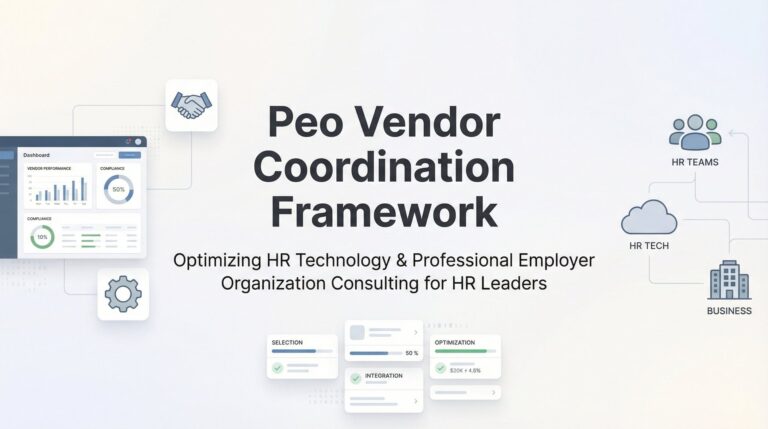
Managing a PEO alongside multiple HR vendors—separate 401(k) administrators, workers’ comp brokers, and legacy HRIS platforms—creates coordination challenges most businesses face but few discuss openly. A structured PEO vendor coordination framework helps you maintain data accuracy, prevent payroll-benefits mismatches, and ensure seamless communication between systems without consolidating everything under one provider or spending your days as a human API connecting disconnected platforms.
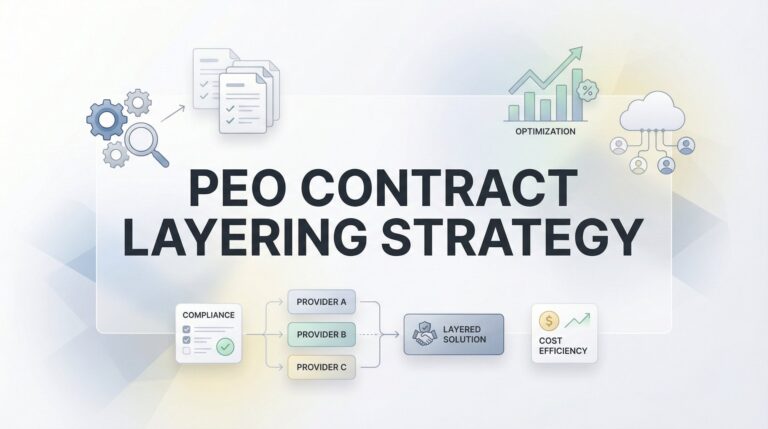
Companies with diverse workforces can significantly reduce costs and improve benefits alignment through PEO contract layering strategy—structuring multiple agreements or service tiers for different employee segments rather than using one universal contract. This approach recognizes that warehouse workers, remote developers, and seasonal staff have distinct needs, allowing businesses to match PEO services accordingly while gaining negotiating leverage, though it requires careful planning to av…
Accounting firms struggle with volatile HR costs from seasonal hiring, competitive CPA benefits, and multi-state compliance as remote work expands. A PEO for accounting firms offers benefits through strategic cost containment—not just outsourcing problems, but leveraging the partnership as a deliberate financial tool to control overhead the same way you’d advise clients to restructure operations.
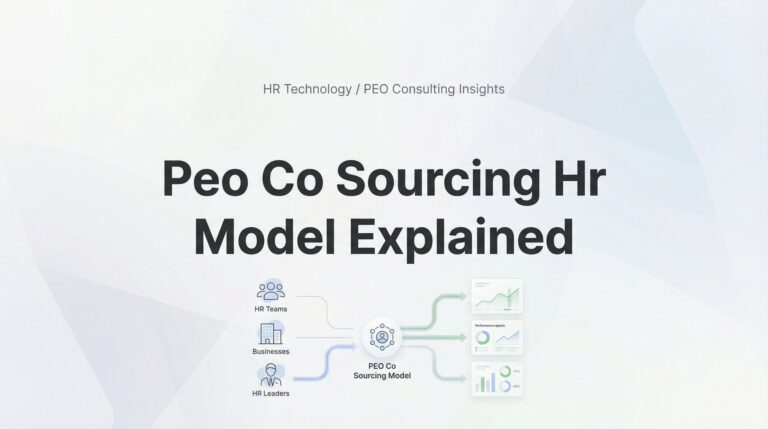
The PEO co-sourcing HR model explained offers a strategic middle ground between keeping HR entirely in-house and fully outsourcing to a PEO. This approach lets growing companies delegate compliance-heavy, technical HR functions to a professional employer organization while retaining control over culture-defining, employee-facing responsibilities and decision-making authority that shapes their workplace.
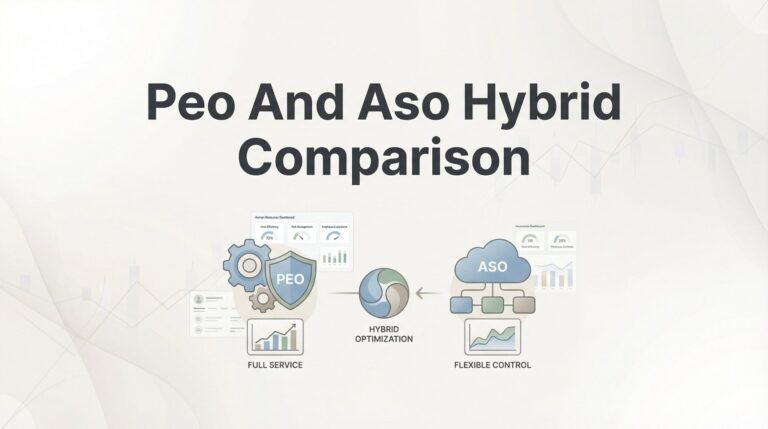
Choosing between PEO and ASO models doesn’t have to be all-or-nothing. This guide presents seven practical strategies for evaluating PEO and ASO hybrid comparison options that let you combine the co-employment benefits of a PEO (like better health insurance rates) with the control of an ASO arrangement for payroll and workers’ comp. You’ll learn how to assess cost breakpoints, risk allocation, and operational considerations to build a hybrid model tailored to your business’s specific needs wi…