
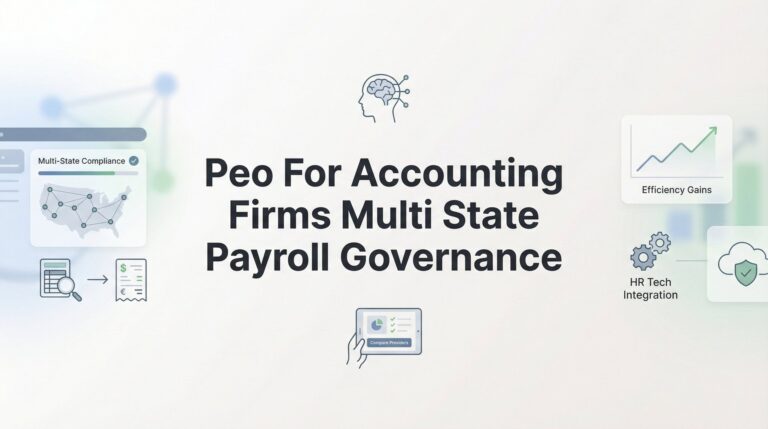
Managing remote accountants across multiple states creates complex payroll compliance challenges that most accounting firms underestimate. A PEO for accounting firms’ multi-state payroll governance can automate tax filings and withholding calculations across jurisdictions, but only when you establish proper governance frameworks from the start—otherwise you’re left with expensive compliance gaps despite the technology.

Managing pharmaceutical operations across state lines requires more than standard payroll compliance—your PEO for pharmaceutical multi-state payroll governance must handle FDA audit trails, DEA facility access tracking, and 21 CFR Part 11 data integrity standards. Unlike typical multi-state payroll challenges, pharmaceutical companies face unique risks where payroll errors can trigger FDA inspection findings, complicate DEA licensing, or create documentation gaps that jeopardize regulatory st…
Accounting firms excel at client compliance but often run informal HR operations that create significant employment law exposure. A PEO for accounting firms enterprise compliance risk management offers centralized regulatory monitoring, employment practices liability coverage, and professional-grade documentation systems—transforming ad-hoc HR processes into the same precision-driven compliance framework you deliver to clients, while addressing the unique co-employment considerations specific…
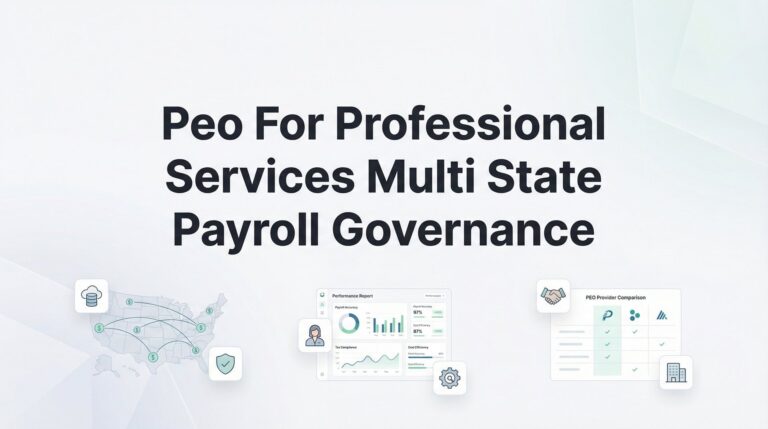
Professional services firms deploying consultants, architects, and accountants across multiple states face complex payroll compliance risks that standard providers often miss. A PEO for professional services multi-state payroll governance addresses the critical challenge of maintaining control and visibility over state-specific withholding requirements, nexus triggers, and worker classification rules—preventing costly penalties when your talent works wherever clients need them, not just where…
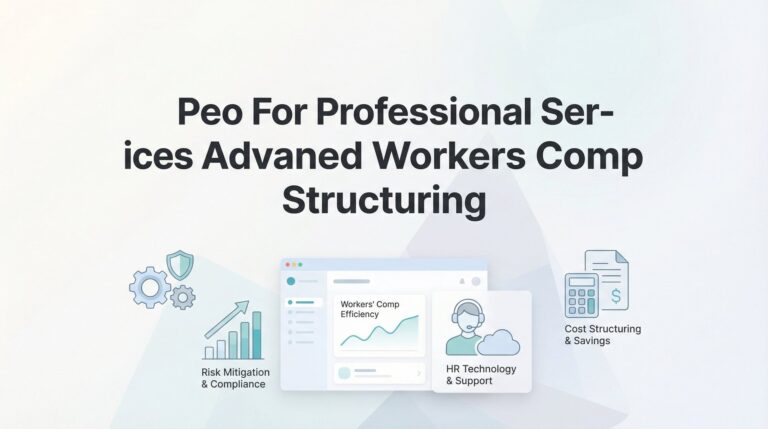
Professional services firms often overpay for workers comp through PEOs because default classifications don’t match their low-risk profiles. This tactical guide shows how to optimize PEO workers comp structuring for accountants, consultants, architects, and engineers—covering proper class code assignment, experience mod negotiation, and handling mixed office-field work scenarios. Learn how strategic structuring can significantly reduce premiums by aligning coverage with your workforce’s actua…
Healthcare practices face unique PEO compliance risks due to their complex regulatory environment spanning HIPAA, OSHA, state medical boards, and credentialing requirements. The co-employment relationship with a PEO doesn’t simplify compliance—it creates additional risk points that practice owners must proactively manage to avoid audit failures and patient complaints, making it essential to understand exactly where compliance gaps can emerge before signing any PEO agreement.
Professional services firms face a unique challenge: they need enterprise-level benefits to compete for top talent, but rising healthcare costs—often increasing 12% annually—directly erode margins when revenue fluctuates. A PEO for professional services benefits cost containment strategy provides access to Fortune 500-level rates and risk pooling, helping smaller firms offer competitive packages while controlling costs that can’t be deferred like other business expenses.
Real estate firms face unique employment litigation risks from wage claims, misclassification disputes, and discrimination allegations that generic HR solutions can’t address. This practical framework shows how a PEO for real estate litigation risk mitigation helps property firms navigate complex compliance challenges around contractor classification, commission structures, and documentation requirements that blur traditional employment law boundaries in the real estate industry.
Staffing agencies struggle with benefits management due to fluctuating workforces, variable hours, and high turnover rates. This guide presents seven practical PEO benefits structuring strategies specifically designed for staffing agencies to offer competitive packages while managing costs, addressing challenges like short-term assignments, multi-client deployments, and the need to attract quality talent without sacrificing profit margins.
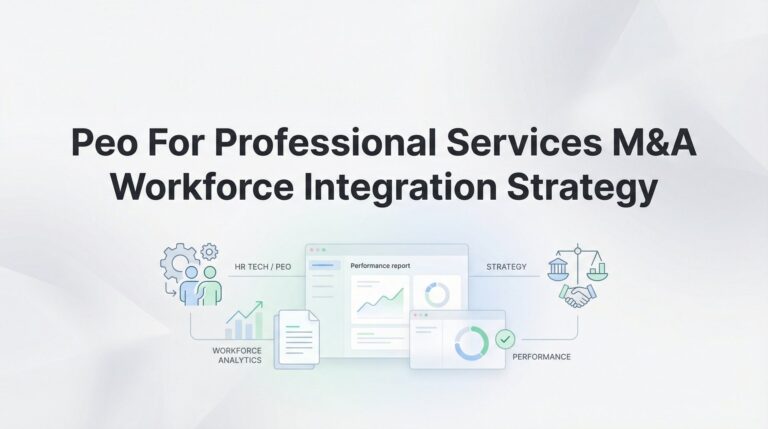
When professional services firms acquire consulting groups, law firms, or accounting practices, workforce integration often determines deal success more than financials. A PEO for professional services M&A workforce integration strategy enables acquirers to rapidly harmonize benefits, maintain multi-state compliance, and create unified employee experiences during the critical transition period—protecting the talent assets that represent the core value of the acquisition while leadership focus…
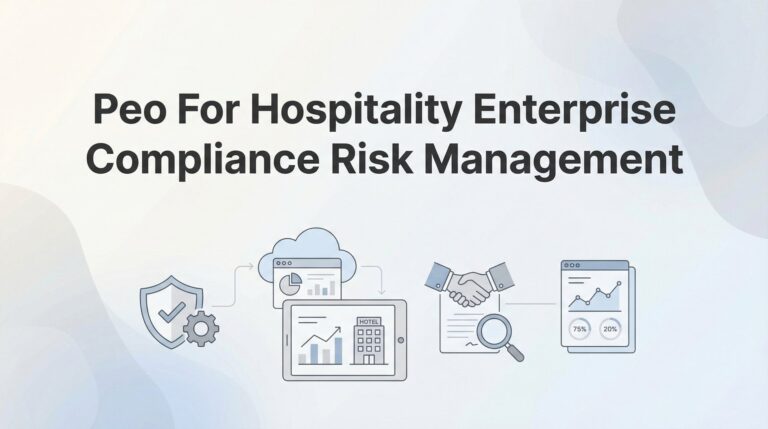
Running a hospitality enterprise means navigating constantly shifting compliance requirements across multiple locations—from tipped wage calculations to predictive scheduling laws. A PEO for hospitality enterprise compliance risk management can centralize these challenges, but co-employment structures change how liability flows through your organization. The real question isn’t whether you need compliance support, but whether a PEO relationship actually reduces your exposure or adds operation…
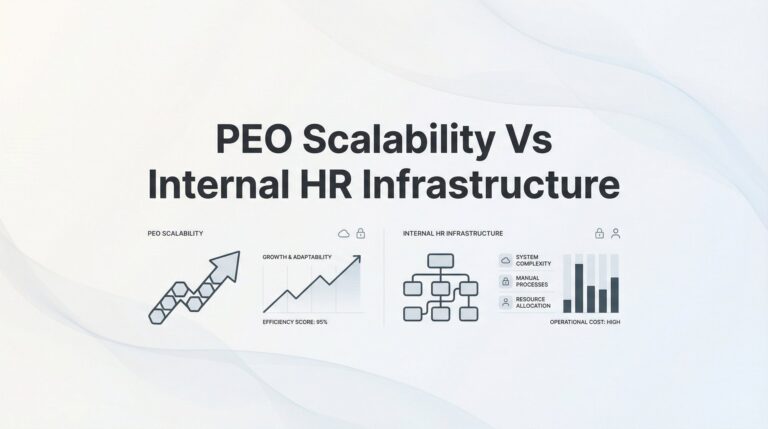
Choosing between PEO scalability vs internal HR infrastructure requires matching your model to your actual growth pattern—whether you’re expanding linearly, through acquisitions, or need flexibility to scale up and down. This framework-based guide moves beyond generic headcount thresholds to help you evaluate seven decision models tailored to your specific growth trajectory, ensuring your HR infrastructure supports rather than hinders your scaling needs.