

A finance lead signs a PEO agreement believing the hard part is over. Payroll will run, benefits will improve, HR admin will…
A Security Guard PEO for 15 Employees addresses the specific HR, compliance, and workers’ comp challenges that generic PEO advice consistently overlooks for security operations. This guide covers seven practical strategies — from high-risk classification coverage to guard card compliance — that directly affect cost, liability, and whether a PEO delivers measurable value at the 15-employee mark.
Car wash operations face a uniquely complex workers comp risk profile — wet surfaces, chemical exposure, conveyor equipment, and high workforce turnover — that standard carriers often price harshly or decline entirely. This guide explains exactly how a PEO workers compensation program is structured for car wash businesses, how the pricing mechanics differ from standalone policies, and what owners should know before choosing coverage.
At 25 employees, security guard companies face real HR pressure without the scale to justify an in-house team — making PEO selection a high-stakes decision. This guide covers the seven factors that matter most for security operations specifically: workers’ comp structure, licensing compliance, shift-based payroll, and more.
Auto repair shops run some of the most complex payroll structures in any industry — flat-rate mechanics, hourly techs, salaried managers, and commissioned advisors all under one roof. This guide cuts through the generic PEO sales pitch to show shop owners exactly what Auto Repair PEO Payroll Services do and don’t handle, from flat-rate overtime compliance to workers’ comp classification accuracy.
Moving PEO Pricing & Cost Structure works differently for moving and relocation companies than for most industries, driven by elevated workers’ comp classifications, seasonal headcount swings, and compliance exposure that affects how PEOs quote and structure their fees. This guide breaks down exactly what’s inside a typical quote, what pushes costs higher, and how to evaluate whether the number in front of you is reasonable.
A finance lead usually starts the search for PEO services near me after something breaks. Payroll questions pile up. Health plan renewals…
Moving company owners overpaying for workers comp or trapped in worsening renewal cycles may find relief through a PEO workers compensation program, though coverage quality and structure vary significantly between providers. This guide breaks down what these programs actually cover, how they affect your experience mod, and what moving-specific risk factors to evaluate before signing with any PEO.
Moving PEO payroll services is more complex than a typical vendor switch because payroll is structurally embedded in the co-employment relationship, touching tax filings, benefits coverage, employee records, and workers’ comp simultaneously. This guide walks through what the transition actually involves so you can assess whether the disruption is worth the long-term gains.
When relocating your business, moving PEO compliance support doesn’t automatically transfer — your PEO must rebuild state-specific registrations, carrier relationships, and regulatory standing in the new state, and not all of them do it completely or on time. This guide walks business owners through exactly what changes, what stays the same, and what questions to ask your PEO before your move date arrives.
Moving employee benefits through a PEO involves more than accessing better coverage—it requires a legal transfer of plan sponsorship, a new enrollment event for your workforce, and trade-offs that the sales pitch rarely explains. This guide walks business owners through the actual mechanics, cost implications, coverage risks, and exit dependencies so you can evaluate the decision with a complete picture.
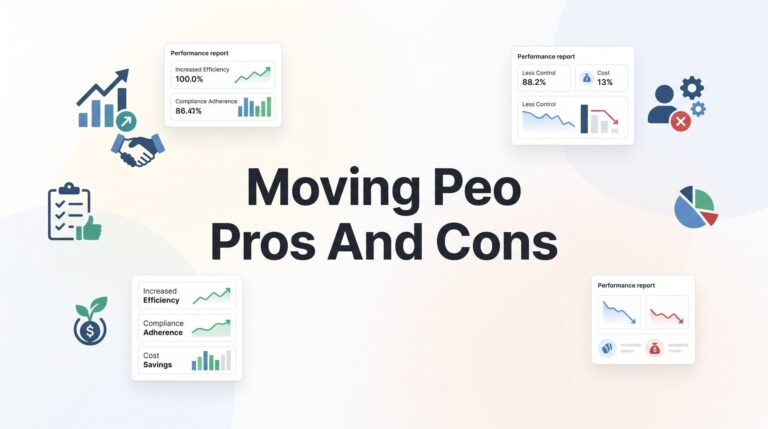
Moving to a PEO offers real advantages in payroll, benefits access, and compliance support, but it also involves meaningful tradeoffs in control, cost structure, and operational flexibility that aren’t always clear before you sign. This guide covers the honest pros and cons of moving to a PEO so you can evaluate the decision with a clear picture of what you’re actually gaining and giving up.