
Most advice on how to compare health plans starts in the wrong place. It tells employers to line up premiums, glance at…
PEO contracts contain specific terms around auto-renewal, termination fees, and exit timelines that can turn a routine provider switch into a costly, drawn-out process. This guide breaks down the contract mechanics governing PEO entry, exit, and transitions so business owners can negotiate from a position of knowledge before signing.
Moving company owners exiting a PEO contract face industry-specific complications that generic guides overlook, including workers’ comp coverage gaps, open injury claims, and seasonal billing mismatches. This guide breaks down what a moving PEO cancellation policy actually involves so you can plan your exit without leaving your crews or your business exposed.
Towing companies face uniquely complex payroll challenges—from overnight overtime and hazard differentials to high-risk workers’ comp classifications—that standard payroll processors aren’t built to handle. PEO payroll services designed for the towing industry consolidate these compliance burdens, driver classification risks, and insurance complexities into one managed solution, giving operators more time to run their fleet.
Towing PEO compliance support helps operators navigate the employment-side risks that catch most towing companies off guard — payroll tax exposure, workers’ comp misclassifications, and overtime rules for on-call drivers. This guide explains exactly what a PEO handles, where its coverage ends, and what towing operators still need to manage independently before signing a contract.
Towing operators who partner with a PEO gain access to large-group employee benefits—including health insurance, retirement plans, and supplemental coverage—at rates their small headcount couldn’t secure independently, making it a practical tool for attracting and retaining the certified, experienced drivers that keep a towing business running.
Most advice on how much it costs to outsource HR starts and ends with a per-employee-per-month number. That’s the wrong starting point…
Towing companies considering a PEO face a unique set of tradeoffs, from potential workers’ comp savings and HR support to contract risks with providers unfamiliar with towing-specific payroll, DOT compliance, and high-risk insurance dynamics. Understanding the towing PEO pros and cons before signing helps operators avoid costly mismatches and find providers with genuine industry experience.
Towing company owners face unique challenges when exiting a PEO agreement, from workers’ comp coverage gaps to automatic renewal clauses that can lock you into another full term. This guide breaks down what towing operations specifically need to understand about PEO cancellation policy before signing — or before making a costly exit mistake.
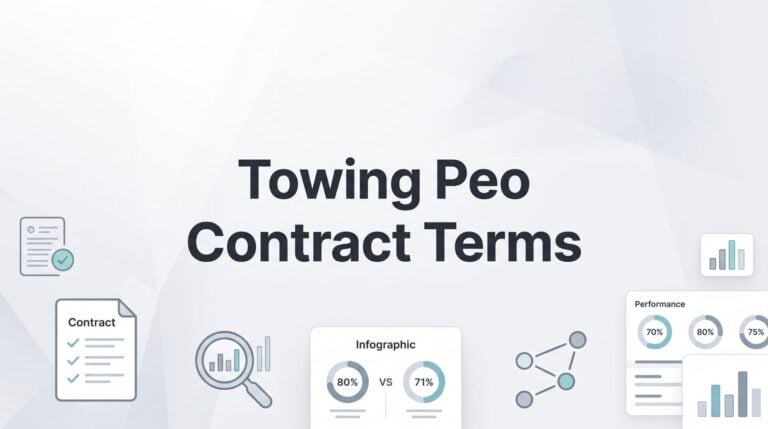
Towing PEO contract terms contain hidden risks that can trap operators in costly agreements long after the relationship breaks down — from buried termination clauses to workers’ comp audit provisions that hit hardest in a high-risk industry. This guide walks towing company owners through the specific contract language to scrutinize before signing, so the fine print doesn’t become an expensive surprise.
Small and mid-sized waste management companies often struggle to offer competitive benefits due to high insurance costs and complex workforce demands, but partnering with a PEO can change that picture by providing access to large-group health plans, retirement options, and structured HR support. This guide examines specifically how waste management employee benefits through a PEO differ from going it alone, and what actually improves versus what stays the same.
Waste management operators face costly surprises when exiting PEO contracts, from missed auto-renewal windows to unexpected tail coverage fees specific to high-risk refuse collection workforces. This guide breaks down exactly what waste management PEO cancellation policy language means in practice, so haulers and municipal contractors know what they’re committing to before they sign.