

Switching oilfield services companies to a PEO requires a different approach than a standard business transition, given the industry’s complex workers’ comp exposure, multi-state compliance demands, and fluctuating field crews. This step-by-step guide walks oilfield operators through the full process—from auditing current HR gaps to completing the switch without disrupting active job sites.
A CEO signs a PEO agreement, hands off payroll and benefits, and assumes the employee handbook is covered. Then a manager promises…
Warehousing PEO payroll services handle the high-complexity demands of large hourly workforces — including shift-based pay rates, fluctuating overtime, seasonal headcount surges, and workers’ comp classifications — reducing the compounding errors that plague warehouse operations. This guide breaks down exactly what PEOs cover for warehouse employers, where the value holds up, and how to assess whether the cost makes sense for your operation.
Freight brokerages at the 100-employee mark face a distinct HR challenge—complex enough to need PEO support, but not large enough to absorb a bad contract. This guide covers seven practical strategies for evaluating, structuring, and managing a freight brokerage PEO for 100 employees to maximize value, control costs, and avoid common pitfalls specific to this headcount and industry.

Warehousing companies face unique PEO challenges — high workers’ comp exposure, seasonal workforce swings, and multi-state operations — that generic rankings ignore. This guide evaluates the best PEOs for warehousing companies based on what actually matters: workers’ comp handling, real safety programs, and pricing structures built for hourly workforces.
Exiting a manufacturing PEO involves more than sending a cancellation notice — multi-year contracts, workers’ comp audits, and shift-based payroll transitions create financial and compliance risks unique to manufacturers. This guide covers how to review your manufacturing PEO cancellation policy, time your exit strategically, and avoid the costly mistakes that catch most businesses off guard before they ever submit notice.

Switching manufacturing companies to a PEO can consolidate workers’ comp coverage, correct payroll classifications, and reduce compliance burdens unique to shift-based operations—but the transition requires careful validation and independent oversight to avoid operational risk. This step-by-step guide walks manufacturing HR leaders through each phase of the process to ensure a clean, accurate handoff.
A Chicago company usually starts shopping for a PEO at the exact moment internal HR stops being “manageable.” Payroll runs through one…
Car wash operators with around 50 employees face real HR complexity without the staff to manage it — a PEO can solve that gap. This guide outlines seven practical strategies for selecting and maximizing a Car Wash PEO for 50 Employees, covering workers’ comp, turnover, wage compliance, and seasonal staffing challenges specific to this industry and headcount tier.
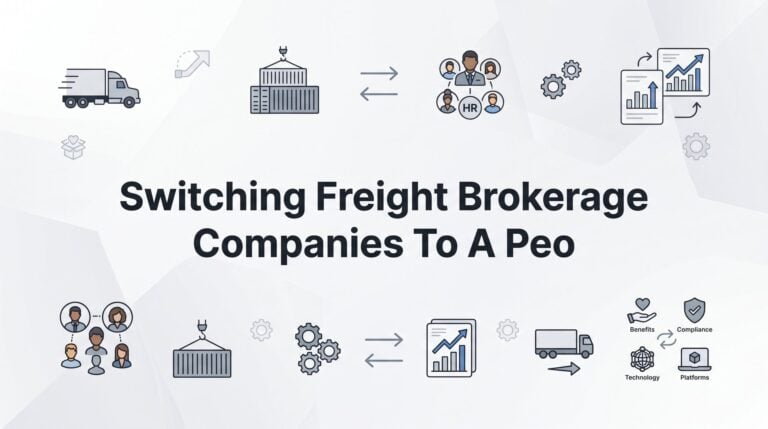
Switching a freight brokerage to a PEO requires careful planning around commission structures, workers’ comp coverage, and payroll continuity that generic transition guides overlook. This step-by-step guide covers exactly what freight brokerage owners need to audit, prepare, and execute to avoid costly disruptions when switching freight brokerage companies to a PEO.
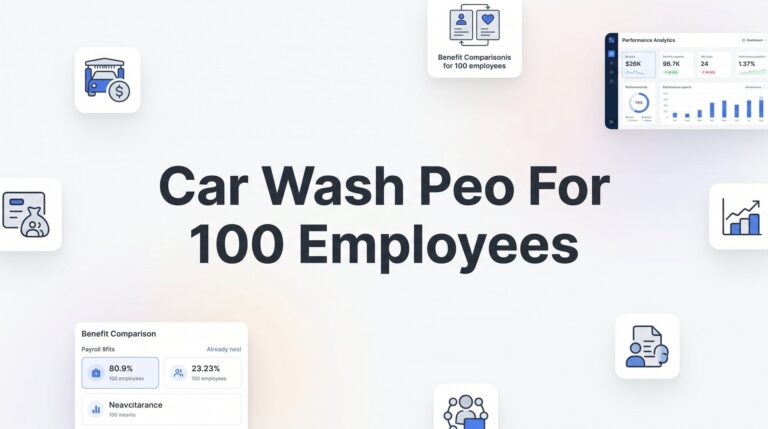
Car wash operators at the 100-employee mark face a critical HR inflection point where a PEO can eliminate compliance gaps, control workers’ comp costs, and deliver enterprise-level benefits — but only if deployed strategically. This guide covers seven practical strategies tailored specifically to car wash businesses at this headcount, where ACA obligations, high injury exposure, and seasonal staffing complexity make PEO selection and management decisions especially consequential.
Finding the best PEO for trucking companies requires looking beyond general HR providers to those that can handle DOT compliance, high-risk workers’ comp classifications, multi-state driver payroll, and FMCSA requirements. This guide evaluates nine PEOs with demonstrated experience in the trucking environment to help fleet operators reduce costs without the risk of a costly contract mistake.