
Engineering firms switching to a PEO face unique challenges—complex workforce classifications, multi-code workers’ comp exposure, and licensed credential obligations—that generic transition guides overlook. This step-by-step guide walks engineering firm leaders through the actual mechanics of switching engineering firms to a PEO, from evaluating current contracts to ensuring payroll continuity, benefits preservation, and compliance throughout the transition.
Two Illinois PEO proposals land in the inbox on the same day. One looks cheap because the admin fee is low. The…
A manufacturing PEO for 25 employees addresses the unique compliance, payroll complexity, and workers’ comp challenges that small manufacturers face without the cost of a dedicated HR hire. This guide covers seven practical strategies tailored specifically to 25-person manufacturing shops, where risk profiles and regulatory obligations differ significantly from other industries.
Food manufacturing companies face unique HR challenges — from OSHA compliance and workers’ comp complexity to multi-shift payroll — that generic PEOs aren’t built to handle. This guide ranks the nine best PEOs for food manufacturing companies in 2026, evaluated on industry fit, compliance depth, and real workers’ comp expertise for operations ranging from small specialty producers to large processing facilities.

Food manufacturing companies face unique HR challenges—OSHA compliance, high workers’ comp exposure, and multi-shift payroll complexity—that most generic PEOs aren’t equipped to handle. This guide ranks the best PEOs for food manufacturing companies based on safety program depth, industry experience, workers’ comp capabilities, and pricing transparency to help production-floor operations find the right fit.
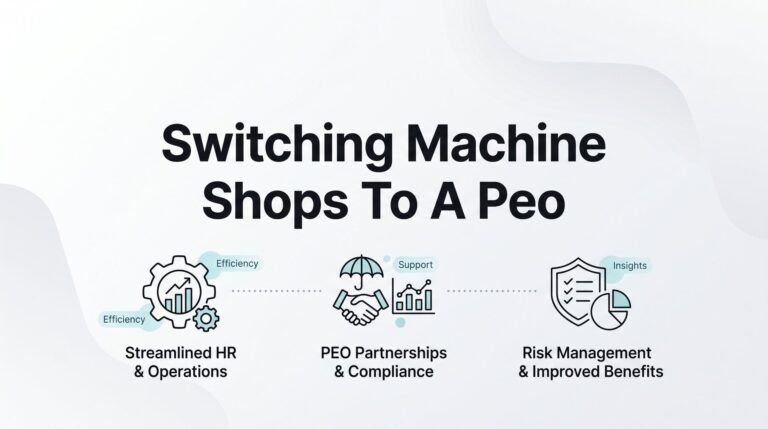
Switching machine shops to a PEO requires more preparation than most industries due to complex workers’ comp classifications, mixed payroll structures, and manufacturing-specific risk profiles. This step-by-step guide covers what to audit before you start, how to evaluate PEO providers on criteria that matter for machine shop operations, and how to avoid costly coverage gaps or misclassification errors during the transition.

Switching industrial maintenance companies to a PEO involves more complexity than standard HR transitions, with mid-term workers’ comp policies, open claims, and high-hazard job classifications requiring careful sequencing to avoid coverage gaps. This step-by-step guide walks through the actual transition process built around the specific operational realities of industrial maintenance, from evaluating PEO fit to protecting field crews throughout the switch.
Most advice on professional employer organization health insurance is too shallow. It treats the decision like a shopping exercise for lower premiums.…
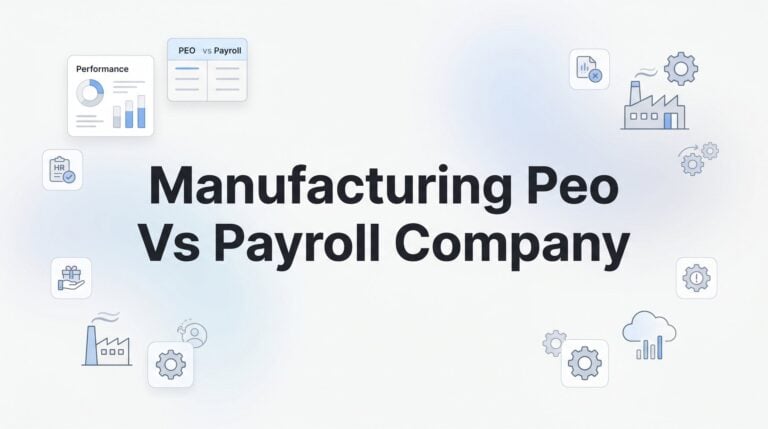
Manufacturing environments face unique HR challenges — multiple workers’ comp class codes, OSHA compliance, and skilled trades retention — that make the PEO vs payroll company decision more consequential than in typical office settings. This guide breaks down what each provider actually handles on the shop floor, where each falls short, and which option fits your specific manufacturing situation.
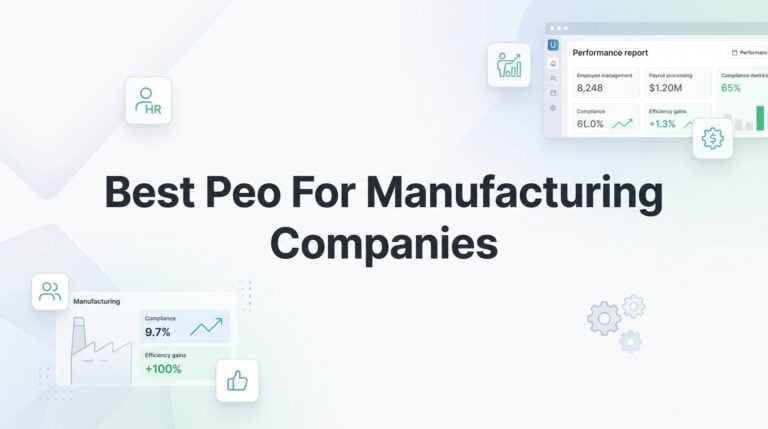
Manufacturing companies face unique HR challenges — high workers’ comp classifications, OSHA obligations, and complex multi-shift payroll — that general-purpose PEOs often handle poorly. This guide ranks the 9 best PEOs for manufacturing companies based on workers’ comp depth, loss control programs, OSHA compliance support, and benefits competitiveness for hourly workforces.
Manufacturing companies with 50 employees face unique HR, safety, and compliance challenges that generic PEO solutions often miss. This guide outlines seven practical strategies to help mid-sized manufacturers evaluate and maximize a Manufacturing PEO for 50 Employees, covering everything from workers’ comp cost control to OSHA compliance support tailored to the specific risks of physical, machinery-intensive workplaces.
Food manufacturing payroll involves far more complexity than standard operations—shift differentials, seasonal workforce swings, mixed employee classifications, and FSMA compliance requirements that generic payroll providers routinely mishandle. This guide helps food manufacturing operators evaluate whether PEO payroll services can address those specific pressure points more effectively than traditional solutions.