
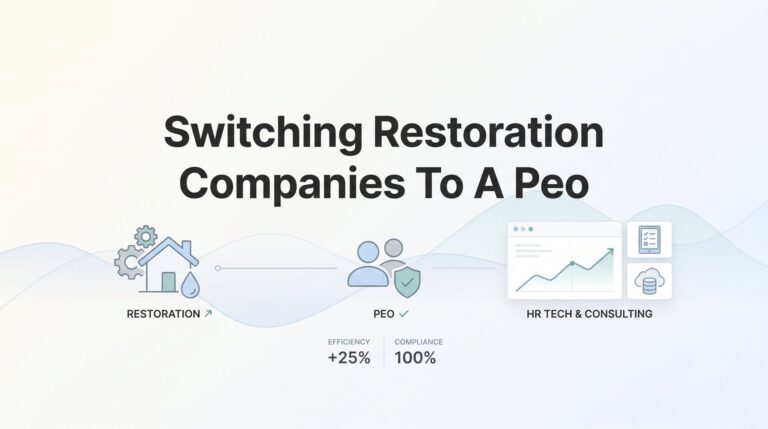
Switching restoration companies to a PEO can consolidate complex HR challenges like workers’ comp exposure, multi-state deployments, and rapid crew scaling—but the transition requires careful planning to avoid coverage gaps or payroll disruptions. This step-by-step guide walks restoration contractors through the process of evaluating, selecting, and onboarding a PEO without putting active job sites or field crew trust at risk.
PEO dispute resolution provisions explained through financial impact analysis reveal how overlooked contract clauses—covering arbitration requirements, venue selection, class action waivers, and complaint deadlines—can dramatically increase your costs when billing disputes or unauthorized charges arise. Understanding these provisions before signing a PEO agreement is essential for protecting your business from hidden financial exposure that only becomes apparent when something goes wrong.
Water damage restoration companies with small teams often struggle to compete on employee benefits due to high-risk classifications and limited purchasing power. This guide outlines seven strategies for leveraging water damage restoration employee benefits through a PEO, helping restoration business owners access large-group health insurance rates, better workers’ comp terms, and competitive perks that attract and retain skilled technicians in a demanding labor market.

The PEO effect on gross margin in service businesses is more complex than most sales pitches suggest, since labor is the core product and any cost restructuring hits margin directly. This breakdown examines where PEO fees, benefits savings, and workers’ comp changes actually land on a service company’s P&L, helping operators calculate the real net impact before committing.

Switching water damage restoration companies to a PEO can consolidate payroll, benefits, workers’ comp, and compliance under one co-employment relationship — but the transition requires careful planning given the industry’s unique risk profile, emergency staffing demands, and specialized certification requirements. This step-by-step guide walks restoration business owners through the entire process, from evaluating PEO compatibility to completing the handoff without disrupting operations.
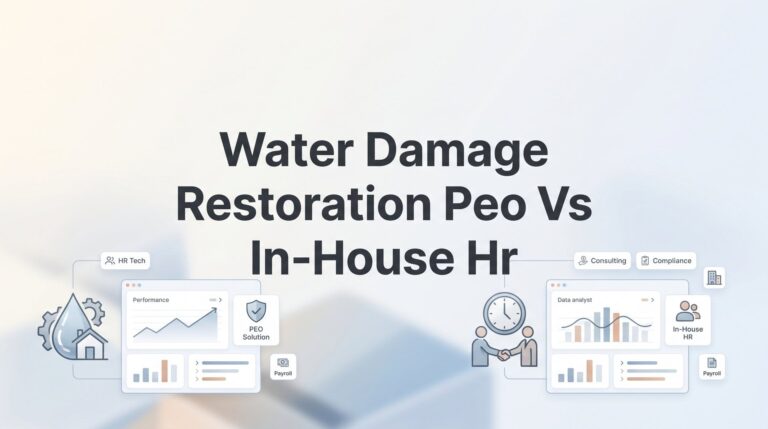
Water damage restoration companies face unique HR challenges—rapid storm hiring, multi-state compliance, and high workers’ comp exposure—that make the Water Damage Restoration PEO vs In-House HR decision critically important. This guide provides seven decision strategies tailored to restoration industry realities, including seasonal workforce volatility, employee classification complexities, and cross-state regulatory compliance, helping owners with 10-150 employees determine which HR model b…

A thorough peo adoption before private equity exit financial impact analysis reveals that implementing a PEO 12-24 months before a liquidity event can eliminate compliance gaps, clean up payroll records, and reduce diligence risk — but timing, deal structure implications, and buyer perception dynamics must be carefully weighed by CFOs and operating partners to avoid unintended consequences on purchase price or transaction terms.
Switching fire protection companies to a PEO involves more than a simple administrative handoff—contractors must carefully navigate experience modification rate transfers, workers’ comp class codes, contractor license continuity under co-employment, and mid-project certificate of insurance changes. This step-by-step guide addresses the industry-specific complications that generic PEO transition advice overlooks, helping fire protection contractors consolidate payroll, benefits, and compliance…
Choosing a Water Damage Restoration PEO for 5 Employees requires careful vetting since most providers aren’t equipped to handle the specialized hazards and workers’ comp complexities of restoration work at small-crew scale. This guide covers five key strategies to find a PEO that genuinely supports your risk profile without overcharging or overbuilding for your size.

HR infrastructure scaling using a PEO for nonprofit organizations offers a practical solution for mission-driven groups struggling with patchwork HR systems that can’t keep pace with workforce complexity, multi-state compliance demands, and limited administrative capacity. A Professional Employer Organization provides nonprofits access to enterprise-level HR infrastructure—including payroll, benefits, and compliance support—without requiring the internal headcount or expertise most nonprofits…
Manufacturing firms with 25–200 employees face compounding compliance risks—OSHA violations, workers’ comp misclassification, and wage-and-hour exposure—without the internal resources to manage them. A workforce compliance strategy using a PEO for manufacturing firms provides co-employment infrastructure, expert oversight, and shared liability that helps close those gaps before they become costly regulatory problems.
A lot of wage and hour problems start the same way. Payroll has been running for years, managers approve time in different…