Deep dives into payroll, benefits administration, HR support, onboarding, and operational shifts inside a PEO arrangement.
Discover seven common PEO communication breakdown examples that silently damage business relationships — from missed open enrollment deadlines to after-the-fact compliance updates. Understanding these predictable patterns helps businesses ask better questions during PEO selection and establish clearer expectations that prevent small miscommunications from escalating into costly trust failures or provider switches.
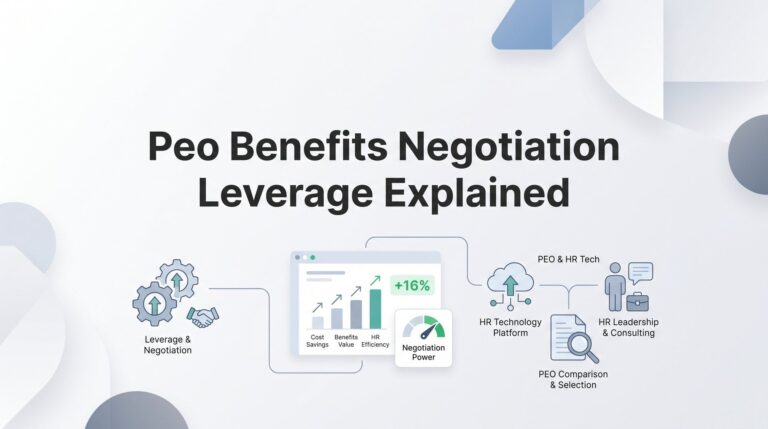
PEO benefits negotiation leverage explained: PEOs don’t just negotiate better rates—they fundamentally reclassify your business in insurers’ eyes by pooling employees across hundreds of companies, changing your risk profile entirely. This breakdown covers how that pooling mechanism actually works, where cost savings realistically appear, and how to evaluate whether a specific PEO’s claimed leverage is genuine before signing a contract.

PEO workforce standardization across subsidiaries helps multi-entity businesses eliminate inconsistent benefits, fragmented HR systems, and compliance gaps that emerge when managing multiple acquired companies. A PEO creates a unified employment infrastructure — standardizing onboarding, payroll, and benefits across all entities — reducing administrative burden and compliance risk while improving employee experience at the portfolio level.
PEO operational rigidity risks can quietly constrain your business long after you’ve signed the contract, limiting your ability to restructure teams, adopt new compensation models, or integrate unsupported systems. This guide identifies seven common friction points where PEO arrangements lock businesses into inflexible patterns, offering practical strategies to negotiate smarter agreements and avoid operational constraints before they become costly problems.

PEO payroll reconciliation failures often go undetected for months, surfacing only during audits or tax season when corrections become costly and complex. This guide outlines seven practical strategies for HR leaders and business owners to proactively identify and resolve discrepancies across co-employment systems—before terminated employees, mismatched W-2s, or carrier errors create financial and compliance consequences.

Businesses relying on PEO partnerships can proactively identify service gaps using these eight tools for PEO customer service breakdown analysis, covering everything from specialized comparison platforms to helpdesk solutions that track missed payroll responses, unresolved benefits issues, and escalation failures before they become costly HR disasters.
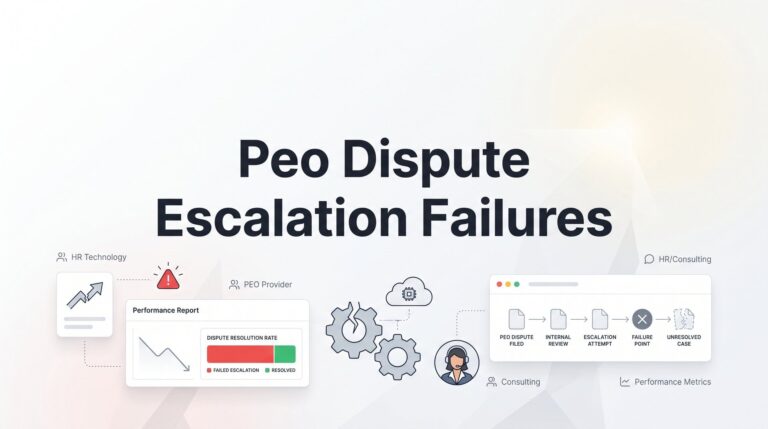
PEO dispute escalation failures often cause more financial damage than the original issue itself, leaving businesses stuck in unresponsive resolution systems during critical moments like audits or compliance deadlines. This guide identifies the most common escalation breakdowns in PEO relationships and provides actionable strategies to protect your business before disputes spiral into costly, time-consuming ordeals.

PEO payroll consolidation for financial reporting is essential when your PEO bundles wages, taxes, benefits, and admin fees into a single invoice that obscures true labor costs. This guide provides a step-by-step process for breaking apart PEO billing data and mapping it correctly to your general ledger, so your P&L, balance sheet, and audit documentation accurately reflect what your organization spends on people.
Businesses running a hybrid HR model often struggle with duplicated work, unclear ownership, and cost inefficiencies between their PEO and internal HR teams. This guide reviews the 9 best tools for building a PEO hybrid HR service optimization framework in 2026, selected for their ability to improve cost transparency, clarify service ownership, and support smarter decision-making as your organization scales.
Implementing a successful PEO multi-department coordination strategy requires more than simply onboarding a provider — it demands deliberate internal alignment across finance, HR, operations, and legal. This guide outlines seven practical approaches to prevent costly gaps like misaligned pay cycles, compliance blind spots, and benefits enrollment errors that emerge when multiple departments share a single PEO relationship without clear ownership and communication protocols.
