
Understanding indemnification clauses in PEO agreements is critical for accurately modeling your true employment risk costs. When employment claims arise, these contract provisions determine whether you or your PEO bears the financial burden of legal defense and settlements—potentially shifting tens of thousands in unexpected costs to your balance sheet if the language carves out supervisory decisions, hiring practices, or workplace safety issues from PEO coverage.
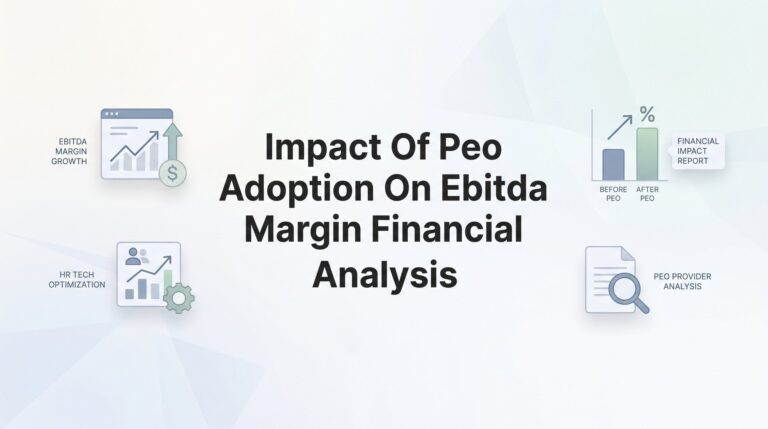
When you adopt a PEO, your EBITDA margin shifts in ways that aren’t immediately obvious—monthly invoices rise, but hidden costs like HR headcount, workers’ comp premiums, and compliance risk often drop. This financial impact analysis breaks down exactly which line items change, how those changes flow through to your bottom-line margin, and whether the math works in your favor when investors and lenders evaluate your business performance.
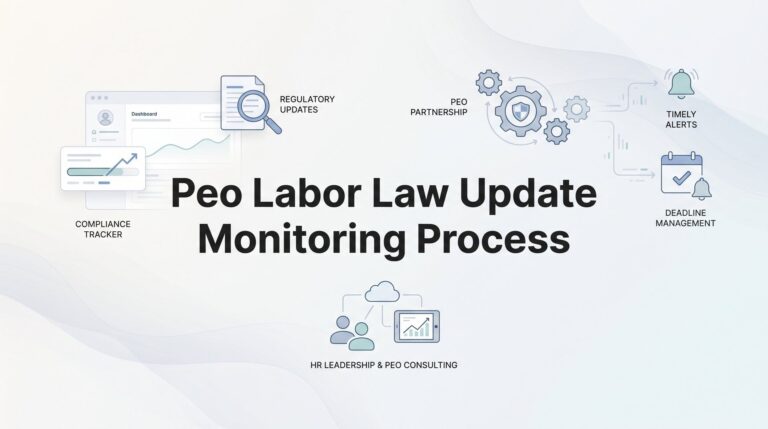
Professional Employer Organizations use varying approaches to track employment law changes, from sophisticated legal teams monitoring federal, state, and local regulations in real-time to basic newsletter subscriptions. This article reveals how the PEO labor law update monitoring process actually works behind the scenes and why understanding your provider’s compliance tracking system matters when you’re responsible for staying current across multiple jurisdictions with conflicting requirements.
Manufacturing firms struggling with high workers’ comp premiums, overtime costs, and OSHA compliance can achieve labor cost optimization using PEO for manufacturing firms through a strategic six-step approach. This framework shows how to audit current expenses, leverage a PEO’s pooled buying power to reduce insurance and benefits costs, and measure real ROI—but only when paired with sound operational fundamentals.
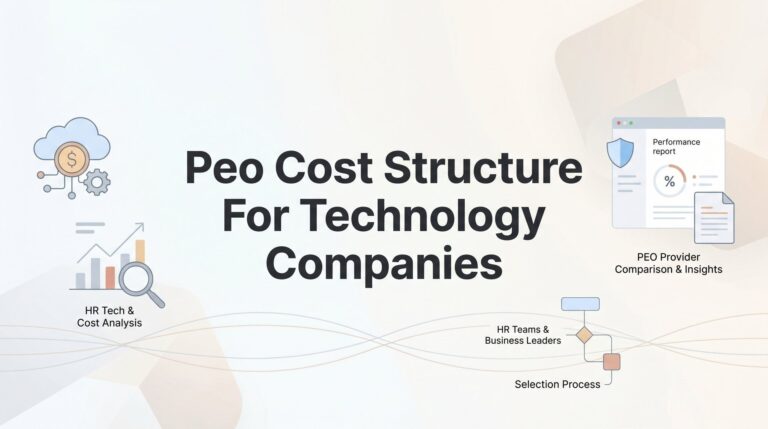
Technology companies face unique PEO pricing drivers that differ significantly from traditional businesses—high salaries, multi-state remote teams, equity compensation, and contractor-heavy models fundamentally alter cost calculations. Understanding the actual PEO cost structure for technology companies means knowing which pricing components reflect your specific workforce characteristics, which elements are negotiable, and when the financial model stops making sense for your tech team’s ne…
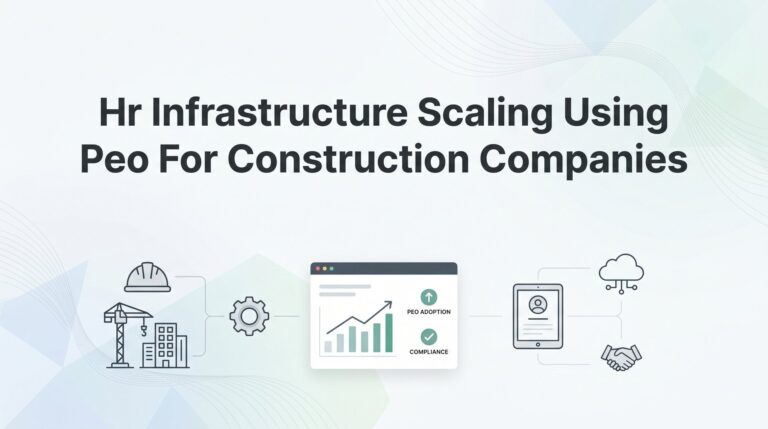
Construction companies experience dramatic workforce fluctuations—doubling during peak seasons and spreading across multiple states—while managing prevailing wages, union requirements, and frequent workers’ comp claims. HR infrastructure scaling using a PEO for construction companies offers a flexible solution that adapts to these unique challenges, but choosing the wrong provider can be costlier than managing HR in-house. This guide reveals how to evaluate your readiness for a PEO partnershi…
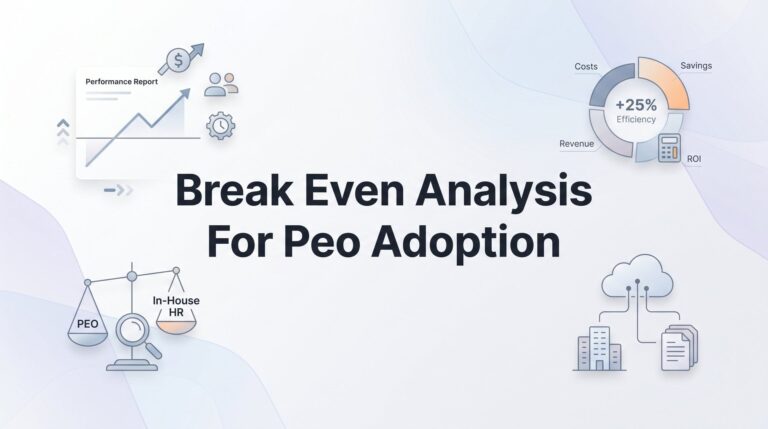
Before committing to a PEO partnership, conducting a break-even analysis for PEO adoption helps you determine when your investment will actually pay off using your real numbers, not inflated projections. This analysis cuts through vendor marketing by accounting for actual transition costs, ongoing fees, and realistic savings—giving you a clear picture of whether and when a PEO arrangement makes financial sense for your specific business situation.
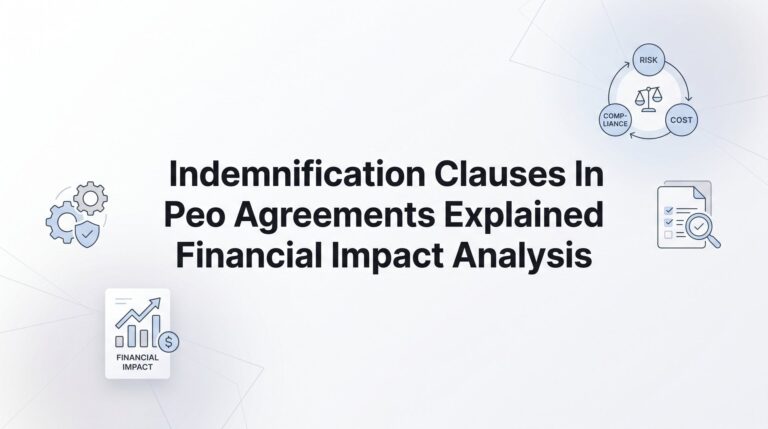
Indemnification clauses in PEO agreements explained through financial impact analysis reveal how contract language determines your liability when employment issues arise, potentially costing tens of thousands in legal fees and settlements. Business owners who overlook these provisions in their PEO contracts face unexpected financial exposure for discrimination claims, payroll disputes, and workplace violations—often matching or exceeding their annual PEO service costs.
Indemnification clauses in PEO agreements determine which party bears financial responsibility when employment-related claims arise, making them critical for effective risk mitigation strategy. Understanding these provisions before signing can prevent unexpected legal costs and liability exposure, especially since PEOs provide HR guidance but don’t always assume responsibility for the employment decisions they help you make.
Healthcare practices often overpay for workers’ comp because all employees are lumped into one risk category, charging billing staff the same rates as clinical workers with higher injury exposure. A PEO workers comp strategy for healthcare practices can solve this misclassification problem, but only when you properly structure class codes, implement healthcare-specific claims management, and avoid the common mistake of choosing a PEO based solely on the lowest premium quote.
When a qualifying event triggers COBRA, many employers assume their PEO handles everything—but COBRA administration responsibility under PEO arrangements is actually split between both parties. While the PEO typically sponsors the health plan, the employer often remains responsible for identifying and reporting qualifying events like terminations or hour reductions, and penalties for late notices (up to $110 per day per person) can fall on either party depending on your service agreement and …

A PEO hiring surge management framework helps businesses rapidly onboard dozens or hundreds of employees during major contracts, seasonal peaks, or expansion without creating bottlenecks. This practical guide outlines five essential steps for establishing clear protocols with your PEO partner before hiring surges occur, ensuring smooth coordination of onboarding, benefits enrollment, payroll setup, and compliance verification at scale while maintaining accuracy during rapid growth.