

Managing a PEO for multi-division organizations requires balancing corporate-level efficiency with division-specific operational needs across different states, industries, and risk profiles. This guide explores seven practical strategies for structuring PEO relationships that deliver consolidated HR reporting and cost benefits while preserving the flexibility each division requires for workforce management, compliance, and compensation structures.
Private equity firms acquiring multiple companies often face fragmented HR costs, with portfolio companies paying vastly different rates for PEO services—sometimes ranging from $47 to $71 per employee monthly for identical services. Consolidating these companies under a single PEO provider can unlock 20-30% cost savings through aggregated headcount and better pricing tiers, though achieving PEO HR cost savings in portfolio roll-up requires navigating contract timing, benefits harmonization, a…
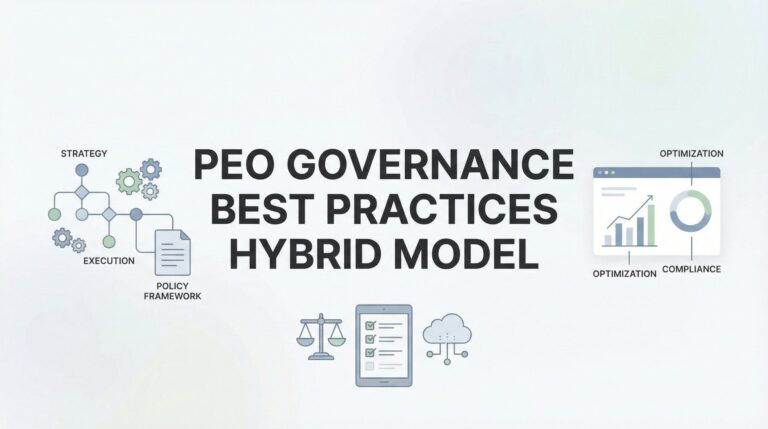
Hybrid PEO models fail when governance structures are unclear, leading to duplicated work and accountability gaps between internal HR teams and outsourced providers. This guide outlines seven essential PEO governance best practices for hybrid model success, including establishing unified employee data systems, defining clear responsibility boundaries, and creating operational guardrails that prevent costly oversights while maintaining productive co-employment relationships.
PEO relationships commonly fail not because the model is flawed, but due to preventable mismatches between company expectations and actual service delivery. Understanding why PEOs fail companies comes down to recognizing predictable patterns: expectation gaps about service scope, payroll errors, unresponsive support, and paying for unused services. By identifying these root causes early, businesses can either avoid poor PEO partnerships from the start or recognize warning signs before the rel…
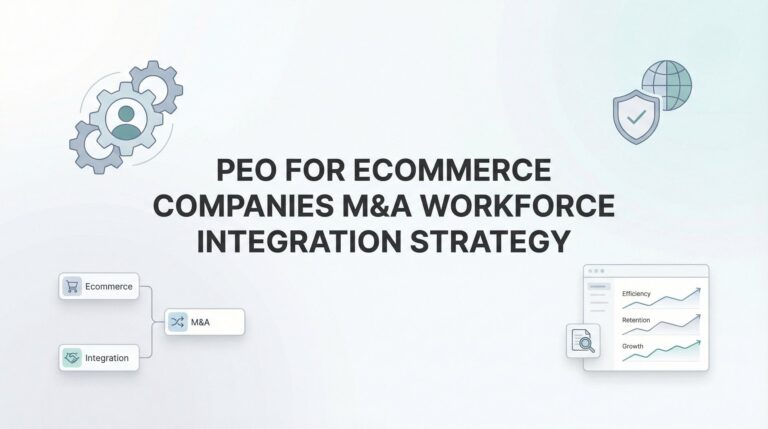
Acquiring an ecommerce company means inheriting complex workforce challenges—multi-state employees, varied benefits, contractor classifications, and urgent timeline pressures that can derail M&A deals. A PEO for ecommerce companies M&A workforce integration strategy can compress typical 6-9 month HR integration timelines into 60-90 days by handling benefits enrollment, payroll consolidation, and compliance across jurisdictions while your acquired team maintains operations without disruption.
Acquiring a company with employees across multiple states creates immediate compliance challenges with varying unemployment rates, workers’ comp rules, and leave laws. This guide explains how to strategically use a PEO for multi-state employers M&A workforce integration strategy, covering critical pre-close planning, enrollment sequencing, and ongoing compliance management that prevents regulatory issues and ensures smooth transitions when consolidating acquired workforces under a single arra…
If your business has a workers’ comp mod rate above 1.0 and employees in multiple states, finding a PEO partner requires a strategic approach—most providers will decline or overprice your account. This guide outlines the specific steps to identify a PEO for high mod rate employers with multi-state payroll governance capabilities, focusing on providers with appetite for higher-risk accounts, robust compliance infrastructure across jurisdictions, and the operational controls to manage complexit…
Government contractors face unique litigation risks from payroll errors, worker misclassification, and compliance failures that can trigger False Claims Act investigations, qui tam lawsuits, and contract debarment. A PEO for government contractors litigation risk mitigation framework addresses the specialized compliance requirements—including Service Contract Act, Davis-Bacon wages, DCAA audits, and security clearance management—that standard PEO services typically overlook, creating systemat…
Ecommerce companies face unique litigation risks from seasonal hiring, multi-state operations, and rapid scaling that create compliance vulnerabilities around worker classification, overtime, and termination. A PEO for ecommerce companies litigation risk mitigation framework helps systematically address these exposures by standardizing employment practices, ensuring regulatory compliance across jurisdictions, and providing professional HR infrastructure that reduces the likelihood of costly l…
Multi-state employers face exponentially growing compliance risks as they expand—each state brings unique employment laws, wage rules, and litigation exposure that internal HR teams often can’t monitor proactively. A PEO for multi-state employers provides a litigation risk mitigation framework by managing state-specific regulations, from California’s PAGA lawsuits to New York’s wage theft protections, helping companies scale across state lines without discovering compliance gaps through costl…
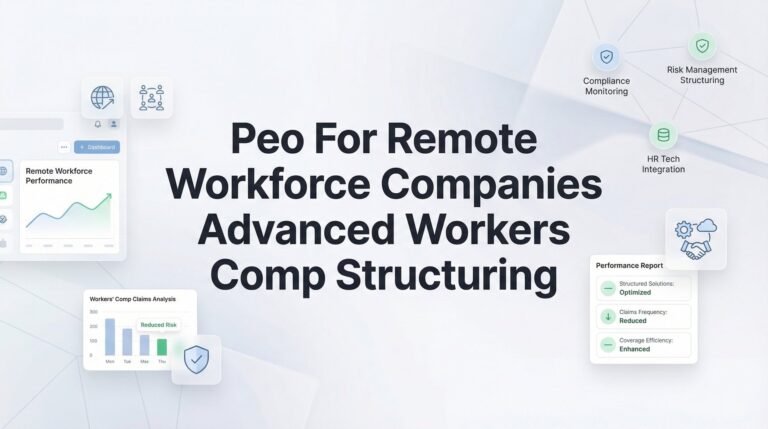
Managing workers’ comp for remote teams across multiple states requires navigating 15 different regulatory systems simultaneously—each with unique classification codes and premium structures. This practical guide explains advanced PEO for remote workforce companies’ workers’ comp structuring, including how to correctly classify distributed employees, negotiate state-specific rates, build audit-proof documentation, and avoid the costly gaps that standard PEO arrangements often leave unaddres…
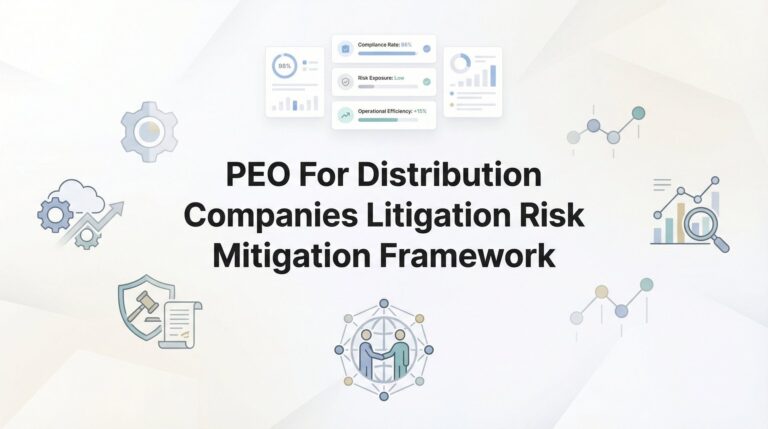
Distribution companies face constant litigation risks from workplace injuries, wage disputes, and compliance violations that generic HR programs fail to address. A strategically implemented PEO for distribution companies litigation risk mitigation framework doesn’t just outsource paperwork—it proactively prevents legal exposure by targeting the specific vulnerabilities in warehouse operations, driver classification, and multi-state compliance before they escalate into costly claims or class a…