
General contractors wrestling with the PEO vs in-house HR decision face unique challenges including multi-site workforce management, fluctuating headcounts, complex workers’ comp classifications, and high-stakes safety compliance. This analysis examines seven critical factors—from workers’ comp economics to growth trajectory—that determine which HR model actually fits your construction operation’s specific risk profile and business needs, rather than promoting a one-size-fits-all solution.
General contractors managing fluctuating crews, multi-state projects, and high workers’ comp exposure need specialized PEO support beyond standard offerings. This guide evaluates the top general contractors PEO providers for 2026, focusing on those with construction payroll expertise, certified payroll reporting capabilities, and pricing structures designed for project-based businesses with 15 to 80+ employees across residential and commercial builds.
General contractors with 5 employees face unique HR challenges—too large for DIY payroll and workers’ comp management, but too small for dedicated HR staff. This guide outlines seven practical strategies to evaluate whether a General Contractors PEO for 5 Employees makes financial sense for your business, helping you avoid costly mistakes by analyzing your actual needs before entertaining sales pitches.
General contractors with 15 employees face unique challenges that standard PEO solutions often overlook, including fluctuating crew sizes, multi-state projects, complex workers’ comp classifications, and subcontractor liability. This guide examines seven practical strategies to evaluate whether a General Contractors PEO for 15 Employees will deliver genuine operational value or simply add an expensive administrative layer without addressing construction-specific needs like job site safety man…
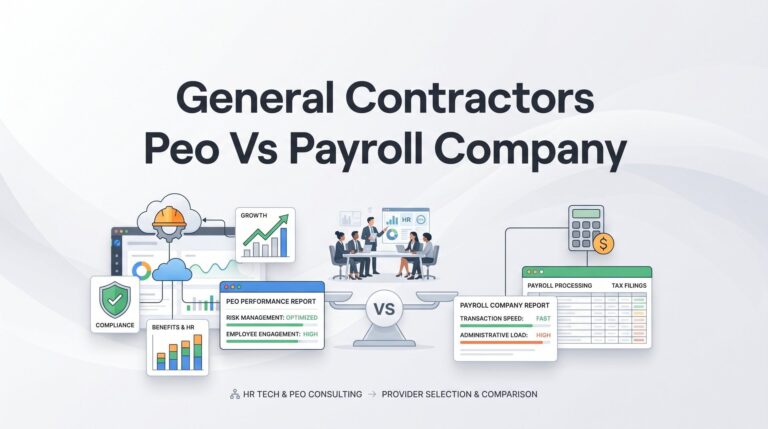
General contractors need payroll solutions that handle construction-specific challenges like multi-site crews, prevailing wage compliance, and complex workers’ comp classifications. This guide compares the best PEO and payroll companies for general contractors in 2026, explaining which services manage certified payroll reporting, workers’ comp liability, and construction workforce complexity most effectively for different contractor types.
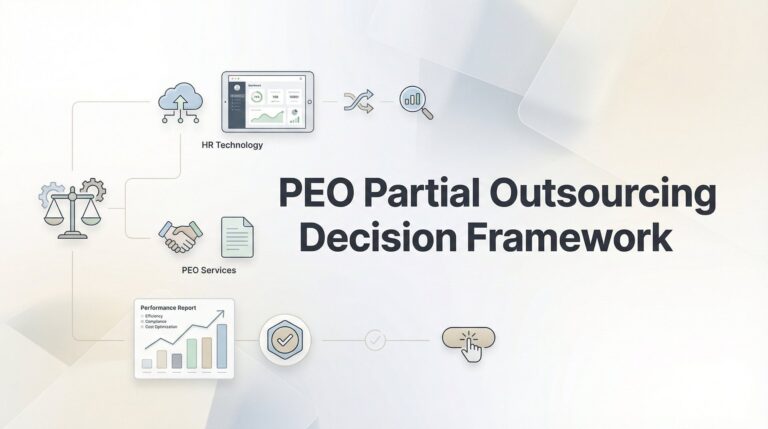
A PEO partial outsourcing decision framework helps businesses determine which HR functions to hand off to a PEO and which to manage internally, avoiding the costly mistake of either paying for unnecessary services or drowning in compliance work that should be outsourced. This guide presents seven critical decision factors to structure an effective partial outsourcing arrangement that balances cost efficiency with operational control.
When you join a PEO’s master workers comp policy, you’re entering a pooled risk arrangement where reserve allocation—money set aside for future claims—can quietly add thousands to your annual costs. Most PEO contracts use vague language about “actuarially determined reserves,” but understanding how PEO workers comp reserve allocation works determines whether you’re paying your fair share or subsidizing other businesses’ risk in the pool.

Managing a PEO for multi-division organizations requires balancing corporate-level efficiency with division-specific operational needs across different states, industries, and risk profiles. This guide explores seven practical strategies for structuring PEO relationships that deliver consolidated HR reporting and cost benefits while preserving the flexibility each division requires for workforce management, compliance, and compensation structures.
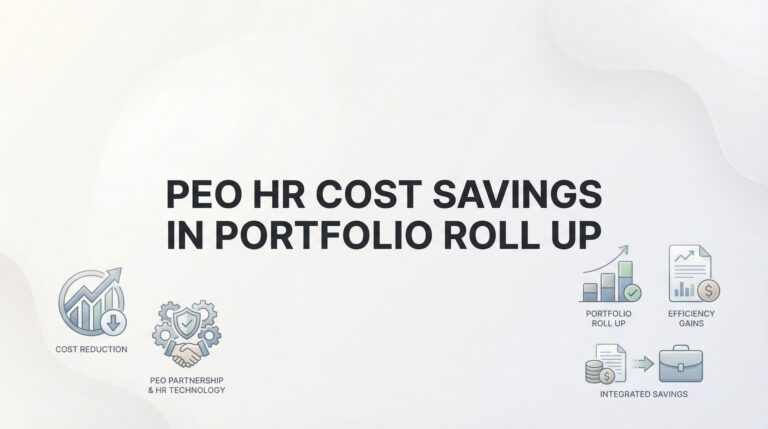
Private equity firms acquiring multiple companies often face fragmented HR costs, with portfolio companies paying vastly different rates for PEO services—sometimes ranging from $47 to $71 per employee monthly for identical services. Consolidating these companies under a single PEO provider can unlock 20-30% cost savings through aggregated headcount and better pricing tiers, though achieving PEO HR cost savings in portfolio roll-up requires navigating contract timing, benefits harmonization, a…
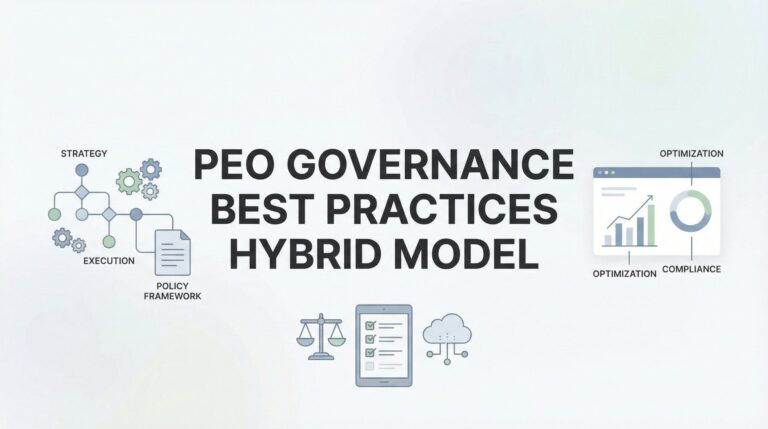
Hybrid PEO models fail when governance structures are unclear, leading to duplicated work and accountability gaps between internal HR teams and outsourced providers. This guide outlines seven essential PEO governance best practices for hybrid model success, including establishing unified employee data systems, defining clear responsibility boundaries, and creating operational guardrails that prevent costly oversights while maintaining productive co-employment relationships.
PEO relationships commonly fail not because the model is flawed, but due to preventable mismatches between company expectations and actual service delivery. Understanding why PEOs fail companies comes down to recognizing predictable patterns: expectation gaps about service scope, payroll errors, unresponsive support, and paying for unused services. By identifying these root causes early, businesses can either avoid poor PEO partnerships from the start or recognize warning signs before the rel…
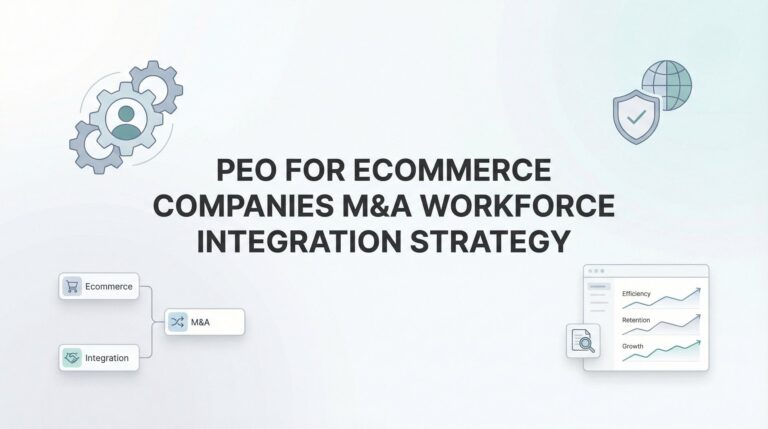
Acquiring an ecommerce company means inheriting complex workforce challenges—multi-state employees, varied benefits, contractor classifications, and urgent timeline pressures that can derail M&A deals. A PEO for ecommerce companies M&A workforce integration strategy can compress typical 6-9 month HR integration timelines into 60-90 days by handling benefits enrollment, payroll consolidation, and compliance across jurisdictions while your acquired team maintains operations without disruption.