
Understanding the Fire Protection PEO cancellation policy in your contract is critical before signing or exiting, as the terms can create serious financial and operational risks unique to fire protection contractors. This guide explains what to look for in cancellation clauses, exit timelines, and potential penalties so you can make informed decisions about your PEO relationship.
A fire protection PEO for 50 employees offers real advantages in workers’ comp costs, HR compliance, and benefits competitiveness, but the co-employment model comes with tradeoffs that standard sales pitches rarely address. This practical guide breaks down actual costs, evaluates whether the math works at this headcount, and helps fire protection owners make an informed decision before signing a contract.

Restoration employee benefits through a PEO give smaller restoration companies access to large-group health insurance rates and comprehensive benefit packages that would otherwise be unaffordable, helping them compete for skilled technicians and project managers against larger operators. This article breaks down exactly what PEO arrangements provide, how the cost structure works, and what restoration business owners should realistically expect before signing on.
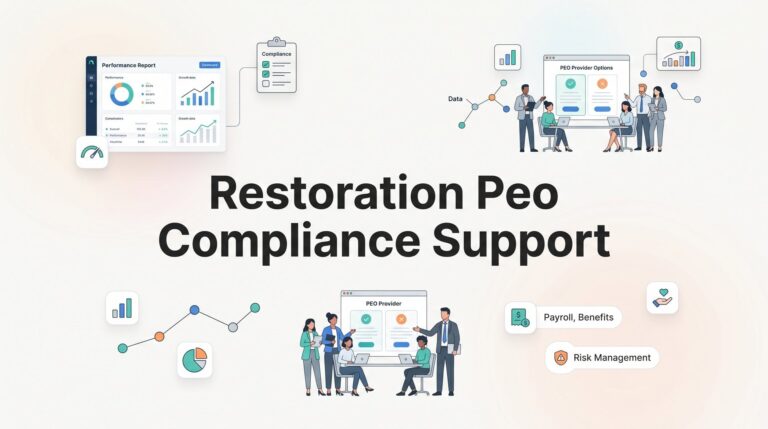
Restoration PEO compliance support goes far beyond payroll processing — for contractors navigating OSHA hazardous materials standards, EPA regulations, multi-state licensing, and workers’ comp classifications, understanding exactly what your PEO covers (and what it doesn’t) can mean the difference between full protection and costly compliance gaps you’re left absorbing alone.
Restoration PEO payroll services are designed to handle the unpredictable complexity of restoration company payroll, including rotating crews, multi-state tax obligations, overtime calculations, and workers’ comp coverage that standard payroll software can’t manage efficiently. This guide breaks down exactly what these services cover and helps restoration business owners evaluate whether the cost is justified by the operational and compliance value delivered.

Commercial cleaning employee benefits through a PEO can help small cleaning companies offer competitive health insurance, retirement plans, and other perks typically out of reach for businesses with high turnover and part-time workforces. This guide breaks down what cleaning company owners actually receive from a PEO arrangement, the real costs involved, and why the math works differently for cleaning businesses than for typical office-based employers.

Understanding the commercial cleaning PEO cancellation policy before signing can save your business from costly surprises—including hidden termination fees, headcount minimums, and 90-day notice requirements that hit cleaning companies especially hard due to contract volatility. This analysis breaks down the exit terms you need to scrutinize before committing to a PEO agreement.
Understanding commercial cleaning PEO contract terms before signing can save your business from costly surprises—hidden cancellation windows, shifting workers’ comp rates, and billing changes tied to crew fluctuations are common pitfalls that disproportionately affect cleaning companies due to their high turnover, variable headcount, and multi-site operations. This guide breaks down the specific clauses cleaning business owners must scrutinize to avoid being locked into unfavorable agreements.
Understanding Restoration PEO Pricing & Cost Structure is critical for restoration contractors who often face unexpected year-end reconciliation invoices when standard PEO models fail to account for their unique operational realities. This guide breaks down what you’re actually paying for — from workers’ comp classifications to CAT event payroll spikes — helping restoration business owners evaluate quotes accurately and avoid costly pricing surprises.
A Restoration PEO Workers Compensation Program offers restoration contractors a structurally different approach to managing high-risk workers comp coverage — changing who holds the policy, how risk is pooled, and how claims are handled. For water mitigation, fire cleanup, and mold remediation businesses facing steep rates or assigned risk placement, understanding this arrangement can meaningfully reduce costs and improve claims outcomes.
Commercial Cleaning PEO Payroll Services help cleaning company owners manage the complex payroll challenges unique to the industry—including multi-site scheduling, high employee turnover, workers’ comp costs, and multi-state tax compliance. This guide breaks down exactly what these services cover, what they typically cost, and how to determine whether partnering with a PEO makes financial and operational sense for your cleaning business.
Commercial Cleaning PEO Compliance Support helps mid-sized cleaning businesses manage the growing burden of wage laws, workers’ comp audits, and HR compliance without dedicated in-house staff. This breakdown explains exactly what a PEO covers in a co-employment arrangement, where the gaps still exist, and how to evaluate whether the cost makes sense for your operation’s size and risk exposure.