
Grease trap pumping business owners weighing HR outsourcing options will find a practical breakdown of grease trap pumping PEO pros and cons specific to FOG removal operations, covering workers’ comp costs, field workforce management, and compliance complexities that generic PEO evaluations typically overlook.
Grease trap pumping operators evaluating a PEO partnership need to scrutinize contract terms carefully, as generic agreements are often written for low-risk industries and may leave liquid waste businesses exposed on workers’ compensation classifications, hazardous waste liability, and environmental compliance requirements. Understanding key Grease Trap Pumping PEO Contract Terms before signing can prevent costly coverage gaps and misaligned risk structures specific to field crews handling ha…
Grease trap pumping companies face unique challenges when evaluating PEO pricing due to high-risk workforce classifications, seasonal staffing swings, and workers’ comp complexities that most generalist PEOs mishandle. This guide breaks down grease trap pumping PEO pricing and cost structure so operators know what fair pricing looks like, which fees to scrutinize, and how to avoid costly misclassifications before signing a contract.
Security Guard PEO Pricing & Cost Structure differs significantly from standard industries due to elevated workers’ comp classifications and complex claims profiles that cause many PEOs to either decline security firms or quote inflated rates. This guide breaks down what security companies are actually paying for in a PEO arrangement and how to accurately compare proposals to avoid overpaying.

Finding the best PEO for security guard companies requires looking beyond standard providers to those built for high-turnover workforces, complex workers’ comp classifications (NCCI codes 7720 and 7723), and multi-state compliance demands. This guide evaluates nine PEOs specifically against the real operational challenges of running a security guard business, from overnight shift differentials to rapid onboarding at scale.
Switching dumpster rental companies to a PEO can streamline payroll, reduce workers’ comp costs, and simplify HR compliance for operators managing drivers, yard staff, and seasonal workers. This step-by-step guide walks dumpster rental business owners through the transition process, helping them avoid common pitfalls and set up their PEO partnership for long-term operational success.
Navigating a dumpster rental PEO cancellation policy requires careful attention to contract details like notice windows, auto-renewal triggers, and workers’ comp tail obligations that can create costly surprises during exit. This step-by-step guide helps dumpster rental and waste hauling businesses decode the fine print, time their departure strategically, and avoid the most common financial pitfalls when transitioning away from a PEO arrangement.
Understanding restoration PEO contract terms before signing is critical for contractors managing volatile workforce sizes, mixed W-2 and 1099 classifications, and high-risk workers’ comp codes. Standard PEO agreements often contain clauses that appear harmless in general business contexts but create significant financial and operational risks specific to water, fire, mold, and storm restoration work.

Most advice on managing distributed teams starts in the wrong place. It starts with tools, meeting cadence, and vague reminders to "communicate…
Before signing with Restoration PEO, understanding the Restoration PEO cancellation policy is critical — buried contract terms around notice periods, fees, and exit timelines can lock businesses in for months longer than expected. This breakdown covers exactly what you’re agreeing to, so you can evaluate Restoration as a provider or navigate an existing contract with clear knowledge of your options and obligations.
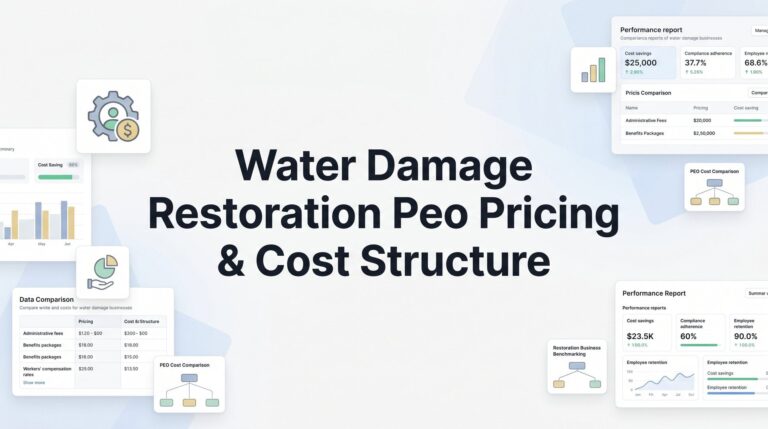
Water damage restoration business owners face unique PEO pricing challenges due to seasonal workforce fluctuations, multiple job classifications, and high workers’ comp exposure. This practical breakdown of water damage restoration PEO pricing and cost structure explains how fees are actually calculated, where hidden costs emerge around class codes and subcontractors, and what restoration contractors should evaluate before signing a PEO agreement.
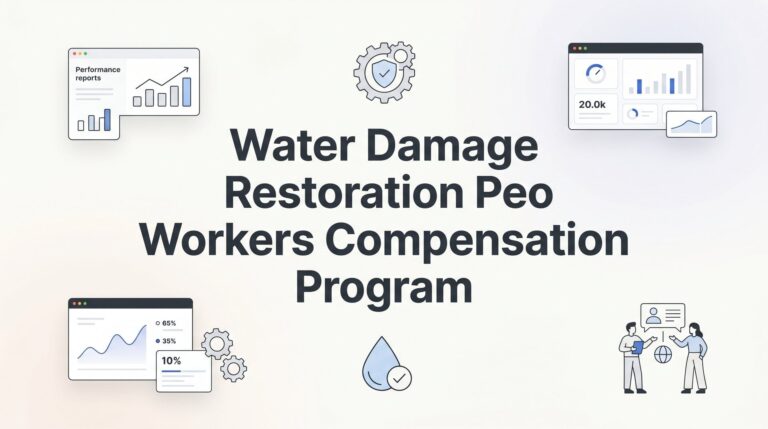
Water damage restoration contractors face unique workers compensation challenges due to high-hazard exposures that cause standard markets to decline coverage or price it punitively. A Water Damage Restoration PEO Workers Compensation Program offers one legitimate solution by providing access to stable, specialized coverage—but understanding how these programs actually work helps business owners determine whether it’s the right fit for their operation.