

Understanding pool service PEO contract terms before signing can prevent costly surprises like unexpected mid-season invoices, workers’ comp gaps, and difficult exit clauses. This guide breaks down the specific contract provisions that carry the most financial risk for pool service businesses, helping owners identify the buried terms in exhibits and addenda that could significantly impact their operations.
Understanding the Pool Service PEO cancellation policy before signing can save business owners from costly surprises, including hidden termination fees, 60-day notice requirements, and post-exit workers’ comp audits. This guide breaks down exactly what pool service companies should expect when entering or exiting a PEO agreement, helping owners avoid the common financial pitfalls that catch many businesses off guard mid-season.
Pest Control PEO Payroll Services help operators manage the unique complexities of technician payroll — from multi-county workers’ comp classifications to seasonal workforce fluctuations — by bundling HR, compliance, and payroll administration under one provider. This guide breaks down exactly what these services cover, what they typically cost, and how to determine whether the investment makes financial sense for your pest control business.
Pest control PEO compliance support covers employment-related obligations like payroll taxes, workers’ comp, and HR regulations, but stops short of industry-specific requirements such as EPA pesticide licensing, FIFRA compliance, and state applicator certifications. Operators who assume a PEO handles all regulatory obligations risk leaving significant compliance gaps unaddressed in areas that fall outside the co-employment model.

Pest control employee benefits through a PEO give small pest control businesses access to competitive group health plans, retirement options, and HR support typically reserved for large companies. By pooling employees with thousands of others, a PEO helps owners attract and retain skilled technicians without the administrative burden or high costs of managing benefits independently.
Pool service PEO pros and cons come down to your company’s size, risk profile, and seasonal hiring patterns—this guide gives owners an honest breakdown of when co-employment makes financial sense and when it doesn’t, covering workers’ comp costs, payroll complexity, and the real tradeoffs of sharing employer responsibilities with a Professional Employer Organization in a high-risk, seasonal industry.

Understanding your pest control PEO cancellation policy before signing can save your business from costly surprises, including hidden termination fees, mid-cycle exit penalties, and complex employee transition requirements. This guide breaks down what pest control owners need to know about PEO contract exit terms, common cancellation triggers, and how to protect your business when the partnership no longer makes sense.

Small security guard companies face unique HR challenges that most PEOs aren’t equipped to handle. This guide outlines seven practical strategies for choosing the right Security Guard PEO for 5 Employees, focusing on workers’ comp classifications, licensing compliance, and cost structures that actually fit a small-headcount operation without overpaying for enterprise-level services you don’t need.
Pest control business owners struggling with high premiums and experience mod penalties can find relief through a Pest Control PEO Workers Compensation Program, which pools employees under a master policy to potentially lower rates. This guide cuts through the sales pitch to explain how these arrangements actually work, what they cost, and how to evaluate providers before committing.
Most advice about a professional employer organization in Florida treats the decision like a commodity purchase. Compare a few admin fees, pick…
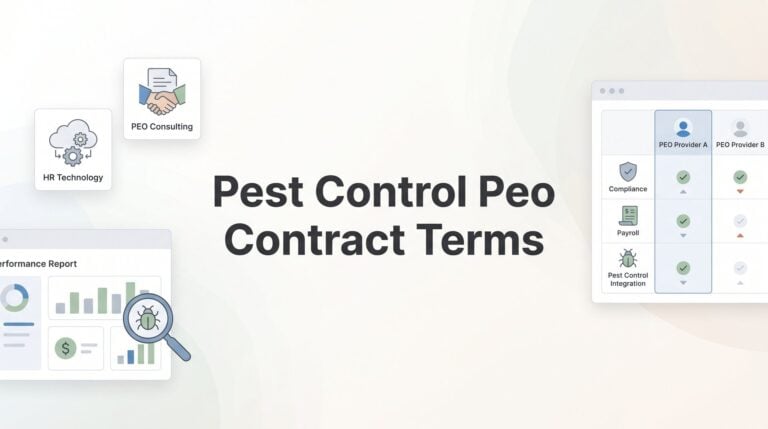
Pest control business owners face unique contract risks when partnering with a PEO, and understanding key pest control PEO contract terms—including termination windows, seasonal fee structures, and workers’ comp indemnification clauses—can prevent costly surprises. This guide breaks down the specific language operators should scrutinize and negotiate before signing, given the industry’s distinct challenges like chemical exposure liability and high-risk workforce classifications.
Flooring contractors face unique risks when signing PEO agreements, including mid-year rate adjustments, auto-renewal traps, and termination clauses that can lock businesses into unfavorable terms. This guide breaks down the critical flooring PEO contract terms to negotiate before signing, helping flooring businesses avoid costly surprises tied to seasonal crews, subcontractor overlap, and high workers’ comp classification codes.