

Understanding your landscaping PEO cancellation policy before signing can save your business from costly exit fees, coverage gaps, and contract terms that don’t account for seasonal workforce fluctuations. This guide breaks down the key cancellation clauses landscaping business owners should scrutinize, where industry-specific risks hide, and how to negotiate better exit terms upfront.

Understanding your lawn care PEO cancellation policy before signing can save you significant money and operational headaches when it’s time to exit. This guide breaks down the key contract terms—notice periods, auto-renewal clauses, and seasonal workforce considerations—that lawn care business owners must evaluate to avoid costly surprises when switching or leaving a PEO provider.
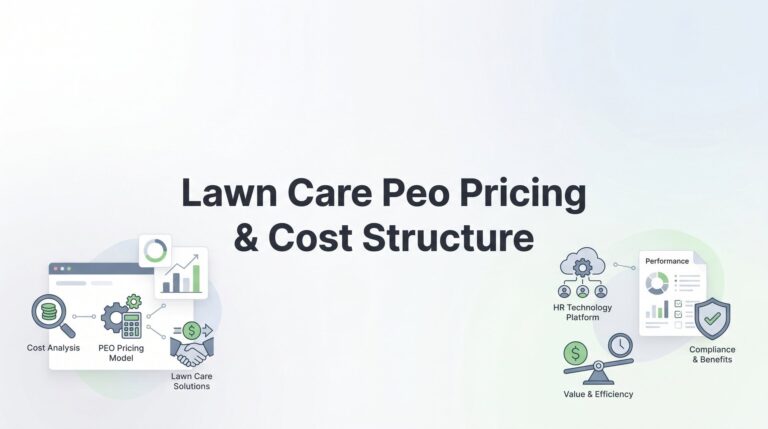
Lawn care and landscaping business owners navigating Lawn Care PEO Pricing & Cost Structure will find a clear breakdown of what actually drives their costs — from workers’ comp exposure and seasonal headcount swings to overtime-heavy payrolls. This guide cuts through confusing sales proposals to explain how different pricing models interact with the unique risk profile of field-based crews, helping owners determine whether a PEO genuinely saves money or quietly costs more.
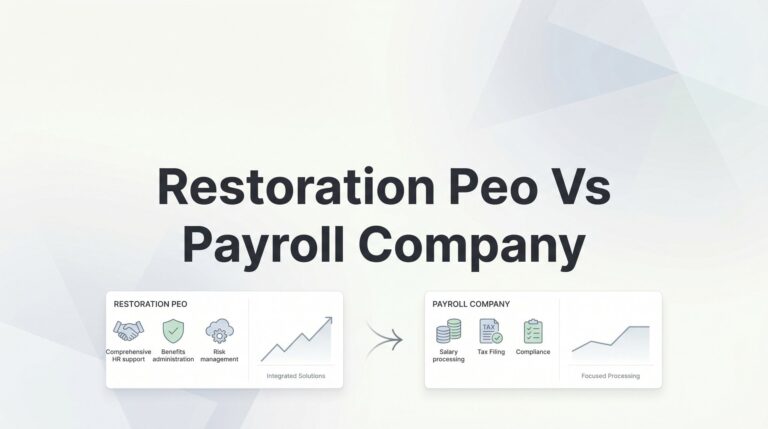
Choosing between a restoration PEO vs payroll company is a critical decision for disaster recovery businesses facing unpredictable staffing surges, multi-state deployments, and high-risk workers’ comp exposure. This guide compares eight PEO and payroll solutions built to handle the unique operational demands of restoration companies, helping owners determine whether co-employment benefits and risk management justify PEO costs over a standard payroll platform.

Lawn care PEO compliance support can streamline payroll taxes, workers’ comp, and HR obligations, but it won’t cover pesticide licensing, DOT requirements, or H-2B visa paperwork. This practical guide helps lawn care business owners understand exactly which compliance responsibilities a PEO handles and which ones remain firmly in their court.

A Lawn Care PEO Workers Compensation Program offers landscaping businesses an alternative to costly standalone coverage by co-employing workers under a PEO’s master policy, spreading risk across a larger pool to reduce premiums. This approach helps lawn care operations manage unpredictable insurance costs driven by high-risk occupational classifications, providing more stable pricing despite seasonal cash flow challenges and elevated injury rates common in the industry.
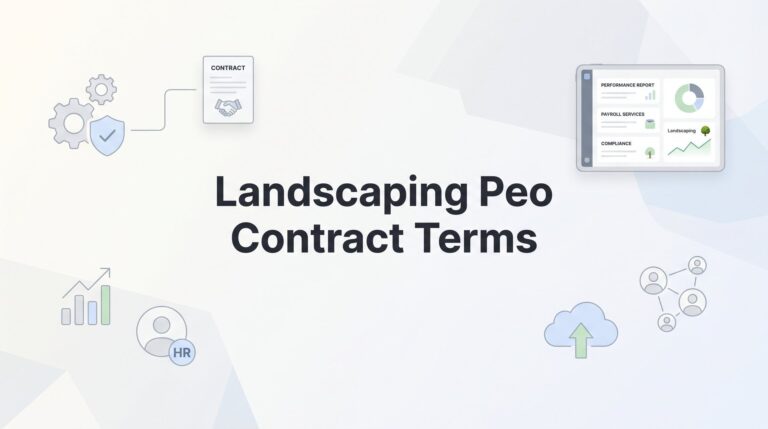
Landscaping PEO contract terms contain critical clauses—like auto-renewal windows, workers’ comp carve-outs, and headcount flexibility provisions—that can lock seasonal landscaping businesses into costly agreements. This guide helps landscaping owners identify the specific contract language that matters most before signing with a PEO partner.
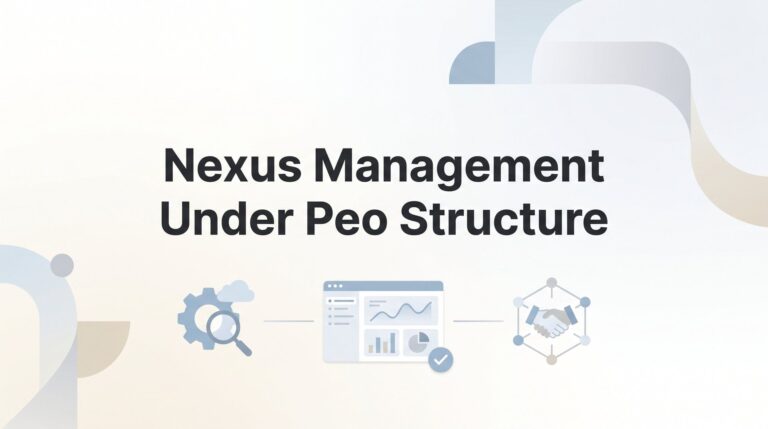
Nexus management under a PEO structure doesn’t eliminate your multi-state tax obligations—it only addresses employment-related ones. This guide clarifies exactly what a PEO handles on your behalf, where critical compliance gaps remain, and what business owners expanding across state lines must still manage independently to avoid unexpected obligations from state tax authorities.
Managing HSA and FSA administration through a PEO can significantly reduce the compliance burden for small and mid-market businesses by handling contribution tracking, nondiscrimination testing, and IRS updates. This guide breaks down the operational realities of HSA and FSA management through a PEO, including cost implications, fiduciary responsibilities, and critical questions to ask before assuming everything runs on autopilot.

Benefit fiduciary liability under the PEO model is more complex than most employers realize — co-employment shifts certain HR responsibilities to the PEO, but ERISA fiduciary duties don’t automatically transfer with them. Understanding how your contract, plan structure, and day-to-day decisions determine who’s actually on the hook for health plan and 401(k) fiduciary obligations is critical before signing any PEO agreement.
A workers’ comp class code restructuring under PEO financial impact analysis reveals how premium changes in PEO proposals can reflect legitimate job-duty reclassifications or misleading payroll reallocation that collapses at audit. Understanding the difference between genuine savings and artificially competitive proposals is critical for construction and other employers evaluating PEO arrangements to protect their bottom line.
Joint employer liability allocation in PEO contracts is a critical risk mitigation strategy that determines exactly how financial and legal responsibility is divided between your business and the PEO when employment claims arise. This guide breaks down the contract mechanics — indemnification language, insurance requirements, and liability caps — that actually protect your business versus those that only appear to.