
Qualifying for PEO workers’ comp dividends requires more than a clean claims year—it demands a compliance framework that simultaneously satisfies insurance carrier rules, PEO contractual requirements, and state-specific regulations. This guide breaks down exactly how dividend qualification works within PEO arrangements and what your organization needs to track to stay eligible and evaluate whether pursuing dividends actually makes financial sense.
Labor cost optimization using a PEO for nonprofit organizations offers a strategic path to reducing HR overhead, accessing Fortune 500-level benefits at lower rates, and streamlining payroll and compliance — without sacrificing the competitive compensation needed to attract mission-driven talent. This guide explains how nonprofits can partner with a PEO to run a leaner, more efficient employment function while redirecting savings toward their core mission.
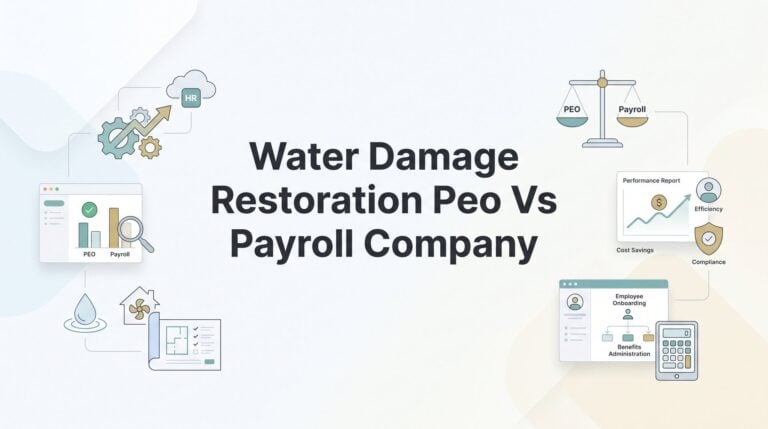
Water damage restoration companies face unique HR challenges—from surge hiring after storms to complex workers’ comp classifications—making the choice between a Water Damage Restoration PEO vs Payroll Company critical to operational success. This guide evaluates seven top solutions based on what restoration businesses actually need: scalable workforce management, industry-specific workers’ comp handling, and compliance support for OSHA mold and confined-space regulations.
Healthcare practices evaluating PEOs face a more complex cost equation than most industries, and understanding the true PEO cost structure for healthcare practices requires looking beyond standard sales pitches. This breakdown covers actual fee components, hidden cost drivers, and how pricing differs across practice types to help clinical operators make financially sound outsourcing decisions.
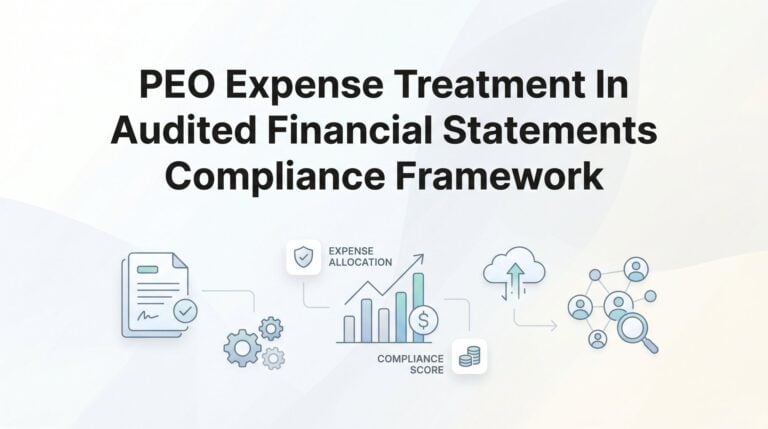
Understanding PEO expense treatment in audited financial statements compliance framework is critical for business owners facing formal audits, SBA loans, or investor rounds. Misclassifying PEO fees on your income statement can affect expense ratios, debt covenant compliance, and whether your auditor issues a clean opinion or a management letter comment requiring explanation to lenders.
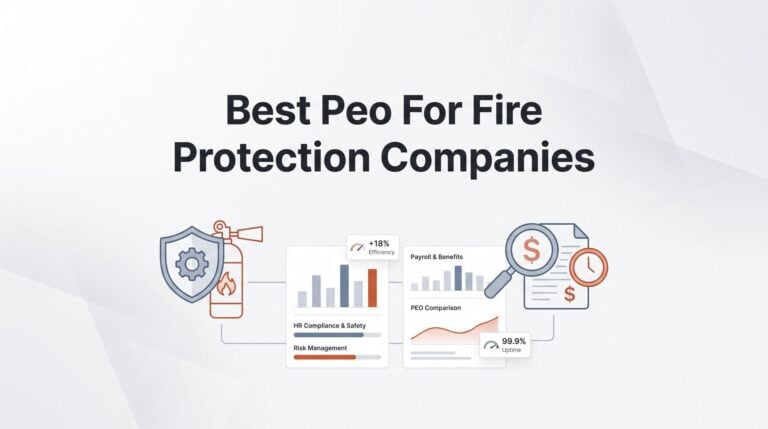
Finding the best PEO for fire protection companies requires a provider that handles high-risk workers’ comp classifications, OSHA compliance, and certified payroll without inflated costs. This guide evaluates seven top PEOs specifically suited for fire protection contractors managing field crews, multi-state licensing, and construction-adjacent HR challenges.
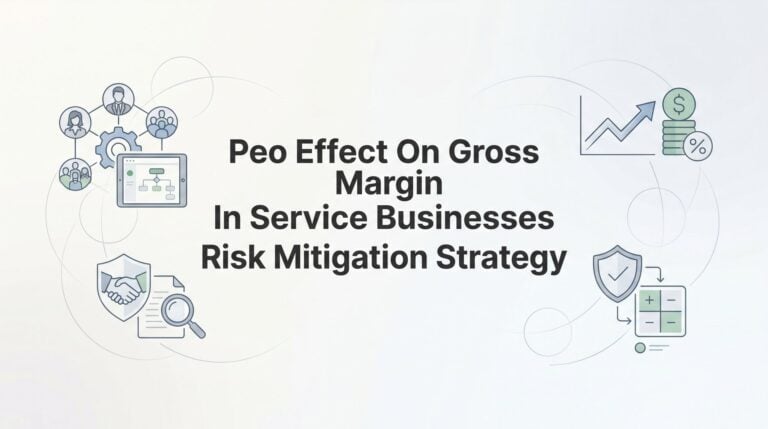
Service businesses face constant margin erosion from unpredictable labor costs like workers’ comp spikes, benefits renewals, and compliance penalties—all of which hit gross margin directly. This guide explains how building a PEO-based risk mitigation strategy helps service business owners stabilize and protect gross margin by converting volatile employment costs into predictable, manageable expenses rather than treating PEO services as a simple HR convenience.
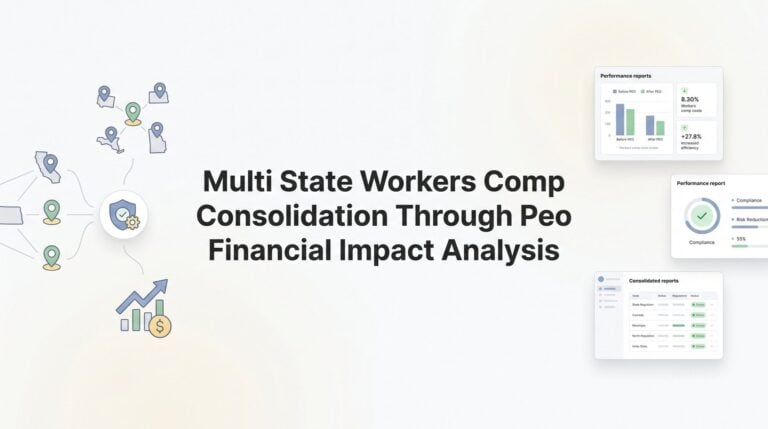
Businesses operating across multiple states often struggle with fragmented workers’ comp policies, each carrying separate carriers, audits, and rate structures. This multi-state workers’ comp consolidation through PEO financial impact analysis breaks down the real cost layers, risk shifts, and state-specific variables to help owners determine whether consolidating under a PEO master policy actually saves money — or simply trades one set of complexities for another.
This guide evaluates the top water damage restoration PEO providers based on criteria that actually matter to restoration companies — including workers’ comp classification accuracy, rapid onboarding during storm surges, and multi-state compliance support. It cuts through generic PEO comparisons to identify which providers can handle the unique risks of mold remediation, asbestos abatement, and fluctuating crew sizes without inflating costs.
Understanding the PEO cost structure for staffing agencies requires looking beyond surface-level quotes, as fluctuating headcounts, rapid employee turnover, multiple workers’ comp classifications, and multi-state compliance create a fundamentally different pricing reality than standard PEO models account for. This guide breaks down how PEO fees actually work for staffing operations so agency owners can make accurate cost comparisons.
A rigorous peo adoption before private equity exit cost modeling approach helps deal teams pressure-test whether consolidating HR through a PEO genuinely improves EBITDA and exit positioning—or introduces implementation risk, contract lock-in, and co-employment complexity that could create friction during diligence at the worst possible moment.
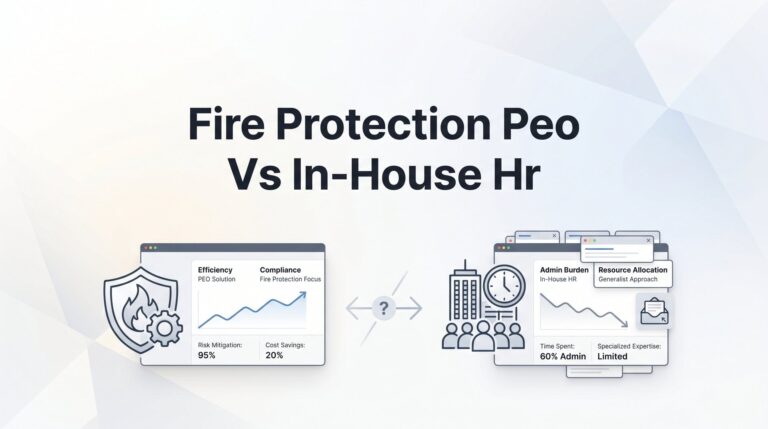
Fire protection companies face unique HR challenges—from OSHA compliance and workers’ comp classifications to managing certified technicians across multiple job sites—making the Fire Protection PEO vs In-House HR decision operationally critical. This guide outlines seven industry-specific decision strategies based on your claims history, workforce mix, geographic footprint, and growth trajectory to help you choose the right HR approach for your business.