
Managing multi-state workers comp compliance under a PEO shifts certain obligations to the PEO while others remain the employer’s responsibility—and understanding exactly where that line falls is critical to avoiding audits, claim denials, and premium spikes. This guide breaks down what actually changes when you bring a PEO into a multi-state operation, what stays with you, and the gray areas that require proactive clarification before something goes wrong.
Finding the best PEO for restoration companies requires a provider built for high-risk trade classifications, seasonal workforce fluctuations, and multi-state deployment challenges that generic PEOs aren’t equipped to handle. This guide evaluates the top seven PEO options in 2026 that offer the specialized workers’ comp coverage, flexible headcount management, and industry-specific expertise restoration businesses need to operate efficiently during disaster response surges.
Companies using a PEO face a common audit challenge: bundled invoices that must be disaggregated into auditable expense categories. This practical guide on PEO expense treatment in audited financial statements offers a cost modeling approach covering invoice decomposition, gross-versus-net presentation decisions, and reconciliation frameworks that satisfy auditor requirements before fieldwork begins.
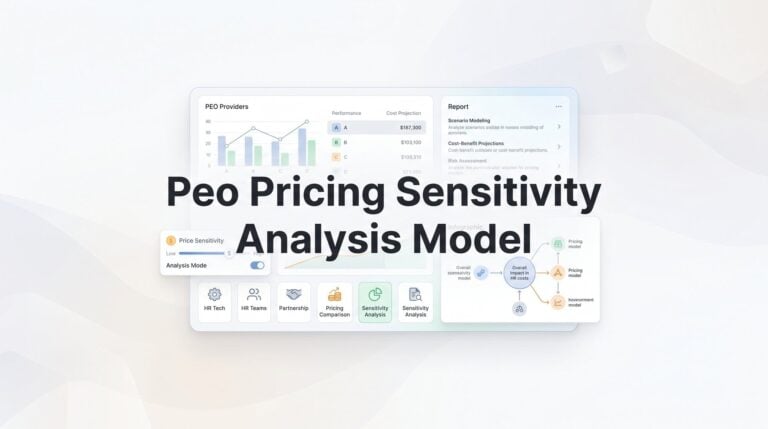
A PEO pricing sensitivity analysis model helps business owners stress-test their projected costs before signing a contract by modeling how variables like headcount growth, workers’ comp claims, and health plan elections affect total spend. This structured approach closes the gap between initial quotes and real-world invoices, giving you a clearer financial picture before you’re locked into a multi-year agreement.
Commercial cleaning companies face unique HR challenges—high turnover, multi-site deployments, and significant workers’ comp exposure—that generic PEO solutions can’t adequately address. This guide evaluates the top commercial cleaning PEO providers based on their expertise in janitorial NCCI classifications, payroll flexibility for variable schedules, compliance support, and pricing transparency to help cleaning businesses find the right fit.
Benefit fiduciary liability under the PEO model is a quantifiable cost variable that most businesses either misattribute entirely to the PEO or overlook in their financial analysis. This cost modeling approach clarifies where fiduciary responsibility actually sits in a PEO arrangement, what the real exposure costs, and how to build an accurate model so your PEO comparison numbers reflect true financial risk.
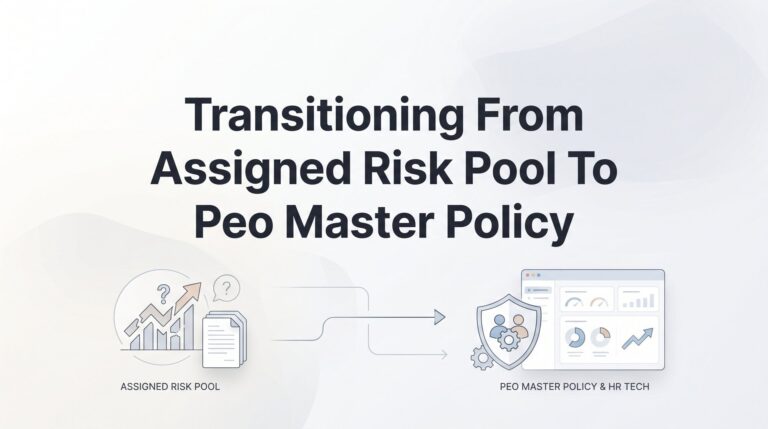
Transitioning from assigned risk pool to PEO master policy offers high-hazard businesses in construction, roofing, and landscaping a practical escape from inflated workers’ comp premiums by pooling employees with thousands of others under a PEO’s coverage umbrella. This step-by-step guide walks through the documentation requirements, timing considerations, and key decision points to help businesses navigate the process and potentially qualify for the voluntary market.
This guide helps commercial cleaning business owners navigate the Commercial Cleaning PEO vs Payroll Company decision by evaluating nine top providers based on industry-specific factors like workers’ comp rates for janitorial classifications, OSHA compliance support, and high-turnover workforce management. The breakdown covers both co-employment and standalone payroll options, giving cleaning operators a clear framework to choose based on their headcount, risk profile, and budget constraints.
Service businesses like consulting firms and staffing agencies often underestimate how compliance overhead silently erodes profitability, since labor is their primary cost. This analysis examines the peo effect on gross margin in service businesses compliance framework, helping owners evaluate whether a PEO’s fee structure and coverage genuinely reduces compliance drag or simply adds another cost layer to an already thin margin.
Restaurant groups expanding beyond a few locations often find their patchwork HR systems can’t keep pace with multi-state compliance, payroll complexity, and workforce demands. This guide explains how hr infrastructure scaling using peo for restaurant groups works in practice — helping operators assess where their current setup is breaking down and how a Professional Employer Organization can provide the compliance support, benefits administration, and operational structure needed to grow sus…
Finding the right PEO for restoration companies is challenging since many providers won’t quote high-risk trade contractors or lack experience with workers’ comp classifications for mold remediation, water mitigation, and abatement work. This guide reviews seven PEOs that specialize in or actively support restoration businesses, helping owners offload payroll, compliance, and risk management so they can focus on actual restoration work.
Indemnification clauses in PEO agreements explained through a compliance framework reveal how risk is allocated between employers and PEO providers—often in ways that surprise business owners. Understanding these contractual provisions is essential for avoiding unexpected financial exposure from lawsuits, regulatory fines, and employment disputes that many assume their PEO automatically covers.