
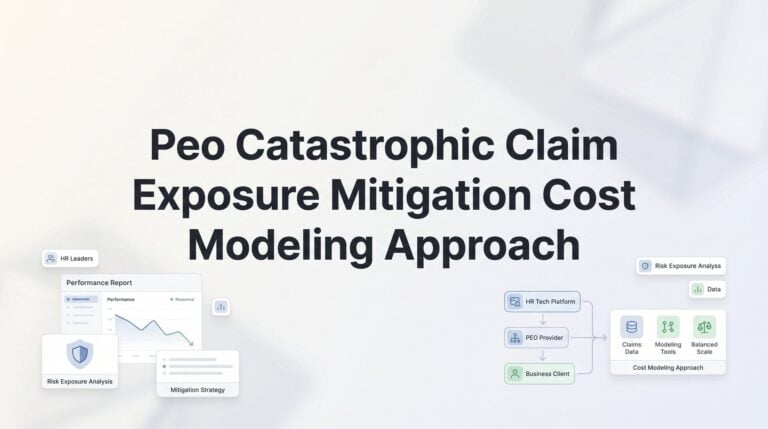
When evaluating PEO providers, most businesses focus on visible fees while overlooking catastrophic claim exposure—a single severe workers’ comp or health insurance claim that can devastate cost projections for years. This guide provides a practical PEO catastrophic claim exposure mitigation cost modeling approach to help business owners analyze how different PEO structures handle worst-case scenarios before signing, preventing costly surprises from loss-sensitive rating, retro adjustments, o…
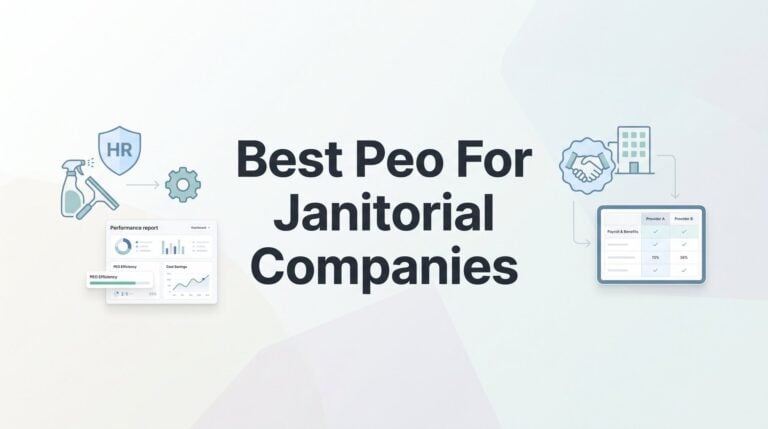
Finding the best PEO for janitorial companies requires looking beyond generic providers to those equipped for industry-specific challenges like high turnover, slip-and-fall workers’ comp claims, and OSHA cleaning-chemical compliance. This guide evaluates seven PEO providers based on their ability to handle the unique HR, payroll, and risk management needs of commercial cleaning businesses operating on tight margins.
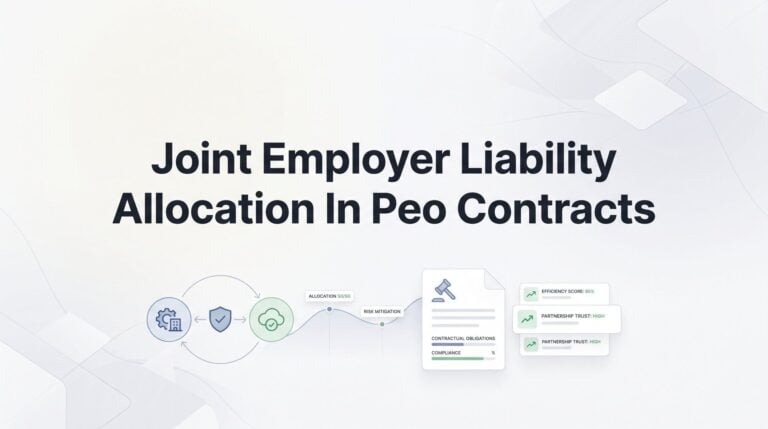
Understanding joint employer liability allocation in PEO contracts is critical before signing—what the sales pitch implies and what the contract actually delivers are often very different. This practical breakdown clarifies which employment liabilities genuinely transfer to the PEO and which remain squarely with the business owner, helping you make informed decisions about real risk exposure.
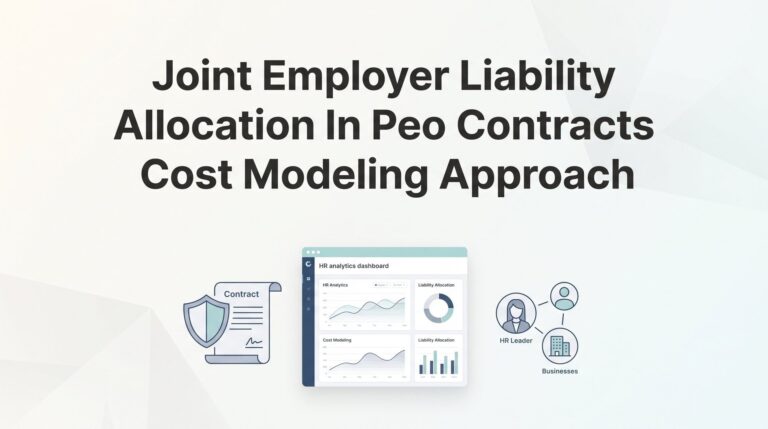
A practical cost modeling framework for business owners using PEO arrangements, this guide breaks down how to quantify joint employer liability allocation in PEO contracts using a dollars-and-cents approach. It covers hidden contract exposures in wage-and-hour claims, safety violations, and discrimination lawsuits, and provides negotiation strategies to reduce financial downside before something goes wrong.
Weighing janitorial PEO pros and cons requires understanding industry-specific challenges like high turnover, workers’ comp exposure, and thin margins before signing a contract. This guide breaks down 7 critical decision factors tailored specifically for cleaning operations, helping you determine whether a PEO partnership will reduce your HR burden or create costly complications you didn’t anticipate.
PEO workers’ comp premium benchmarking helps business owners determine whether their current PEO pricing is competitive or inflated — a difficult task given the structural information asymmetry in PEO contracts. This guide walks HR leaders and employers through practical methods for evaluating their workers’ comp rates against meaningful baselines, so they can negotiate from a position of knowledge rather than guesswork.
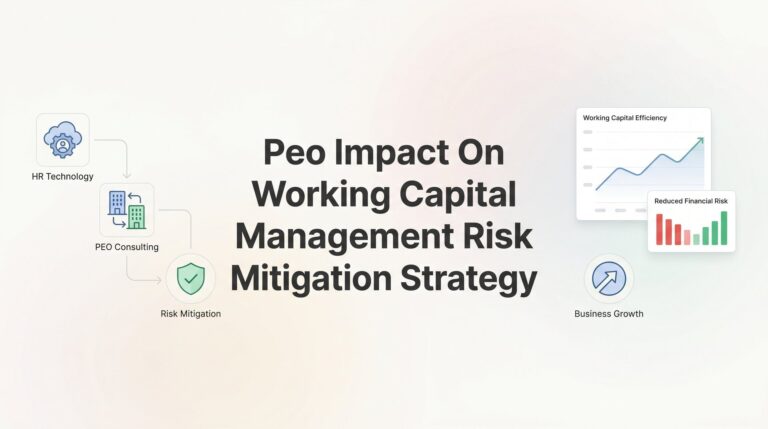
A PEO impact on working capital management and risk mitigation strategy goes beyond basic HR outsourcing — it fundamentally restructures how payroll taxes, workers’ comp premiums, and compliance costs hit your cash flow. This analysis breaks down the financial mechanics for business owners and CFOs, covering both the genuine liability transfer benefits and the potential cash flow constraints that can emerge when choosing the wrong provider.
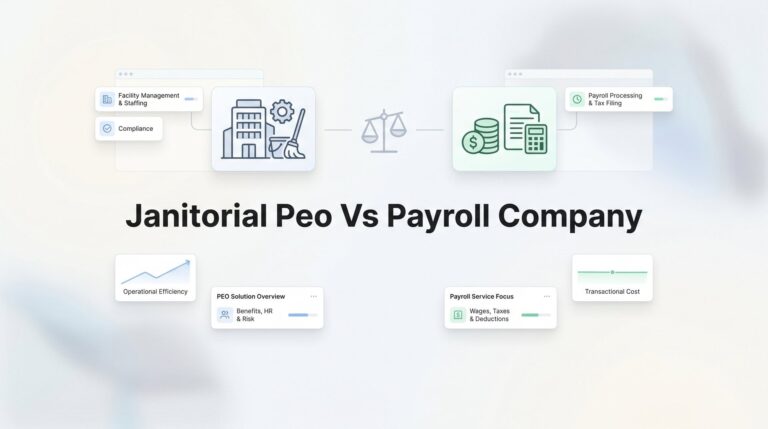
Choosing between a janitorial PEO vs payroll company depends on your business size, workers’ comp exposure, and HR needs — and this guide breaks down eight top solutions built for cleaning businesses. It covers both co-employment PEOs and standalone payroll providers, helping janitorial operators navigate high-risk classifications, employee turnover, and multi-location compliance to find the right fit.
Effective PEO transition planning for nonprofit organizations requires careful sequencing to protect grant compliance, maintain payroll accuracy, and satisfy board governance requirements without disrupting operations. This guide covers the specific audit steps, compliance considerations, and decision frameworks nonprofits need when moving to, between, or away from PEO providers under the constraints of restricted budgets and donor oversight.
PEO adoption before a private equity exit risk mitigation strategy is gaining traction among PE-backed companies looking to clean up HR liabilities before due diligence begins. Implementing a PEO 12-24 months ahead of a planned exit can resolve misclassified workers, inconsistent payroll filings, and benefits gaps — reducing buyer leverage and protecting valuations during the deal process.
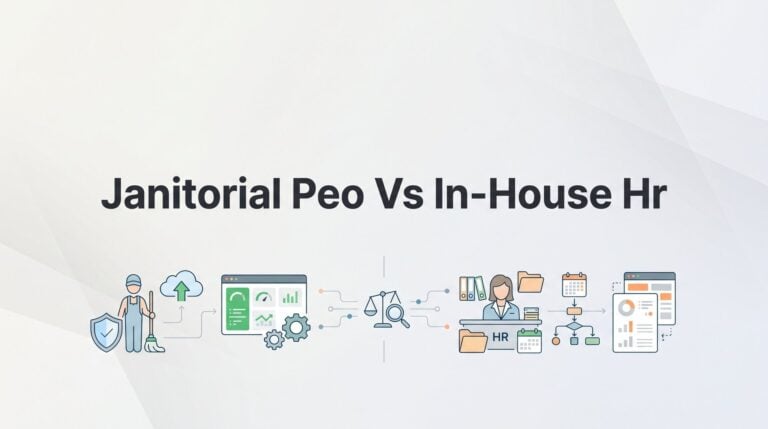
Janitorial companies face unique HR challenges—high turnover, multi-site scheduling, and elevated workers’ comp risks—that make the Janitorial PEO vs In-House HR decision far more complex than for typical businesses. This guide provides seven concrete decision strategies tailored specifically to cleaning operations, helping owners from small residential crews to large commercial janitorial companies determine which HR model best fits their operational realities and cost structure.

Switching to a PEO shifts workers’ comp and health insurance under master policies, creating significant changes in how insurance reserves appear on your balance sheet. Understanding the PEO impact on insurance reserve accounting matters because lenders, bonding companies, and potential acquirers all scrutinize these figures—and surprises at year-end or during a deal can have serious financial consequences.