
Managing the PEO open enrollment administration process requires careful coordination between your internal team and your PEO partner to avoid costly errors like enrollment mistakes and payroll deduction mismatches. This guide breaks down the real timeline, key decision points, and common failure spots so HR leads and business owners can navigate benefits enrollment without the chaos.

Janitorial companies face unique HR challenges — high turnover, complex workers’ comp classifications, and multi-site scheduling — that generic PEO solutions often mishandle. This guide evaluates the top janitorial PEO providers based on industry-specific criteria, helping cleaning business owners find a partner that accurately manages workers’ comp, variable shift payroll, and rapid-hire environments.
A PEO high mod rate stabilization strategy can help businesses in high-risk industries like construction and manufacturing break the cycle of inflated workers’ comp premiums and PEO rejections. This guide explains how to find the right PEO partner, set realistic expectations, and implement a concrete plan to gradually reduce your experience modification rate and regain leverage in coverage conversations.
Small janitorial businesses struggling to find HR support will benefit from this practical guide to securing a Janitorial PEO for 5 employees, covering seven targeted strategies to identify providers that genuinely serve micro-operations rather than sidelining them for larger clients. Learn how to avoid hidden minimums, mismatched pricing structures, and PEOs that treat small cleaning companies as an afterthought.
Businesses using a PEO face significant audit risk when bundled invoices aren’t properly disaggregated into payroll, benefits, taxes, and administrative fees for financial reporting. This practical guide delivers a step-by-step PEO expense treatment in audited financial statements risk mitigation strategy, helping companies avoid audit findings, restatements, and credibility issues with lenders and investors by correctly aligning legal co-employment structure with economic substance in their …
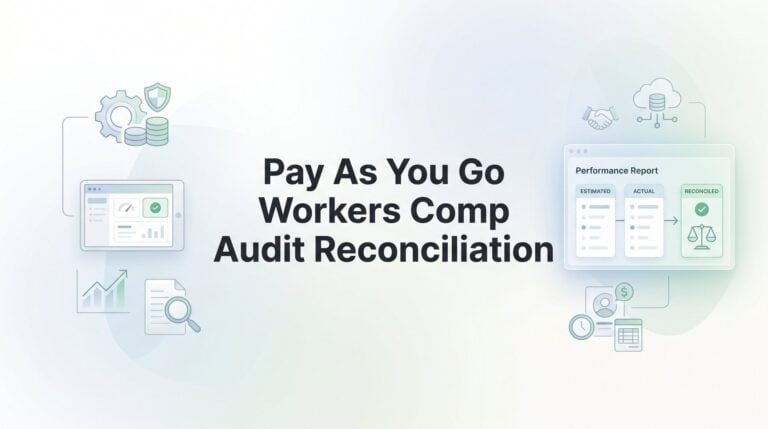
Pay as you go workers comp audit reconciliation still occurs even when premiums are tied to real-time payroll, and understanding why discrepancies happen can help business owners avoid unexpected year-end bills. This article breaks down the reconciliation mechanics, common sources of variance, and practical steps to minimize surprises under a pay-as-you-go structure.

Choosing a janitorial PEO for 15 employees requires careful evaluation since this headcount sits in a compliance-heavy middle ground without the budget for dedicated HR staff. This guide outlines seven targeted strategies to help small janitorial operations identify a PEO that addresses industry-specific challenges like high turnover, multi-site crews, shift scheduling, and workers’ comp classifications unique to commercial cleaning work.
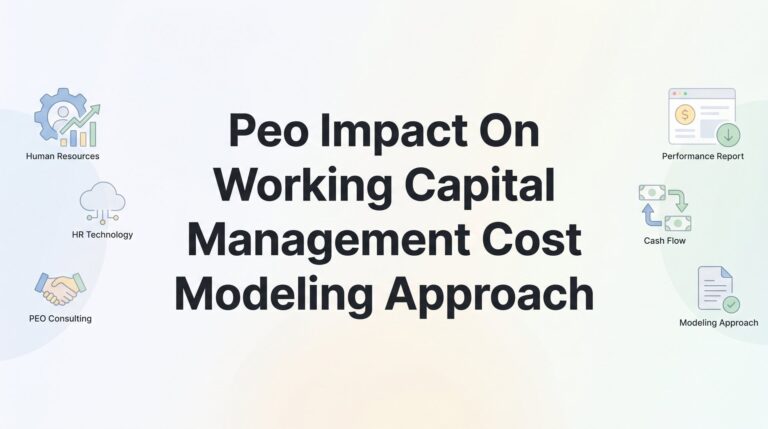
A PEO partnership doesn’t just reduce payroll costs — it fundamentally restructures when cash leaves your business. This guide to the PEO impact on working capital management through a cost modeling approach helps growing companies evaluate funding cadence shifts, benefits billing cycles, and tax remittance changes to build a complete financial picture beyond simple line-item comparisons.
A practical 6-step peo renewal clause negotiation strategy compliance framework helps business owners avoid costly auto-renewal traps and rate increases by auditing their current PEO agreement before leverage disappears. This guide walks through how to assess compliance obligations, identify negotiation windows, and approach renewal conversations with your PEO provider from a position of informed strength.

Choosing the right janitorial PEO for 25 employees requires a targeted approach that addresses industry-specific challenges like high turnover, workers’ comp exposure, and multi-site compliance. This guide outlines seven practical strategies to help janitorial companies at this critical growth stage evaluate PEO options that reduce operational burden without quietly eroding already-thin margins.
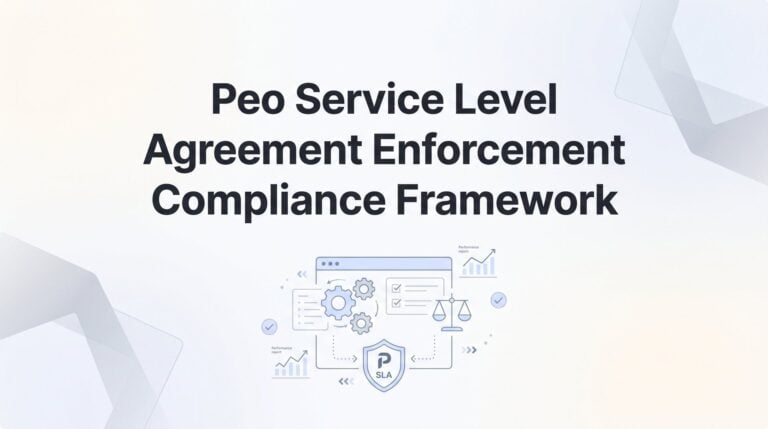
Signing a PEO agreement with strong SLA terms means little without a systematic enforcement mechanism to track violations and hold vendors accountable. This guide to PEO service level agreement enforcement compliance framework walks businesses through building the operational discipline needed to monitor payroll accuracy, response time commitments, and compliance filing deadlines—transforming paper guarantees into measurable, enforceable standards that actually protect your organization.
Businesses stuck in the assigned risk pool face inflated premiums with no negotiating leverage, but transitioning from assigned risk pool to PEO master policy cost modeling approach requires more than accepting a bundled quote at face value. This guide walks through how to calculate your true assigned risk costs, obtain comparable PEO quotes, and build a rigorous side-by-side financial model to verify whether the switch actually delivers savings before you commit.