

Janitorial companies with around 50 employees face a critical HR gap—too large for informal management, too small for a full internal team. This guide outlines seven targeted strategies for selecting a janitorial PEO for 50 employees that addresses industry-specific challenges like high turnover, workers’ comp exposure, and multi-site scheduling without adding unnecessary overhead costs.
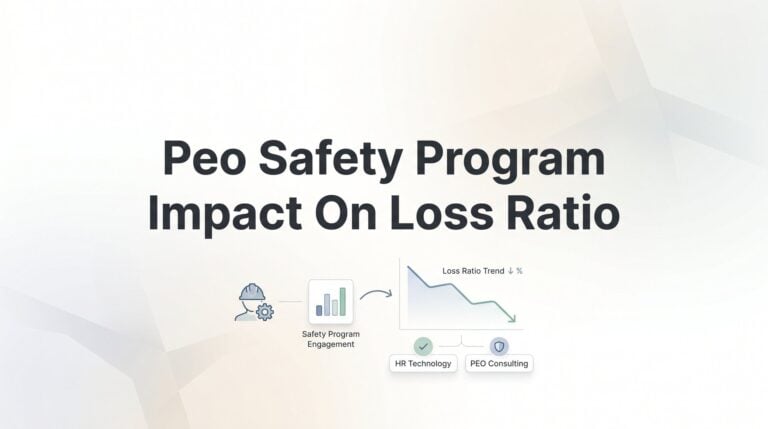
Your PEO safety program’s impact on loss ratio directly determines what you pay for workers’ comp — yet most businesses overlook this connection until renewal costs spike. This article explains the mechanical relationship between PEO safety program implementation and loss ratio outcomes, helping business owners make smarter PEO decisions before pricing adjustments catch them off guard.
The impact of PEO adoption on EBITDA margin extends well beyond simple benefits cost savings, affecting multiple operating line items that collectively determine whether the arrangement improves or dilutes your actual margin. This analysis breaks down each specific cost and savings lever a PEO touches, helping business owners and operators build an accurate net picture before committing to a structure that directly influences valuation and exit outcomes.
The most popular advice on OSHA compliance is also the most dangerous. It tells employers to “partner with a PEO and let…
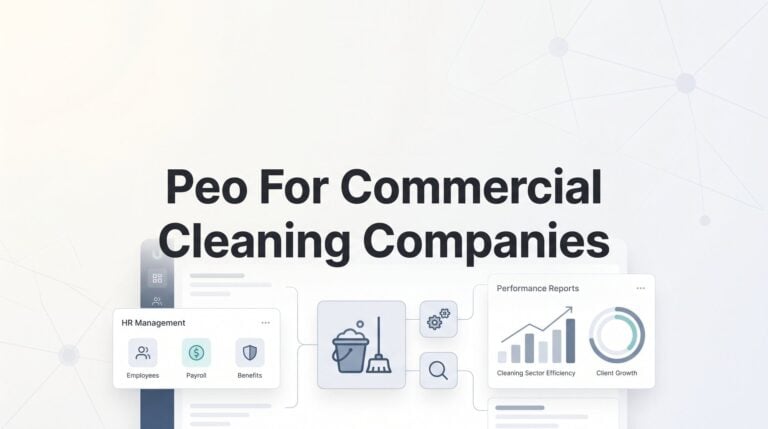
Choosing the right PEO for commercial cleaning companies means finding a provider that handles high employee turnover, workers’ comp claims, multi-site payroll, and complex compliance requirements — not one built for office-based businesses. This guide breaks down the seven best PEOs specifically suited to janitorial and facilities operations in 2026.
Technology companies struggling with high health insurance costs despite low-risk workforces can leverage insurance cost control using a PEO for technology companies by joining a larger employee pool that unlocks enterprise-level benefits pricing. This approach helps smaller tech firms compete for top talent by offering comprehensive medical, dental, and vision coverage at rates typically reserved for large corporations.
Understanding PEO benefits compliance reporting requirements is critical for business owners who assume their PEO handles everything—because the co-employment model creates shared responsibilities that leave specific filing obligations on your plate. This guide breaks down exactly which reporting requirements fall to you versus your PEO, where compliance gaps commonly occur, and what you need to actively verify to avoid IRS notices or DOL audits.
Finding the best PEO for commercial cleaning companies requires looking beyond generic providers to those with real experience handling janitorial risk classes, high employee turnover, and variable shift payroll. This guide evaluates seven top PEOs based on workers’ comp coverage strength, scheduling flexibility, and onboarding efficiency specifically for commercial cleaning operations.
The PEO cost structure for logistics companies is significantly more complex than other industries due to high-risk workers’ comp classifications, DOT compliance requirements, seasonal workforce fluctuations, and mixed employee types spanning drivers, dock workers, and office staff. Understanding these specific cost drivers can mean the difference of tens of thousands of dollars annually when evaluating and negotiating PEO pricing.
A well-designed PEO strategy for rapid workforce expansion helps fast-growing companies scale from small teams to large ones without payroll breakdowns, compliance gaps, or benefits delays. This guide explains how to select and structure a PEO partnership with growth in mind from the start, so your HR infrastructure supports hiring velocity instead of slowing it down.
Choosing the right janitorial PEO for 100 employees requires a targeted approach, since many providers avoid the industry’s high workers’ comp risks and turnover challenges. This guide outlines seven strategies to help mid-sized cleaning companies identify PEO partners that genuinely understand janitorial operations and offer competitive pricing, benefits, and HR support without hiding costs in their fees.
A thorough PEO termination clause risk analysis reveals what most business owners overlook when signing PEO agreements: costly exit provisions including extended notice windows, liquidated damages clauses, and restricted data access that only surface when you’re ready to leave. Understanding these contract terms before signing can prevent five-figure surprises and ensure a clean transition when your business outgrows its current provider.