

Businesses using PEO co-employment models often face fragmented payroll data across multiple systems, creating audit risks, tax liability exposure, and cash flow blind spots. This guide outlines a practical PEO payroll consolidation for financial reporting risk mitigation strategy, walking through operational steps to unify payroll data into a single, accurate reporting framework without overhauling your existing systems.
Multi-location retailers face unique PEO compliance risks that go beyond standard labor law management, including conflicting state statutes, municipal ordinances, and workers’ comp classifications across jurisdictions. This guide examines what actually goes wrong when retailers over-rely on PEO arrangements, how service agreement gaps create dangerous blind spots, and what multi-location operators need to verify before assuming compliance coverage is in place.

Finding the best PEO for subcontractors requires more than comparing brand names — it demands evaluating whether a provider can handle project-based crews, fluctuating headcounts, multi-state job sites, and shifting workers’ comp classifications specific to your trade. This guide offers seven practical strategies to help subcontractors assess PEO providers based on their actual operational needs rather than generic features.
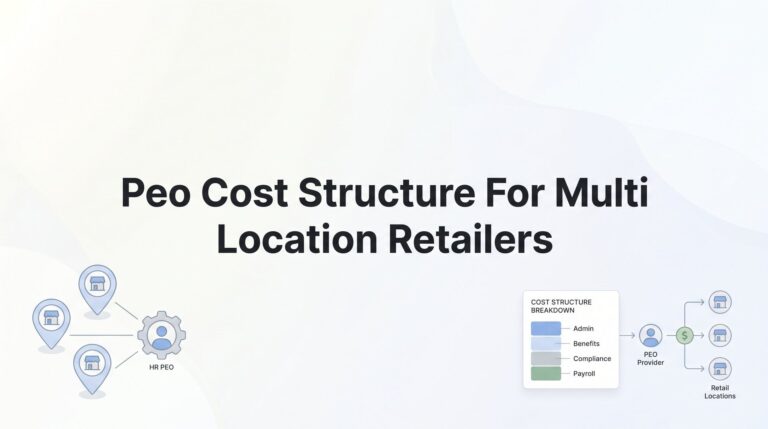
Multi-location retailers face uniquely complex PEO cost structures driven by workforce volatility, multi-state compliance requirements, and seasonal hiring patterns that standard pricing models fail to account for. Understanding the true PEO cost structure for multi-location retailers—including hidden contract terms that penalize fluctuating headcounts—is essential before signing with any provider.
Building a PEO cost allocation across multiple business units compliance framework requires more than splitting invoices — it demands a structured, audit-ready methodology that accurately distributes admin fees, workers’ comp premiums, benefits costs, and payroll taxes by division. This guide provides finance teams with a repeatable system that withstands regulatory scrutiny, prevents tax filing errors, and supports accurate profitability analysis across entities operating in different states…
Subcontractors weighing PEO vs in-house HR will find seven practical decision frameworks here, covering cost modeling, workers’ comp exposure, compliance burden, and workforce flexibility to help determine the right HR infrastructure based on their specific headcount, risk profile, and growth trajectory.
PEO dispute resolution provisions explained clearly can mean the difference between having real recourse and being locked into a provider-friendly process when billing errors, workers’ comp mishandling, or payroll tax mistakes occur. Before signing any PEO agreement, understanding and negotiating these clauses—covering arbitration terms, venue, remedies, and cost allocation—protects your business from losing leverage at the exact moment you need it most.
This guide evaluates the top subcontractors PEO providers based on criteria that actually matter for trade businesses—workers’ comp classification expertise, variable workforce payroll flexibility, multi-state compliance, and seasonal contract terms—helping subcontractors find a PEO built for their operational realities rather than a generic small business.
Building a PEO adoption before private equity exit compliance framework requires more than operational setup — it demands documentation, contract clarity, and transition planning that satisfies buyer due diligence. This tactical guide walks companies through structuring their PEO relationship to withstand M&A scrutiny, prevent deal delays, and avoid costly indemnification clauses that erode exit proceeds.
Many business owners who partner with PEOs discover too late that peo liability allocation confusion can be costly — the co-employment model splits employer responsibilities, but not in the ways most assume. This guide clarifies exactly which liabilities remain yours versus the PEO’s, helping you avoid expensive surprises when workplace injuries, wrongful termination claims, or wage violations arise.
Subcontractors navigating the Subcontractors PEO vs Payroll Company decision face unique challenges—fluctuating crew sizes, multi-state work, and worker classification risks that generic HR solutions overlook. This guide compares eight leading PEO and payroll platforms to help subcontractors choose the right model based on their specific risk exposure, workforce size, and workers’ comp needs.
Many PEO clients struggle with financial reporting opacity — unclear invoices that bundle fees, workers’ comp costs, and benefits charges without meaningful breakdown. This guide walks you through how to conduct a PEO financial reporting opacity review, identifying what questions to ask, which line items to scrutinize, and how to determine whether your provider’s billing structure is genuinely transparent or simply repackaged ambiguity.