
Many business owners assume signing with a PEO transfers most employment liability away from their company, but the reality is far more nuanced. With PEO risk transfer myths explained, this guide clarifies exactly which risks shift to the PEO—like workers’ compensation and payroll compliance—and which responsibilities, including discrimination claims and workplace safety decisions, remain firmly with the business owner.

Multi-state workers’ comp consolidation through a PEO replaces multiple separate state policies, carriers, and renewal dates with a single master policy—reducing administrative complexity and compliance risk. This practical guide explains how the consolidation process actually works, what tradeoffs to evaluate when choosing a PEO, and how experience mod calculations and carrier relationships affect whether consolidation genuinely saves your business money.

Using a PEO for distributed workforce management can dramatically reduce the HR complexity that comes with multi-state employment, but only when structured strategically. This guide outlines seven practical strategies to help businesses navigate cross-state compliance, tax registrations, benefits administration, and employment law requirements while avoiding the most costly operational mistakes.
A structured PEO service inconsistency analysis helps businesses distinguish between temporary performance hiccups and systemic operational failures before those gaps create costly compliance, payroll, or HR problems. This guide walks through how to formalize your evaluation process, identify recurring service patterns, and make informed decisions about whether your PEO relationship is worth salvaging or replacing.
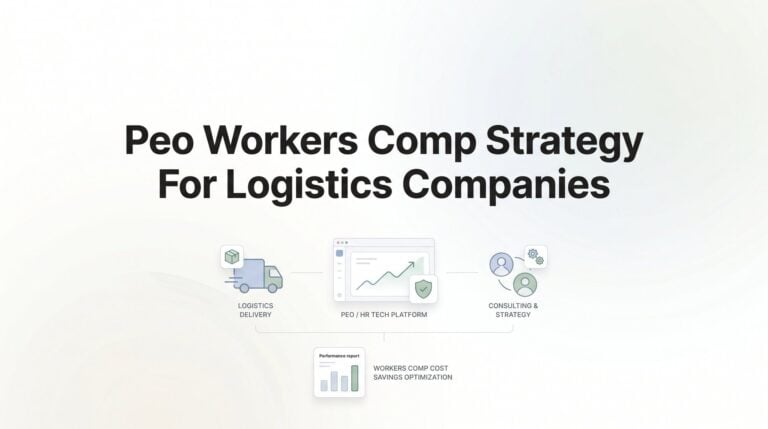
Logistics companies struggling with high EMR rates and complex NCCI class codes need a specialized PEO workers comp strategy for logistics companies that accurately prices warehouse, trucking, and clerical risks under a master policy. This guide evaluates eight PEO providers that genuinely understand logistics risk, helping companies access group rates and avoid costly misclassification errors that drive up premiums.
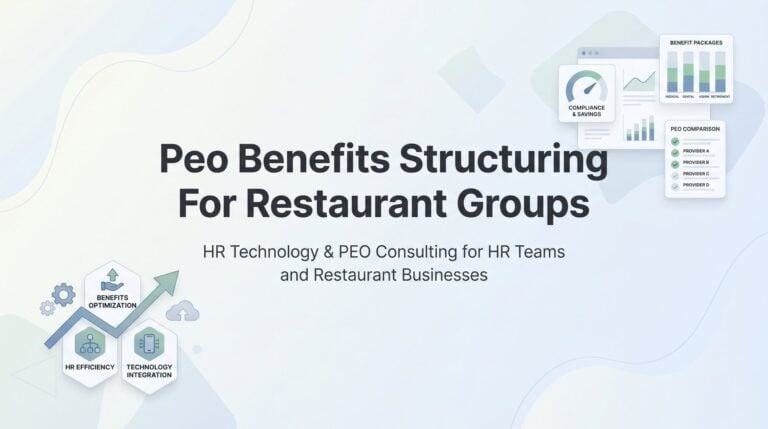
PEO benefits structuring for restaurant groups requires a tailored approach that accounts for tipped employees, variable hours, multi-location compliance, and high turnover rates unique to the foodservice industry. This step-by-step guide walks restaurant group operators through how to correctly configure PEO benefits from the start, avoiding costly mistakes that arise from generic plan designs that ignore the realities of restaurant workforce management.
A PEO audit penalty case review can expose business owners to unexpected liability when compliance gaps surface through IRS notices, state labor audits, or workers’ comp reviews. This guide breaks down how the co-employment model creates audit exposure, where responsibility actually falls between you and your PEO, and what steps to take before—or after—a penalty notice arrives.
A structured PEO medical plan comparison framework goes beyond monthly premiums to evaluate the factors that truly drive costs and coverage quality, including claims experience allocation, network access, and renewal dynamics. This guide outlines seven concrete strategies to help business owners accurately assess PEO medical offerings and avoid the costly coverage gaps that surface-level comparisons typically miss.
PEO service oversight failures are more common than most business owners realize, and when payroll errors, compliance gaps, or misclassified employees occur, the financial consequences typically fall on the employer rather than the PEO. This guide breaks down where oversight breakdowns originate, which failures create the greatest legal and financial exposure, and how to implement proactive verification practices to catch problems before they become costly.
Businesses trapped in the assigned risk pool face inflated premiums and limited options, but transitioning from assigned risk pool to PEO master policy compliance framework requires more than simply signing an agreement. This guide covers the critical compliance checkpoints, documentation requirements, and timing considerations that determine whether the transition reduces costs and eliminates coverage gaps or creates new audit complications.

PEO benefits structuring for manufacturing firms requires a tailored approach that accounts for shift work, high injury exposure, skilled labor retention, and multi-site complexity. This guide outlines seven targeted strategies to help manufacturers move beyond generic benefit plans and build PEO-managed packages that address the real operational and workforce challenges unique to the industry.
A PEO regulatory scrutiny review should be a core part of your vendor evaluation process, not an afterthought. Because co-employment means your business shares liability for payroll taxes, workers’ comp, and employment filings, choosing a PEO that has passed rigorous regulatory oversight protects you from financial and legal exposure if your provider mismanages those responsibilities.