
Business owners operating under a PEO arrangement may be unknowingly exposed to significant financial risk from large workers’ comp claims, as co-employment doesn’t automatically shield your balance sheet. This guide outlines a practical PEO catastrophic claim exposure mitigation risk mitigation strategy, explaining how retroactive rate adjustments, experience modification spikes, and cost-sharing provisions can still impact your business — and what you can do to protect against them.
A financial due diligence review of PEO contracts requires examining more than headline pricing—layered cost structures, renewal clauses, variable fee schedules, and benefits allocation language often hide unexpected charges. This guide walks business owners through seven critical steps to understand where money actually flows, what triggers cost increases, and where negotiating leverage exists before signing.
A PEO profit structure investigation reveals how bundled pricing and vague line items obscure the multiple revenue streams PEOs use — from workers’ comp markups to health plan margins — that directly impact what your business pays. This breakdown helps business owners identify hidden costs and conduct proper due diligence before signing or renewing a PEO contract.
The most common advice on a search like professional employer organization near me sounds sensible and leads buyers in the wrong direction.…
Benefits harmonization across a multi-state workforce is the complex process of creating consistent, equitable employee benefits regardless of location — a challenge most growing companies face reactively after expanding into multiple states with mismatched health plans and coverage gaps. This piece breaks down what it actually takes to align benefits strategically while navigating state regulations, carrier limitations, and compliance requirements.
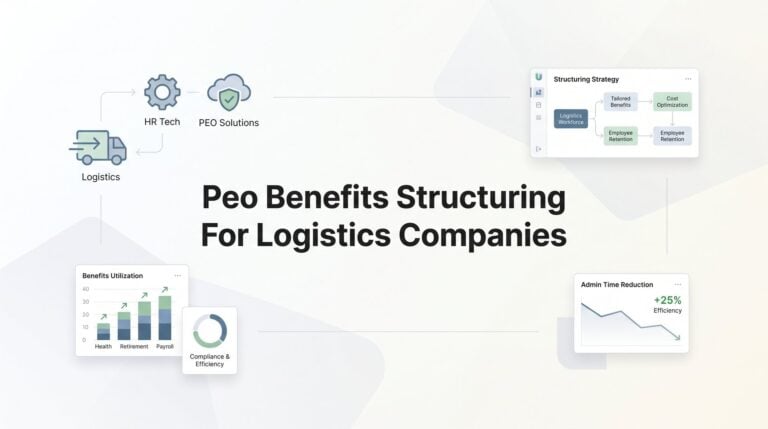
Logistics companies managing mixed workforces of drivers, warehouse staff, and office employees face unique challenges with PEO benefits structuring for logistics companies, including DOT compliance, multi-state workers’ comp, and tiered coverage needs. This guide reviews the 8 best PEO providers that specialize in handling these complexities rather than applying generic, one-size-fits-all benefit solutions to high-risk, distributed logistics workforces.
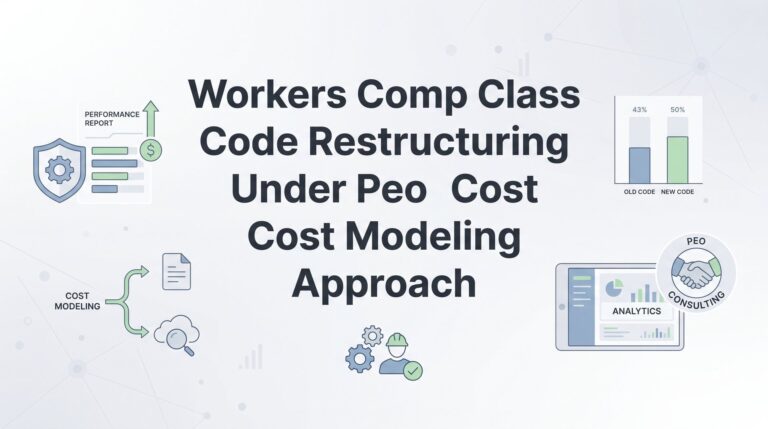
Workers’ comp class code restructuring under a PEO cost modeling approach offers businesses with mixed job roles a strategic opportunity to correct misclassified employees, reduce premium costs, and gain transparency into per-code pricing. This guide explains how to audit dual-duty roles, align classifications accurately under a PEO’s master policy, and avoid bundled pricing traps that obscure your true workers’ comp cost basis.

A thorough peo data ownership clauses review cost modeling approach helps business owners identify hidden exit liabilities before signing — including data portability restrictions, export fees, and format limitations that rarely appear on monthly invoices but can create significant lump-sum costs when transitioning away from a PEO provider.
Following a PEO integration checklist after acquisition helps HR and operations leaders navigate the high-stakes mechanics of workforce consolidation—from auditing change-of-control clauses and aligning payroll timelines to avoiding costly COBRA violations and tax penalties. This guide outlines seven chronological steps to ensure nothing critical falls through the cracks when you suddenly inherit another company’s employees, benefits, and PEO relationships.
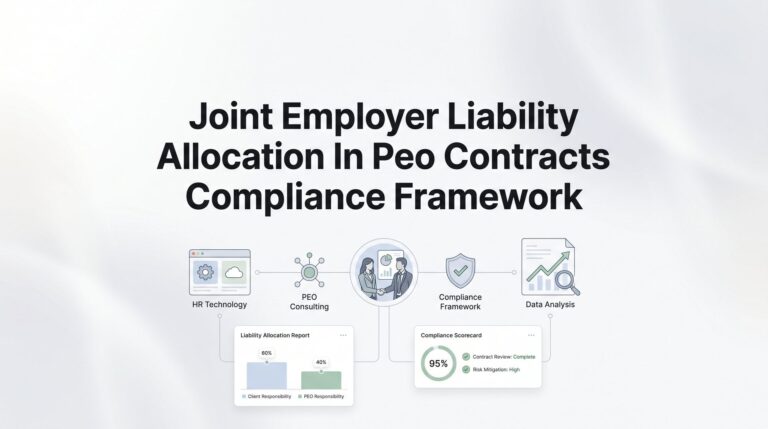
Understanding joint employer liability allocation in PEO contracts compliance framework is essential for business owners who assume outsourcing HR transfers all legal risk. This guide explains how liability is actually divided between employers and PEOs when wage claims, OSHA violations, or discrimination lawsuits arise, identifying common contract gaps that leave businesses unexpectedly exposed to significant financial and legal consequences.
PEO service level agreement enforcement financial impact analysis reveals that SLA failures silently drain operating budgets through absorbed labor costs, tax penalties, idle onboarding time, and compliance fines. This guide shows business owners how to systematically track and quantify these hidden costs to gain real leverage in PEO contract renewals and accountability conversations.
Small businesses with fewer than 50 employees can access the same health insurance stability and plan quality as large corporations by leveraging health plan pooling advantages under a PEO, which combines your workforce into a larger risk pool to reduce premium volatility, unlock richer plan designs, and protect against the financial impact of high-cost claims—though the actual value depends heavily on how each PEO structures its pooling arrangement.