
Large deductible workers comp through a PEO can offer significant premium savings for larger businesses willing to retain more risk, but the arrangement involves complex mechanics that don’t always match the sales pitch. This guide breaks down how these programs actually work inside a PEO structure, when they make financial sense, and what contract terms to scrutinize before committing.
Small businesses considering a PEO should understand the hidden tradeoffs of shared coverage before committing. This article examines seven specific PEO insurance pooling drawbacks—including limited pricing transparency, loss of claims control, and how other companies’ risk profiles can quietly affect your costs—helping business owners make a more informed decision about whether pooled coverage aligns with their workforce and financial goals.
A practical peo renewal clause negotiation strategy for business owners who want to avoid surprise rate increases, missed opt-out windows, and unfavorable lock-in terms at contract renewal time. This step-by-step guide covers how to identify leverage points, time your negotiations effectively, and renegotiate terms whether you’re approaching your first renewal or have been through the process before.
Understanding the PEO cost structure for construction companies requires looking beyond generic pricing guides, as factors like trade mix, workers’ comp exposure, claims history, and project-based workforce fluctuations drive quotes in ways unique to the industry. This breakdown explains exactly what’s influencing your PEO pricing, what to watch for in the fine print, and how to determine whether your quote is competitive.
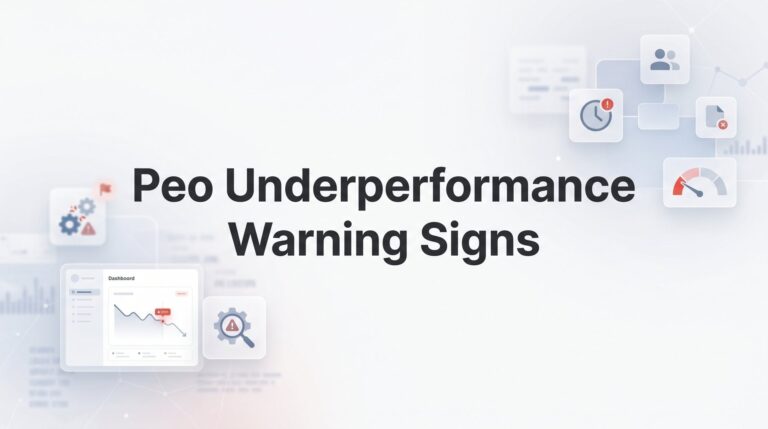
Catching PEO underperformance warning signs early requires independent visibility into your vendor’s metrics before slow drift becomes costly damage. This guide covers nine tools that give businesses their own data on payroll accuracy, benefits costs, compliance quality, and HR responsiveness—so you can identify problems months before contract leverage disappears.
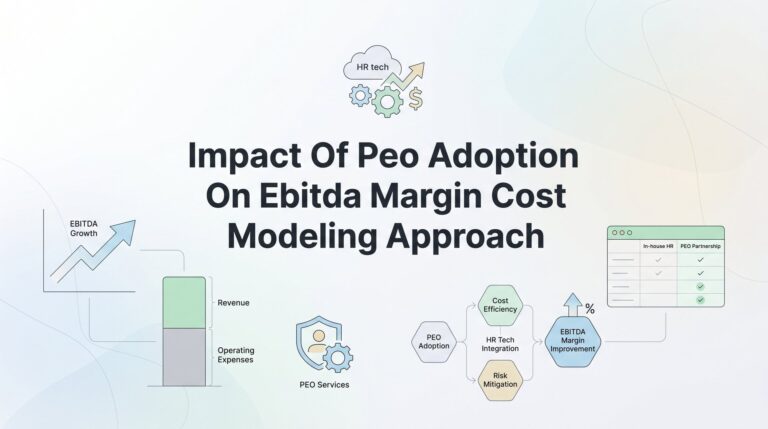
This article examines the impact of PEO adoption on EBITDA margin through a cost modeling approach, showing business owners how to move beyond surface-level fee comparisons to capture the full financial picture—including workers’ comp savings, benefits cost shifts, HR headcount reductions, and eliminated compliance spend—across the line items that actually influence board-level reporting and valuation.
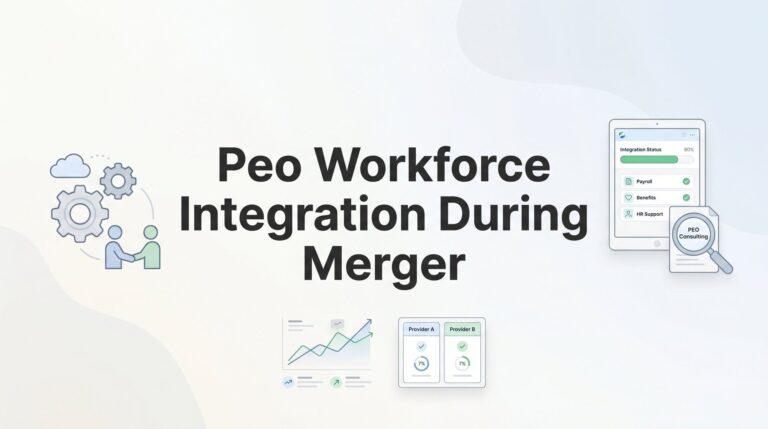
PEO workforce integration during a merger requires careful planning to avoid benefits gaps, compliance failures, and employee attrition. This step-by-step guide walks business owners through consolidating co-employment structures, reconciling benefits plans, and managing state compliance requirements when combining two organizations — whether one or both companies are currently working with a PEO.
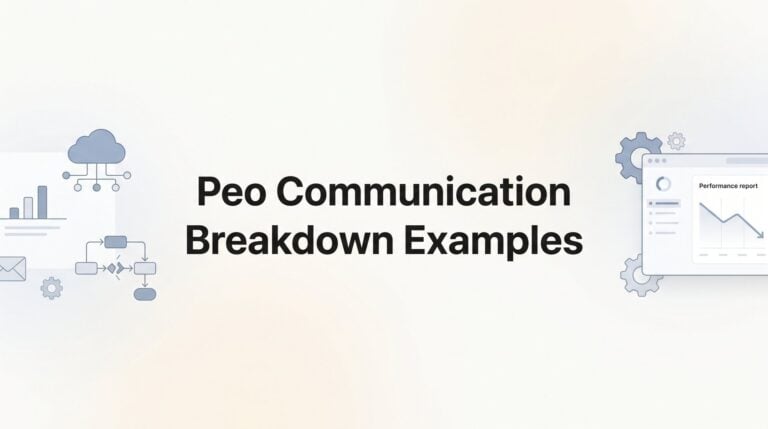
Discover seven common PEO communication breakdown examples that silently damage business relationships — from missed open enrollment deadlines to after-the-fact compliance updates. Understanding these predictable patterns helps businesses ask better questions during PEO selection and establish clearer expectations that prevent small miscommunications from escalating into costly trust failures or provider switches.
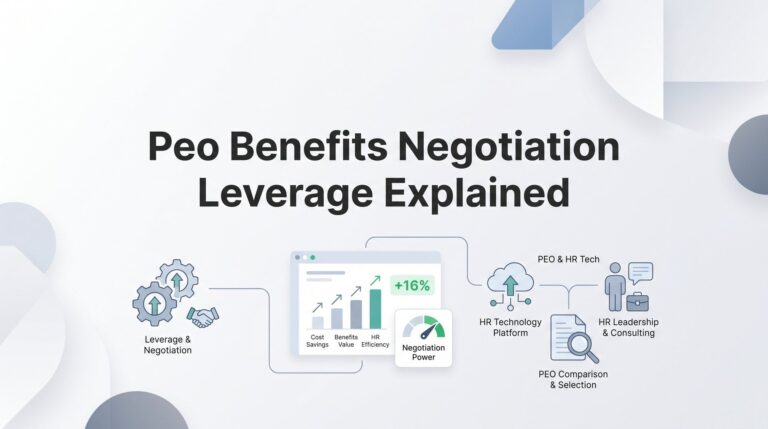
PEO benefits negotiation leverage explained: PEOs don’t just negotiate better rates—they fundamentally reclassify your business in insurers’ eyes by pooling employees across hundreds of companies, changing your risk profile entirely. This breakdown covers how that pooling mechanism actually works, where cost savings realistically appear, and how to evaluate whether a specific PEO’s claimed leverage is genuine before signing a contract.
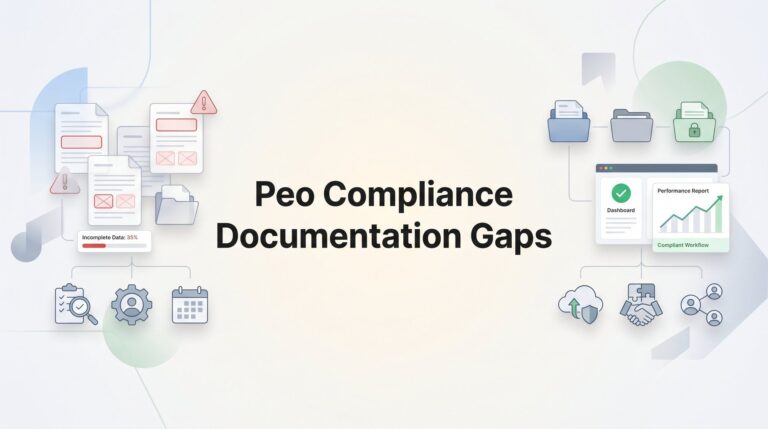
PEO compliance documentation gaps often emerge from unclear service agreements and co-employment ambiguity rather than outright negligence, leaving businesses exposed during audits, termination claims, and workers’ comp disputes. This guide identifies the seven most common documentation gaps in PEO relationships and provides actionable strategies to close them before they trigger costly legal or regulatory consequences.

PEO workforce standardization across subsidiaries helps multi-entity businesses eliminate inconsistent benefits, fragmented HR systems, and compliance gaps that emerge when managing multiple acquired companies. A PEO creates a unified employment infrastructure — standardizing onboarding, payroll, and benefits across all entities — reducing administrative burden and compliance risk while improving employee experience at the portfolio level.

A common trigger for revisiting the retirement plan is growth. A company gets to 40, 60, or 150 employees, recruiting gets harder,…