
Understanding PEO master policy risk pooling mechanics reveals how your workers’ comp and health insurance premiums are actually calculated beneath the per-employee rate you see on invoices. This in-depth breakdown explains how master policy structures, risk pool allocation, and pooling arrangements directly influence what your business pays now and after you exit a PEO arrangement.
Managing multiple entities under one PEO creates hidden PEO multi entity coordination risks that rarely surface at contract signing but emerge during audits, renewals, or subsidiary spin-offs. This article outlines seven specific operational and financial pitfalls—from misaligned EINs to undifferentiated contracts—that quietly erode budgets for businesses operating holding structures or acquisition-driven growth.
Businesses stuck in the assigned risk pool pay premium penalties that compound over time, making a thorough transitioning from assigned risk pool to PEO master policy financial impact analysis essential before switching. This guide breaks down where real savings originate, what costs offset them, and how to determine whether a PEO arrangement genuinely improves your financial position or simply restructures the same expenses differently.
A PEO ROI analysis for technology companies requires a different framework than generic calculators provide, since tech firms face unique cost structures including high benefits expectations, salaried knowledge workers, and multi-state compliance complexity. This guide walks through how to accurately calculate whether a PEO partnership delivers real financial value for your specific technology business.
PEO contract ambiguity analysis reveals how vague service descriptions, undefined fee triggers, and fuzzy termination terms can leave businesses at a costly disadvantage when disputes arise. This guide outlines seven practical strategies to identify and resolve unclear contract language before signing, helping you negotiate from an informed position rather than discovering gaps after something goes wrong.

Companies that regret using a PEO typically don’t regret the concept itself — they regret the decisions made before signing. This diagnostic guide breaks down the predictable patterns behind PEO dissatisfaction and provides practical guidance to help businesses avoid the same mistakes, whether they’re currently evaluating a PEO or questioning an existing relationship.
Workers’ comp class code restructuring under a PEO risk mitigation strategy requires a different approach than standard policies, since the PEO controls the master workers’ comp policy and class code assignments. This guide walks business owners through auditing payroll data, correcting employee misclassifications, and negotiating with their PEO to reduce inflated premiums and strengthen audit documentation.
Understanding the key PEO client dissatisfaction drivers before signing can save your business from costly mistakes and operational headaches. This guide breaks down the seven most common reasons businesses leave their PEO—from mismatched expectations to poor execution—and provides concrete screening steps to identify red flags during the evaluation phase before you commit to a provider.

Business owners considering a PEO arrangement should understand the real risks of a PEO master workers’ comp policy before signing—including loss of claims history ownership, limited carrier flexibility, and complex exit terms that rarely get explained upfront. This practical breakdown covers the structural tradeoffs so you can make an informed decision rather than discovering the fine print after you’re already locked in.
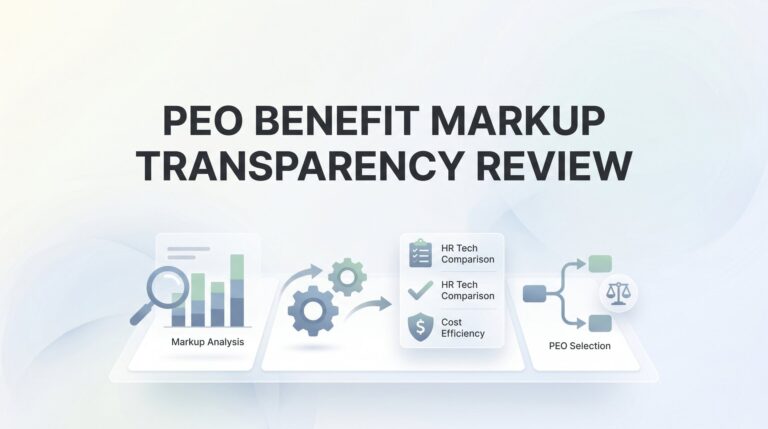
A practical peo benefit markup transparency review guide for business owners who want to understand exactly what they’re paying for benefits inside a PEO arrangement. This walkthrough covers where markup typically hides in bundled pricing, what questions to ask your PEO, and how to separate legitimate administrative fees from excess margin added on top of your actual health insurance costs.
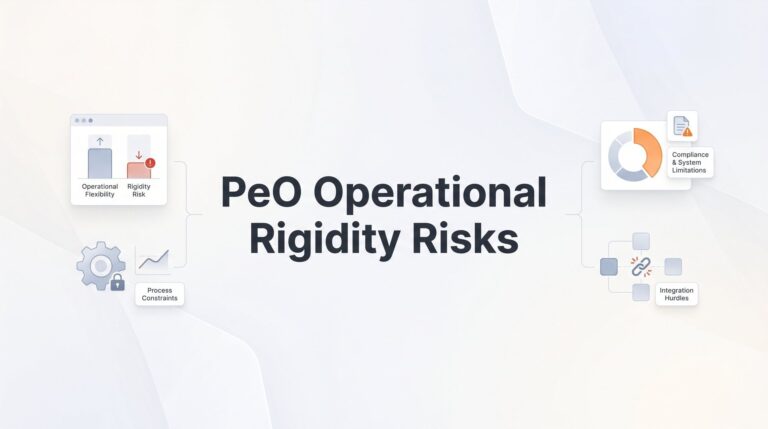
PEO operational rigidity risks can quietly constrain your business long after you’ve signed the contract, limiting your ability to restructure teams, adopt new compensation models, or integrate unsupported systems. This guide identifies seven common friction points where PEO arrangements lock businesses into inflexible patterns, offering practical strategies to negotiate smarter agreements and avoid operational constraints before they become costly problems.
Businesses with significant payroll and strong claims history may reduce workers’ comp costs through a PEO large deductible program, but the large deductible workers comp through PEO cost modeling approach requires careful analysis of retained losses, collateral requirements, and administrative surcharges—not just the headline premium—before committing to the structure.