
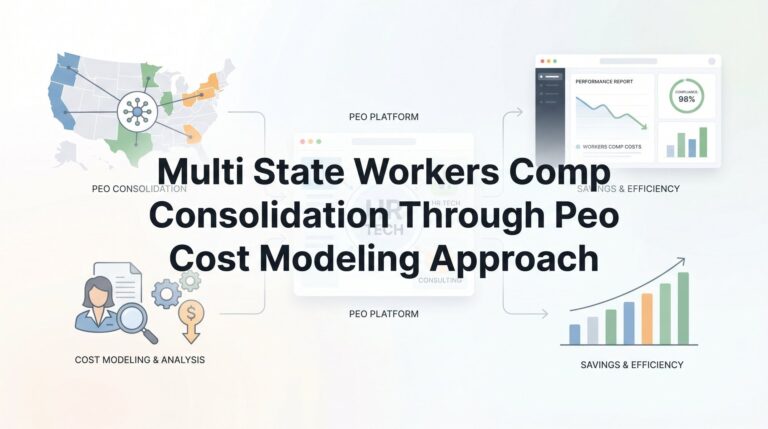
Multi-state workers’ comp consolidation through a PEO cost modeling approach gives employers running operations across multiple states a structured framework to evaluate whether centralizing under a single master policy actually saves money. This guide walks through building a real cost model using your specific numbers—comparing current carrier costs, experience mods, audit exposure, and administrative burden against PEO pricing—so you can make a data-driven decision rather than relying on a…
Reviewing a PEO master service agreement requires careful attention to liability, termination clauses, and benefits terms that most business owners overlook. This guide covers nine specialized tools—from AI contract analyzers to PEO comparison platforms—that serve as a practical PEO master service agreement checklist, helping HR leaders and business owners identify costly provisions and negotiate better terms before signing.
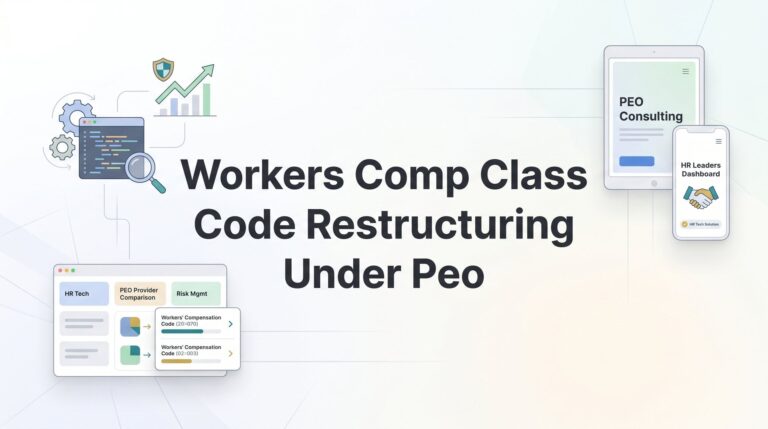
Workers’ comp class code restructuring under a PEO requires proactive auditing of job roles and payroll allocation before the transition to ensure accurate code mapping. This guide walks employers through how to review existing classifications, challenge mismatched assignments, and negotiate correct code structures with their PEO to avoid overpaying on premiums.
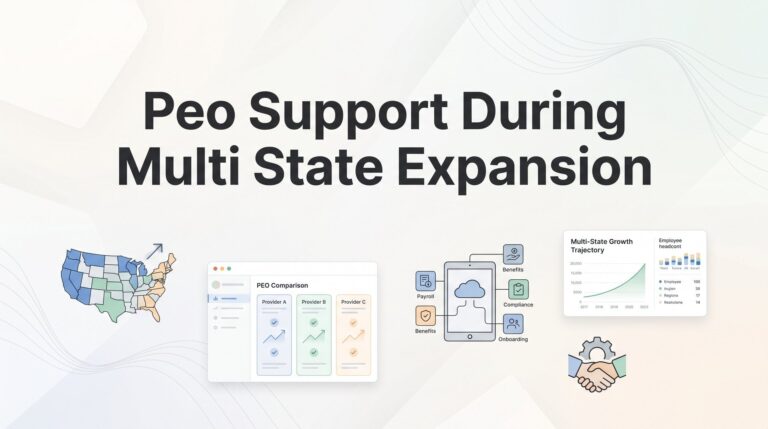
PEO support during multi-state expansion can simplify compliance, tax registration, and workers’ comp requirements when hiring across state lines—but coverage varies significantly by provider. This guide breaks down what PEOs actually handle in multi-state scenarios, where gaps commonly appear, and how to evaluate whether a provider is genuinely equipped for your expansion before you commit.
Technology companies competing for top engineering talent can leverage PEO benefits structuring for technology companies to access Fortune 500-caliber health plans and perks without the HR infrastructure of a large enterprise. This guide evaluates the 8 best PEO providers specifically suited for tech firms—from early-stage startups to scaling SaaS companies—based on benefits quality, tech integrations, and flexibility for distributed teams.
This financial impact analysis examines benefit fiduciary liability under the PEO model, breaking down how co-employment arrangements affect legal and financial responsibility when benefit plan compliance gaps arise. Business owners discover that fiduciary liability transfer is rarely automatic or complete, making it critical to understand exactly what protection a PEO arrangement actually provides versus what’s assumed.
Companies using a PEO across multiple business units often receive a single bundled invoice that makes accurate cost tracking nearly impossible. This guide provides a practical, step-by-step approach to building a PEO cost allocation across multiple business units cost modeling approach, showing finance teams how to break apart bundled line items and assign expenses to the correct divisions based on actual cost drivers rather than simple headcount splits.
Manufacturing firms struggling with high workers’ comp premiums, health insurance costs, and OSHA-related liability can leverage insurance cost control using a PEO to access large-group buying power previously unavailable to smaller operations. This article outlines seven specific strategies that help manufacturers reduce their second or third largest P&L expense by pooling employees into larger risk groups for significantly better rates.
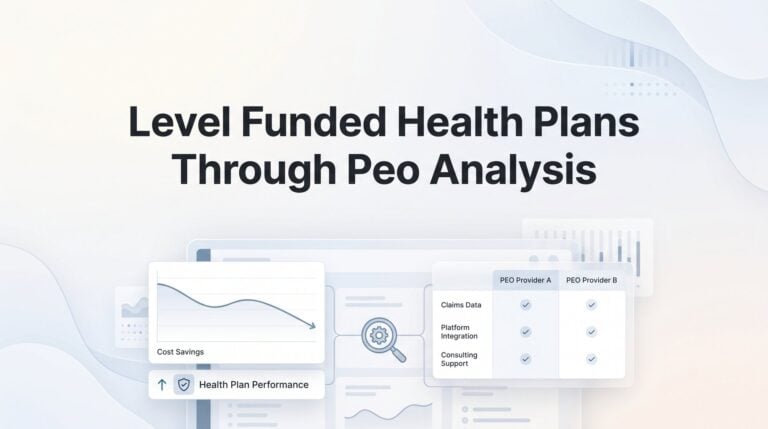
A thorough level funded health plans through PEO analysis that breaks down how this middle-ground coverage option actually works within co-employment structures, including the financial mechanics, surplus handling, and hidden risks that business owners need to understand before signing a PEO contract.
A proper PEO ROI analysis for logistics companies requires a framework built around the industry’s unique cost structure—multi-class workers’ comp codes, CDL compliance, seasonal hiring spikes, and multi-state regulations—not a generic calculator that ignores these variables. This guide walks logistics operators through a step-by-step methodology to determine whether a PEO partnership delivers measurable financial value for their specific operation.
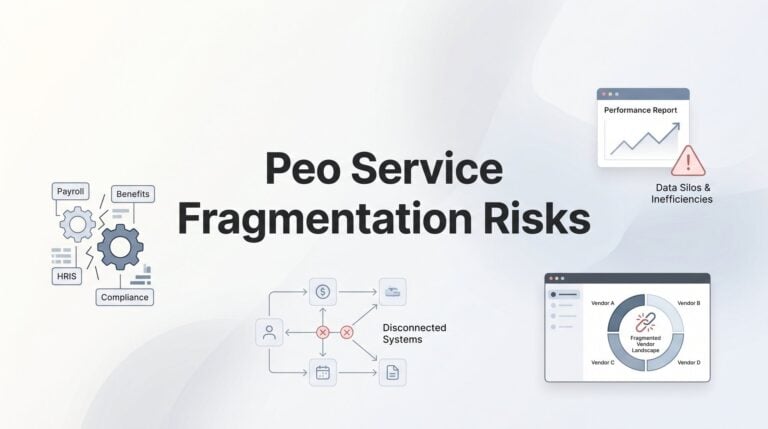
Managing PEO service fragmentation risks becomes critical when HR operations span multiple vendors, creating compliance gaps, duplicate records, and unclear accountability. This guide reviews eight tools designed to prevent or resolve fragmentation—from PEO selection platforms that identify coverage gaps upfront to integration solutions that synchronize disconnected systems already in place.
A PEO termination clause risk analysis cost modeling approach helps businesses avoid costly surprises when exiting a PEO contract, including hidden penalties, missed notice windows, workers’ comp liabilities, and data fees. By modeling total exit costs before signing—not just ongoing fees—companies can negotiate smarter terms, plan transitions strategically, and avoid being trapped in underperforming relationships simply because leaving costs more than staying.