

Enterprise finance teams often underestimate PEO cost complexity by treating bundled fees as a single budget line item, leading to costly variances at scale. This guide explains how to build a PEO enterprise budgeting calculator using your actual cost data—modeling layered expenses like admin fees, workers’ comp, benefits pass-throughs, and state-specific taxes across large, multi-state workforces for more accurate financial forecasting.
A PEO HR risk oversight committee is an internal governance structure that ensures compliance risks don’t fall through the cracks after outsourcing HR to a professional employer organization. This article explains how to build and run one effectively, covering committee composition, core responsibilities, and why active oversight remains essential even when a PEO manages your payroll and benefits.
Construction companies facing volatile workers’ comp costs, complex NCCI class codes, and high experience modification rates can leverage PEO for construction advanced workers comp structuring to pool employees into larger risk groups, potentially lower mod rates, and reduce administrative burden. This practical guide covers auditing class codes, negotiating deductibles, managing loss-sensitive programs, and vetting PEOs that actually specialize in construction — helping owners make smarter, …
Understanding the PEO layered HR control environment is critical for businesses that assume signing a PEO agreement transfers all HR responsibility—it doesn’t. This breakdown clarifies exactly which HR functions the PEO owns, which remain with the employer, and how to manage the often-overlooked shared responsibility zones that leave compliance gaps when left undefined.
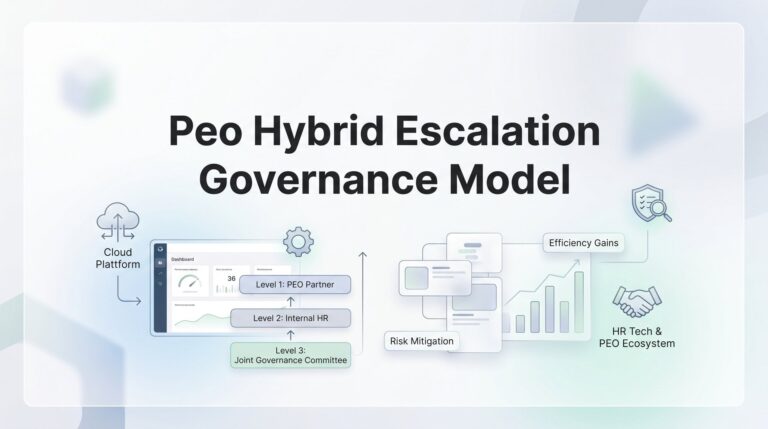
A PEO hybrid escalation governance model provides a structured framework for defining decision authority between your internal HR team and your PEO partner when workplace issues arise—from harassment complaints to EEOC charges. Without clearly documented escalation paths, co-employment arrangements create dangerous authority gaps that stall response times and expose both parties to compliance risk.
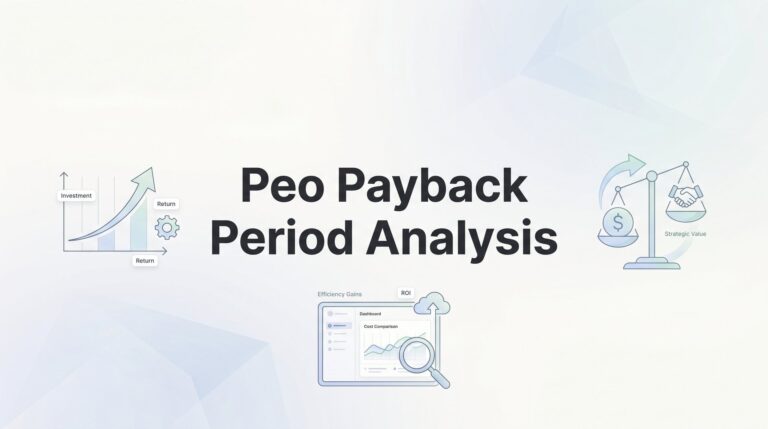
A PEO payback period analysis helps business owners calculate exactly when a PEO arrangement shifts from upfront cost to net financial gain by comparing setup expenses against measurable monthly savings. This guide walks through building a practical financial model using your real numbers, so you can make a confident, data-driven decision before signing any PEO contract.
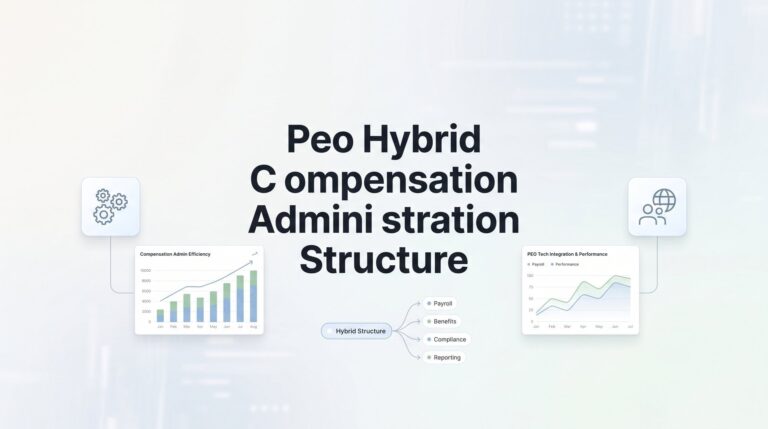
A PEO hybrid compensation administration structure emerges automatically when companies use a PEO for payroll while retaining control over variable pay like commissions, bonuses, and equity — creating an operational split that can generate costly surprises if not managed carefully. This guide breaks down exactly where the ownership boundary falls, how data handoffs work between systems, and how to structure the arrangement to avoid the hidden inefficiencies most companies discover only after …
PEO financial forecasting with PEO adoption requires more than a rough cost estimate — it demands a structured 12-to-36-month model that accounts for shifting admin fees, benefits renewals, workers’ comp adjustments, and realistic HR savings timelines. This guide walks finance leaders through baselining current costs, modeling PEO-specific line items, and stress-testing assumptions to build a forecast their CFO can actually rely on for planning.
Running a PEO with an internal benefits committee doesn’t have to mean choosing between administrative efficiency and meaningful employee oversight. This guide helps HR leaders redefine their committee’s role within a PEO structure, preserving governance, employee advocacy, and strategic influence without duplicating the PEO’s administrative functions.
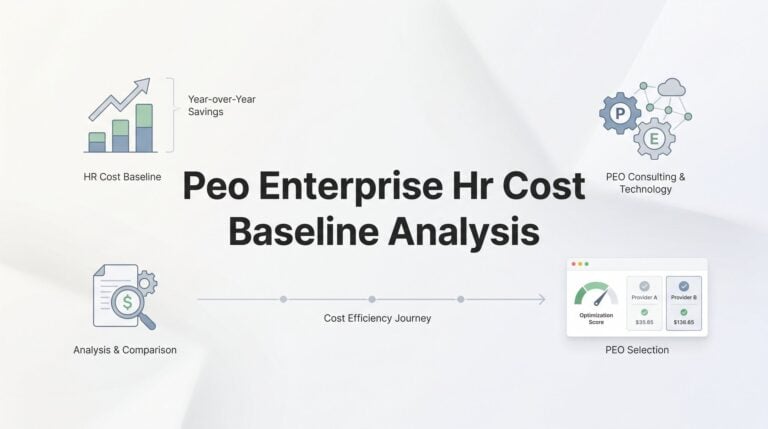
Building a PEO enterprise HR cost baseline analysis before evaluating providers helps enterprise organizations accurately compare proposals against real spending data rather than estimates. This guide covers how to capture all HR costs across payroll, benefits, compliance, recruiting, and internal team time—giving companies with 150+ employees the financial clarity needed to identify whether a PEO quote represents genuine savings or hidden gaps.
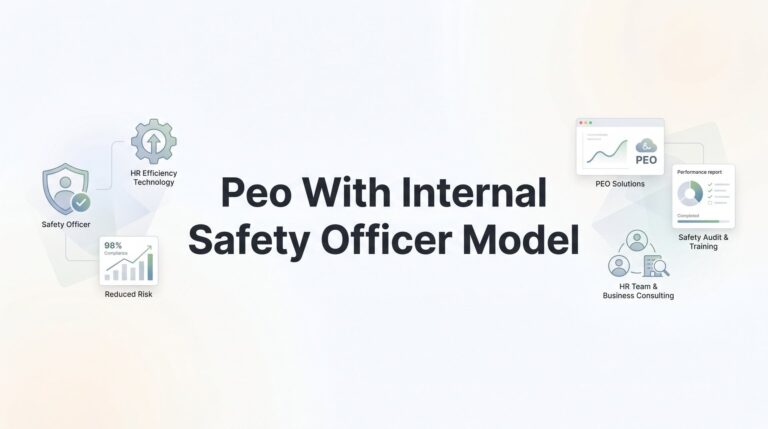
The PEO with internal safety officer model works best when responsibilities are deliberately divided rather than duplicated — your internal officer handles site-specific hazards and daily oversight while the PEO’s safety resources support compliance infrastructure, policy templates, and loss control reviews. This guide breaks down how field-based operations in construction, manufacturing, and logistics can run both safety functions without accountability gaps or redundant costs.
Effective PEO HR systems interoperability planning prevents costly manual workarounds like CSV exports, shadow spreadsheets, and disconnected onboarding workflows that emerge when technology compatibility is evaluated too late. This guide helps business owners and HR leaders assess system connectivity before signing with a PEO, ensuring payroll, ATS, and benefits platforms communicate seamlessly from day one.