
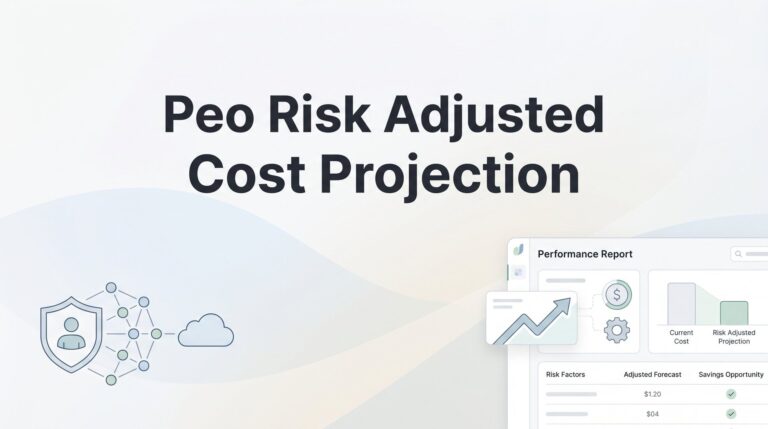
A PEO risk adjusted cost projection goes beyond comparing admin fees to account for workers’ comp adjustments, health renewal spikes, compliance penalties, and hidden fee escalations that typically blow up PEO budgets. This guide walks businesses through building a realistic cost model that spans a range of outcomes — not just best-case scenarios — so expensive surprises don’t derail financial planning.
A poorly defined PEO hybrid employee communication structure leads to costly gaps where employees fall through the cracks between your internal HR team and your PEO provider. This guide breaks down exactly who owns which communications, when each party should deliver them, and how to build a clear framework that prevents confusion, missed deadlines, and workforce trust erosion in co-employment arrangements.
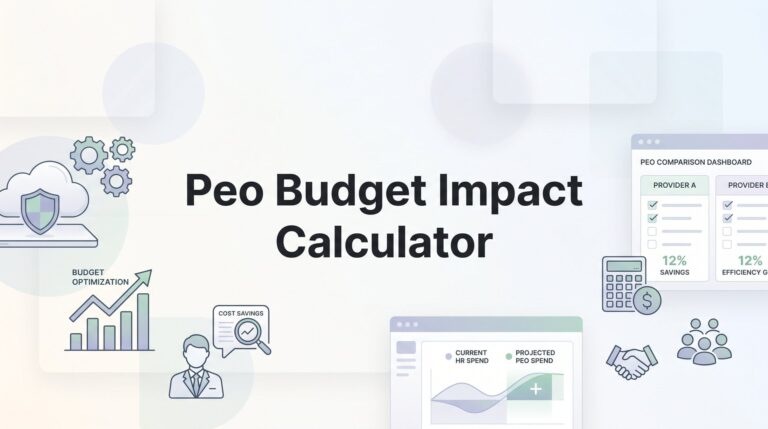
A PEO budget impact calculator helps businesses accurately compare their current in-house HR costs against co-employment expenses before signing a contract. This guide walks you through building a practical, numbers-based model that accounts for total cost of employment—including benefits, workers’ comp, and compliance overhead—so you can make a truly informed decision about whether a PEO arrangement delivers real financial value.
PEO layered compliance monitoring involves multiple levels of oversight across federal, state, and local regulations—but most business owners don’t understand which layers their PEO actually covers. This breakdown explains how multi-level compliance monitoring works in co-employment arrangements and why understanding the liability split is critical for businesses operating across multiple jurisdictions.
PEO operational boundary mapping is the process of clearly documenting which HR, payroll, compliance, and risk management responsibilities belong to your PEO versus your internal team before signing a contract. This guide walks business owners through how to identify dangerous assumption gaps, define shared gray zones, and create explicit agreements that prevent costly compliance failures down the line.
A PEO compliance audit in a hybrid structure exposes a critical gap: split responsibilities between your company and a PEO often mean split documentation, leaving both parties assuming the other owns compliance tasks. This guide breaks down how to map ownership clearly, identify where audit-ready records fall through the cracks, and ensure regulators find proof that every compliance obligation was handled — before an audit notice forces the question.
Effective PEO with internal finance team coordination requires clearly defining ownership before implementation begins — not after the first bundled invoice arrives. This guide breaks down exactly where responsibilities overlap between your PEO and finance function, why onboarding failures happen when HR leads the process without controller input, and how to establish the workflows, reporting formats, and communication structures that prevent costly reconciliation problems down the line.
A PEO HR integration risk analysis helps businesses systematically identify where their existing HR systems, payroll data, and workflows will conflict with a PEO’s platform before signing a contract. Running this analysis upfront prevents costly surprises from broken integrations, compliance gaps, and reporting blind spots that typically emerge months after go-live.
A PEO workers comp exposure analysis reveals where your financial risk actually sits within a PEO arrangement — because handing off administration isn’t the same as eliminating liability. Understanding this distinction helps business owners identify whether claims, rate increases, or pool deterioration could still impact their bottom line, and what the fine print of their PEO agreement really means for long-term cost control.
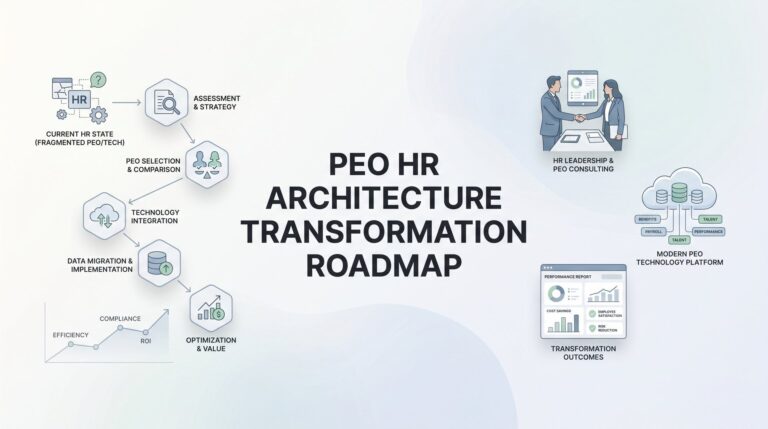
This practical peo hr architecture transformation roadmap guides businesses through restructuring their internal HR operations around a PEO partnership — covering how to audit existing processes, clarify ownership boundaries, eliminate redundant workflows, and sequence the transition to avoid costly gaps in payroll, compliance, and benefits management.
PEO integration failure risks are often overlooked during the vendor selection process, yet they’re responsible for costly payroll errors, benefits gaps, and tax compliance issues that surface weeks after go-live. This guide breaks down what actually goes wrong during PEO transitions and the real financial and operational consequences businesses face when integration is treated as an afterthought.
Building a rigorous **PEO ROI calculator enterprise model** requires moving beyond simple cost comparisons to quantify risk transfer value, benefits leverage, compliance exposure, and multi-state operational overhead—the financial variables that matter when CFOs and boards scrutinize major capital decisions. This guide provides a structured framework for enterprise teams managing 150 to 1,000+ employees who need defensible numbers, not vendor-supplied projections.