

Managing a residential construction workforce means dealing with fluctuating crew sizes, multi-site payroll, workers’ comp challenges, and constantly changing OSHA requirements. This guide reviews the top residential construction PEO providers for 2026, evaluating each on their construction-specific workers’ comp programs, safety resources, project-based payroll capabilities, and overall value for residential builders navigating these unique HR complexities.
Finding the right residential construction PEO for 5 employees means balancing workers’ comp protection and OSHA compliance without paying for enterprise-level services you don’t need. This guide provides seven practical strategies for evaluating PEO options that understand the unique challenges of small construction crews, including seasonal workforce fluctuations, subcontractor management, and industry-specific insurance rates that can significantly impact your profit margins.
For residential construction companies with 15 employees, selecting the right PEO requires understanding industry-specific challenges like high workers’ comp costs (15-20% of labor), seasonal workforce changes, and prevailing wage requirements. This guide provides seven targeted strategies to help you evaluate PEO partners beyond generic pitches, focusing on solutions that address construction crew risk pooling, job classification complexities, and subcontractor management unique to residenti…
Choosing the right residential construction PEO for 25 employees requires understanding your company’s unique position between startup chaos and enterprise scale. This guide delivers seven targeted strategies that address construction-specific challenges like workers’ comp exposure, seasonal workforce shifts, and prevailing wage compliance—helping you find a PEO partner that understands jobsite realities, not just generic HR solutions.
Managing 100 employees in residential construction creates complex HR challenges including multi-site safety compliance, workers’ comp for high-risk trades, and subcontractor classification issues that generic solutions can’t address. This guide provides seven strategic criteria for selecting a residential construction PEO for 100 employees that understands your industry’s unique operational demands, seasonal workforce fluctuations, and dispersed job site management requirements.
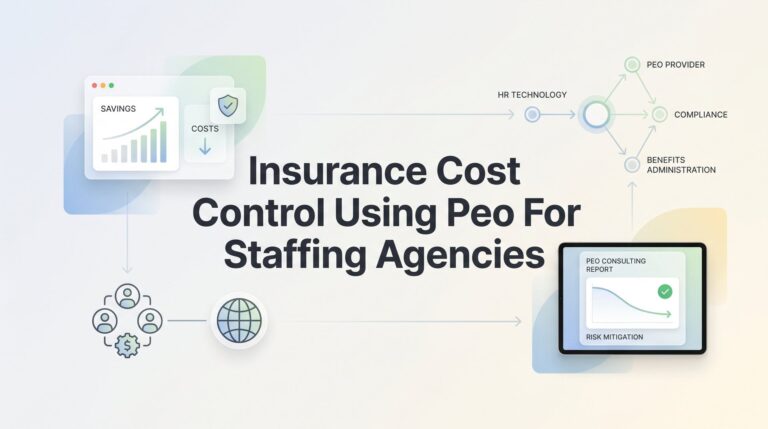
Staffing agencies struggle with inflated insurance costs due to high-risk placements, fluctuating headcounts, and claims from short-term workers that damage experience modification rates. This guide provides staffing-specific strategies for leveraging a Professional Employer Organization (PEO) to achieve meaningful insurance cost control using PEO for staffing agencies, addressing unique challenges like client-site injuries, classification complexity, and margin erosion that generic business …
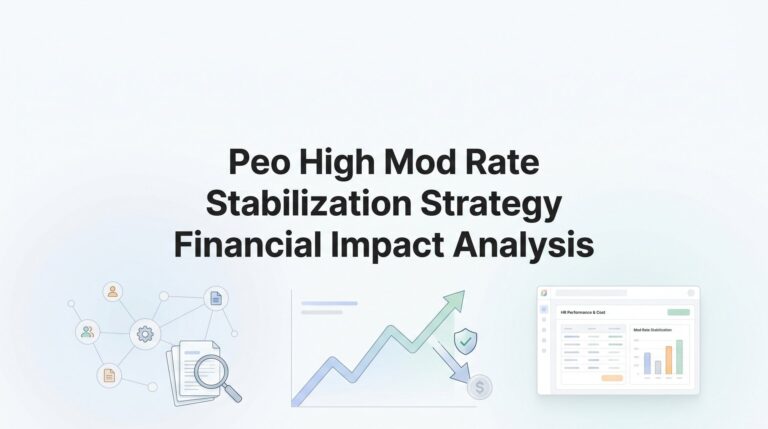
A PEO high mod rate stabilization strategy financial impact analysis reveals how Professional Employer Organizations change the mathematical framework of workers’ compensation costs rather than erasing claims history. Business owners with elevated experience modification rates (like 1.45 versus a competitor’s 0.92) need to understand the actual financial mechanics—including when PEOs create genuine savings, when they merely shift costs while adding fees, and when transitioning out creates une…
Large deductible workers comp through a PEO can dramatically reduce premiums, but requires careful risk mitigation strategy to avoid cash flow surprises and liability disputes. This tactical playbook reveals how to properly structure the arrangement between your company, the PEO, and the carrier—covering decision factors, risk-sharing boundaries, and management protocols that most businesses overlook until claims escalate.
Most businesses overlook PEO termination clauses during contract signing, only to discover restrictive notice periods, narrow exit windows, and costly penalties when they need to leave. A thorough PEO termination clause risk analysis helps you identify these hidden obstacles before signing, while a comprehensive risk mitigation strategy—including calendar alerts, documentation requirements, and transition planning—ensures you maintain flexibility and avoid expensive contract lock-ins that can…
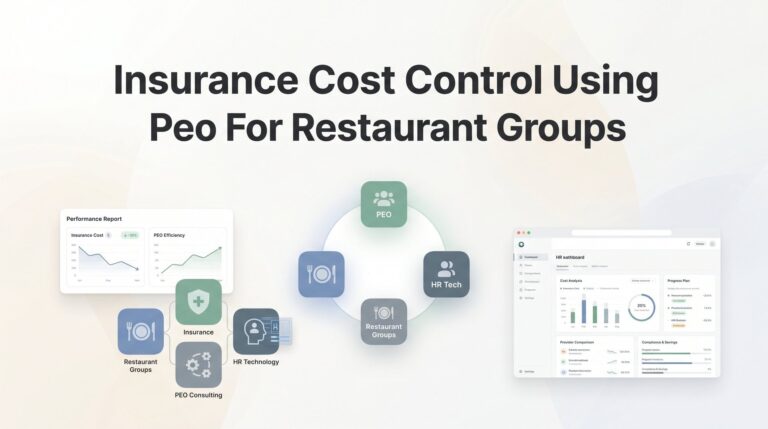
Restaurant groups face crushing insurance costs—often 8-12% of labor expenses—that worsen with each new location due to workers’ comp claims, health coverage for high-turnover staff, and multi-state regulatory complexity. Insurance cost control using a PEO for restaurant groups works by pooling employees into master policies, providing access to enterprise-level rates and professional safety programs that individual operators can’t obtain alone, fundamentally changing the economics of scaling…
PEO workers comp dividend programs promise money back for low claims, but qualification rules and payout calculations are often unclear to business owners. This analysis explains the specific qualification hurdles, financial mechanics, and timing constraints that determine whether dividend potential represents genuine savings or primarily serves as a marketing tool, helping you evaluate if your business profile actually benefits from these conditional profit-sharing arrangements.
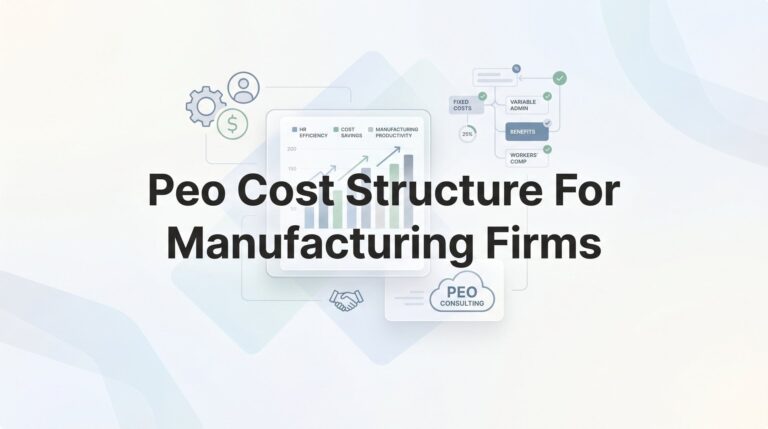
Manufacturing firms face wildly different PEO pricing—from $185 per employee monthly to 3.8% of payroll—because the PEO cost structure for manufacturing firms depends on risk factors most businesses overlook. Instead of asking generic rate questions, manufacturers should understand how their specific variables—workers’ comp codes, experience mods, shift structures, and compliance complexity—actually drive costs, potentially creating thousands of dollars in monthly differences for identical he…