
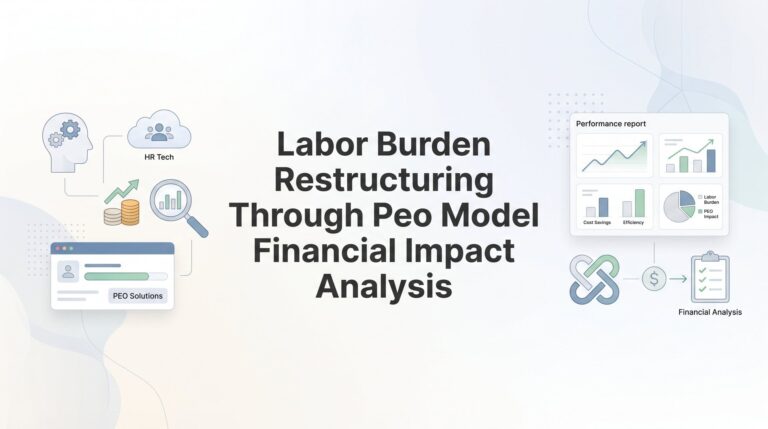
This framework helps businesses conduct a rigorous labor burden restructuring through PEO model financial impact analysis by mapping current employment costs, modeling co-employer scenarios with actual data, and stress-testing assumptions. Unlike generic ROI calculators, this approach accounts for hidden costs and operational tradeoffs, giving you a repeatable method to compare in-house burden (typically 25-40% of compensation) against PEO arrangements with the confidence needed for strategic…
Nonprofits face the same complex employment law requirements as for-profit businesses—including FLSA overtime, ADA accommodations, and multi-state payroll regulations—but typically lack dedicated HR resources. A workforce compliance strategy using PEO for nonprofit organizations can help mission-driven teams navigate multi-state employment laws, workers’ compensation requirements, and grant-specific reporting obligations while operating within restricted budgets and limited administrative cap…
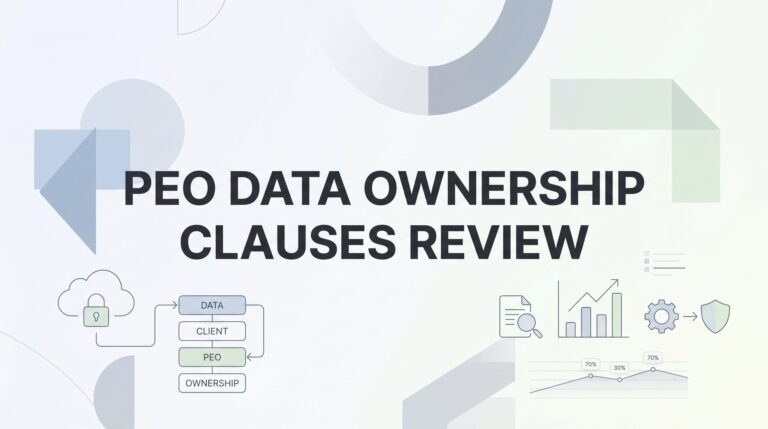
Before signing a PEO agreement, carefully review data ownership clauses to avoid costly surprises during termination. Many businesses discover too late that accessing their own employee data—including payroll history, benefits records, and compliance documentation—may involve extraction fees, format incompatibilities, or restrictive retention terms that complicate transitions to new providers.

Operating multiple business units under a single PEO creates a challenge: how do you fairly distribute one consolidated invoice across different divisions with varying risk profiles and benefit costs? This practical framework provides the exact methodology, data requirements, and edge-case solutions you need to build an accurate PEO cost allocation system across multiple business units—one that satisfies your CFO’s need for precision while remaining manageable without dedicated analyst supp…

Technology companies face unique challenges when switching PEOs, from managing complex equity compensation and multi-state compliance to maintaining critical system integrations. This practical guide provides a six-step framework for PEO transition planning for technology companies, helping you avoid payroll disruptions, protect stock option administration, and retain key talent while navigating the complexities of remote teams across multiple jurisdictions.
When you hire employees in new states, you’re suddenly responsible for registering with each state’s tax and unemployment agencies—a complex process most business owners don’t anticipate until it’s urgent. PEO state tax registration support can handle this multi-state compliance burden for you, but the level of service varies significantly between providers: some PEOs fully manage all registrations under their own tax IDs, others simply guide you through doing it yourself, and many fall somew…

Staffing agencies managing dual workforces need a specialized approach to PEO transition planning for staffing agencies that addresses unique challenges like high-volume employee data migration, multi-state compliance continuity, and protecting client relationships. This practical roadmap covers timeline development, payroll continuity for temporary workers, workers’ comp coverage protection, and operational strategies to prevent disruptions across both your internal team and hundreds of plac…
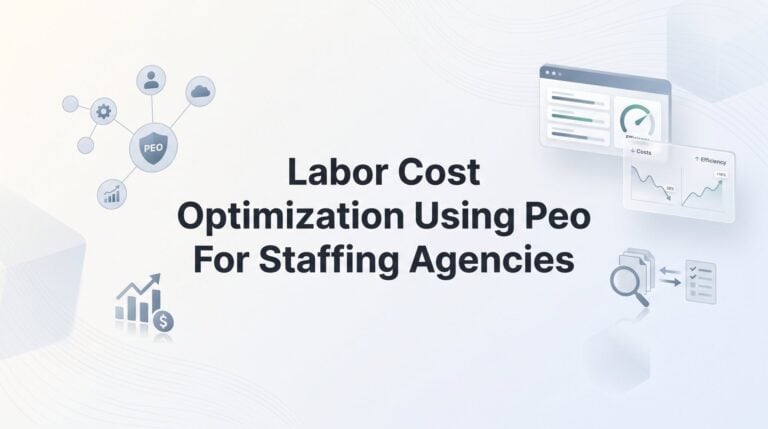
Staffing agencies operating on thin margins can reclaim profitability through strategic labor cost optimization using PEO for staffing agencies by targeting the biggest expense drains: workers’ comp premiums for temporary workers, rising health insurance costs, and mounting compliance overhead. This practical guide shows you how to audit your current labor expenses, identify which costs a Professional Employer Organization can genuinely reduce, and structure a PEO partnership that delivers me…
When PEO service level agreement enforcement becomes necessary, most business owners discover their contract’s performance guarantees are far vaguer than sales promises suggested. Understanding the difference between legally enforceable SLA terms and marketing language is critical before signing, as leverage to hold providers accountable largely disappears once the contract is executed—especially when issues like delayed payroll corrections reveal that “reasonable efforts” clauses offer minim…

Roofing contractors need specialized PEO providers that understand high workers’ comp risks, seasonal staffing, multi-state operations, and OSHA requirements—challenges that generic HR outsourcing can’t address. This comprehensive guide evaluates the best PEO for roofing companies based on construction industry expertise, workers’ comp mod rate management, safety program support, and cost structures for crews of all sizes, helping you avoid coverage gaps and administrative burdens that distra…
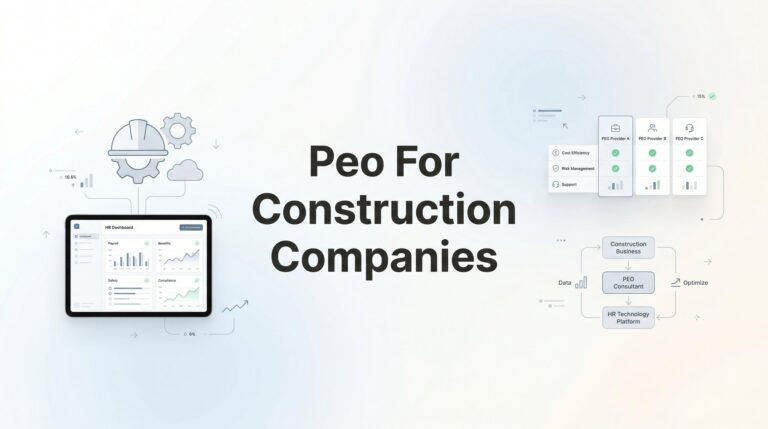
Construction companies need specialized PEOs that understand industry-specific challenges like multi-state compliance, certified payroll for prevailing wage work, fluctuating workforce sizes, and high workers’ comp exposure. This guide evaluates the eight best PEOs for construction companies in 2026 based on their construction expertise, workers’ comp handling, Davis-Bacon compliance capabilities, and ability to manage union payroll and job-costing requirements.
Construction companies face unique HR challenges including seasonal workforce fluctuations, multi-state operations, and high workers’ comp costs. While a Construction PEO can deliver lower insurance rates, better benefits, and OSHA compliance support, the arrangement isn’t always straightforward—success depends on understanding where PEOs add genuine value in construction versus where they create operational friction that could impact your bottom line and job competitiveness.