
When selling or buying a business, your existing PEO contract can create unexpected obstacles through change of control clauses, assignment restrictions, and termination penalties that weren’t designed for ownership transitions. This guide provides actionable steps for PEO contract renegotiation during sale, explaining the leverage points available to both sellers and buyers, common pushback from PEO providers, and critical mistakes that can delay closing or trigger costly fees neither party …
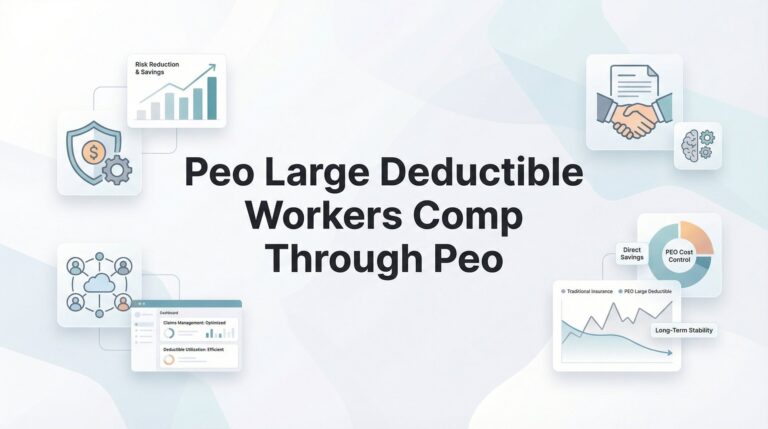
Large deductible workers’ comp through a PEO can cut premium costs substantially, but introduces critical complexities around who holds deductible obligations, claims management authority, and exit scenarios when you’re responsible for claims up to $100K-$500K per occurrence. This guide provides seven practical strategies to evaluate whether this arrangement fits your business’s cash flow, risk tolerance, and operational needs—focusing on contract specifics beyond the sales pitch.
Business owners who partner with PEOs often discover too late that co-employment creates shared responsibility, not complete liability transfer—leaving them exposed to serious legal risks when compliance failures occur. Understanding PEO compliance failure legal exposure is essential because you remain legally accountable for payroll taxes, wage claims, and worker classification issues even when your PEO handles the administrative work, making it critical to know exactly where your accountabi…
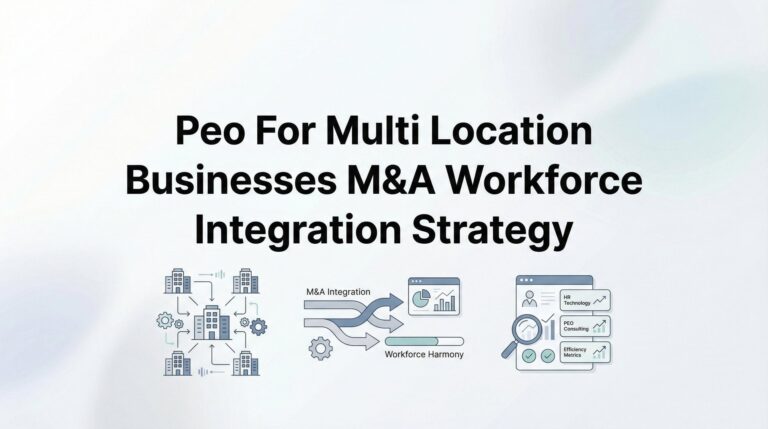
After closing an acquisition, companies face the complex challenge of integrating employees across multiple states with different payroll systems, benefits packages, and compliance requirements. A PEO for multi-location businesses provides a structured M&A workforce integration strategy that consolidates payroll, standardizes benefits, and ensures compliance across all locations within tight post-acquisition timelines, turning what’s typically an operational bottleneck into a streamlined tran…
Expanding to multiple states transforms straightforward payroll into a compliance nightmare, with each location requiring separate tax filings, employment laws, and regulatory frameworks. A PEO for multi-location businesses handles multi-state payroll and governance complexity by consolidating these obligations under one system, but choosing the right provider requires understanding which ones truly specialize in multi-jurisdictional compliance versus those that simply operate in multiple sta…
Marketing agency owners face mounting HR complexity and rising benefits costs while trying to focus on client work and growth. A PEO (Professional Employer Organization) for marketing agencies delivers benefits cost containment through enterprise-level group purchasing power, streamlined compliance management across multiple states, and competitive employee packages that help smaller agencies attract top talent without the administrative burden of managing HR infrastructure in-house.
After closing an HVAC acquisition, the real challenge begins: integrating the workforce without losing skilled technicians or creating compliance issues. This playbook explains how a PEO for HVAC companies M&A workforce integration strategy addresses unique challenges like multi-state licensing requirements, varied workers’ comp classifications, and retaining mobile tradespeople who can easily switch employers. Strategic PEO implementation streamlines post-merger integration while managing re…
Running a plumbing enterprise with 50+ employees means managing complex compliance across multiple states, from journeyman licenses to OSHA protocols and varying workers’ comp classifications. While a PEO for plumbing companies enterprise compliance risk management can effectively handle employment-related compliance like payroll taxes and benefits administration, they typically don’t address trade-specific challenges such as job-site safety protocols, license renewals, or project-driven regu…
Enterprise electrical contractors face unique compliance challenges across multiple states, including OSHA documentation, prevailing wage requirements, and union agreements that standard PEOs often can’t handle effectively. This guide explains how PEO for electrical contractors enterprise compliance risk management works at scale, examining the co-employment structure’s limitations with certified payroll, workers’ comp experience mods, and general contractor insurance requirements that may pr…
Managing electrical crews across multiple states creates a payroll compliance nightmare with varying tax withholdings, workers’ comp requirements, and prevailing wage rules for each jurisdiction. A PEO for electrical contractors multi-state payroll governance centralizes these complex obligations, handling jurisdiction-specific tax filings, state-by-state workers’ comp coverage, and certified payroll reporting so contractors can focus on project execution instead of penalty letters from multi…
Acquiring an electrical contractor brings immediate workforce challenges—mismatched benefits, multi-state licensing complexities, varying workers’ comp mods, and payroll inconsistencies that can drive skilled electricians to competitors. This M&A playbook shows how using a PEO for electrical contractors M&A workforce integration strategy solves these construction-specific complications, from apprenticeship continuity and prevailing wage compliance to union considerations, ensuring your newly …
Electrical contractors face unique litigation risks from worker misclassification, jobsite injuries, and wage compliance issues that can trigger devastating audits and lawsuits years after a project ends. This framework shows how a PEO for electrical contractors litigation risk mitigation framework addresses these exposures by managing multi-state licensing requirements, proper worker classification, and comprehensive documentation systems that protect against Department of Labor audits, work…