
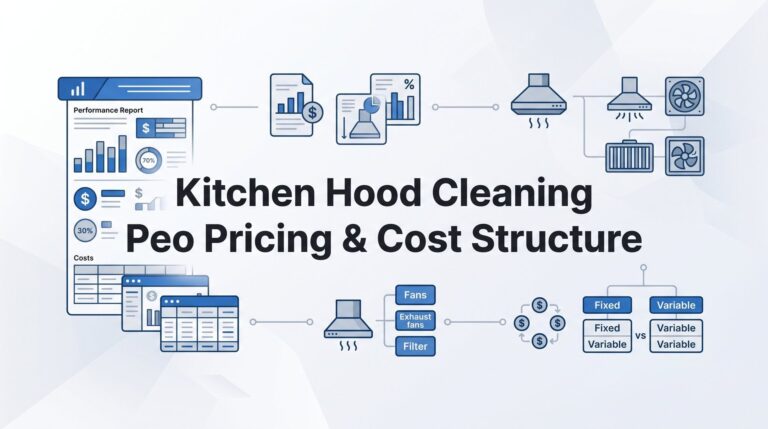
Kitchen hood cleaning companies face unique PEO pricing challenges due to high-risk workers’ comp classifications, chemical exposure liability, and seasonal staffing patterns that generalist HR vendors often underestimate. Understanding kitchen hood cleaning PEO pricing and cost structure helps operators avoid overpaying by knowing exactly which variables drive their rates before signing.
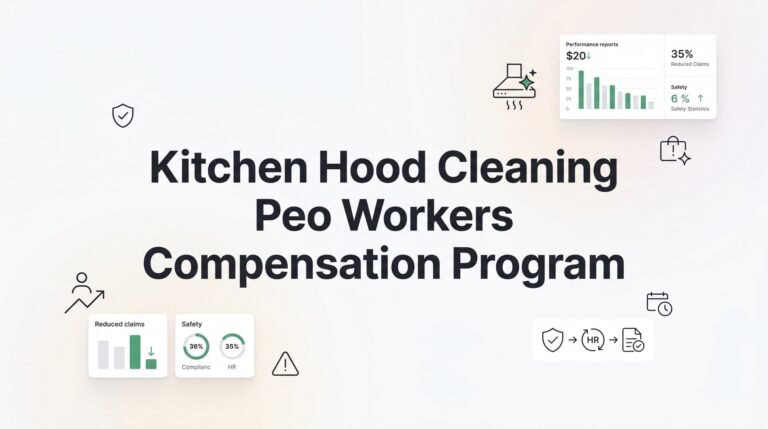
Kitchen hood cleaning operations face unique workers comp risks — rooftop work, chemical exposure, and grease-related hazards — that generic policies routinely misclassify or undercover. A Kitchen Hood Cleaning PEO Workers Compensation Program addresses these gaps with industry-specific classification, audit protection, and coverage designed for the actual risk profile of hood cleaning crews.
Kitchen hood cleaning companies face unique HR challenges — hazardous work classifications, unpredictable scheduling, and mixed worker arrangements — that make a PEO a genuinely complicated decision. This guide breaks down the honest pros and cons specific to small-headcount trade contractors in this industry, with particular focus on workers’ comp classification accuracy and real cost structures.
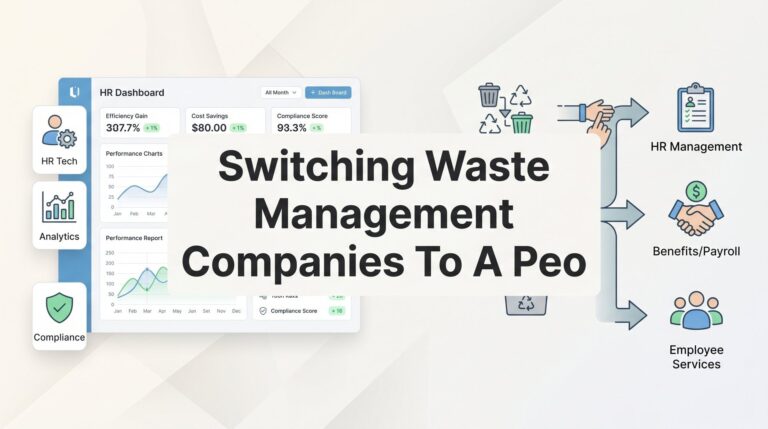
Switching waste management companies to a PEO requires careful planning to avoid compliance gaps across DOT regulations, workers’ comp classifications, and municipal contract insurance requirements. This guide walks waste management operators through a structured transition that protects CDL drivers, field crews, and existing contracts without operational disruption.
Most advice on professional services staffing starts with the vacancy. That's the wrong starting point. The core question isn't how to fill…
Dumpster rental operators face unique HR challenges — CDL drivers, hazardous material exposure, and seasonal headcount swings — that make PEOs an appealing but complicated option. This guide breaks down the real pros and cons of dumpster rental PEO arrangements so owners can evaluate whether co-employment delivers cost relief or creates new constraints before signing a contract.
PEO pricing for dumpster rental companies goes beyond the base quote, with workers’ comp exposure, variable crew sizes, and seasonal demand all driving your actual cost. This breakdown explains the specific factors that shape dumpster rental PEO pricing and cost structure so operators know what they’re really paying for before signing a contract.
Waste management companies face unique payroll challenges — CDL compliance, variable schedules, high workers’ comp exposure — that generic processors aren’t equipped to handle. This guide explains how waste management PEO payroll services can reduce compliance risk, stabilize insurance costs, and support the operational complexity that defines this industry.
Kitchen hood cleaning companies face unique HR challenges — rooftop crews, hazardous chemicals, and complex workers’ comp classifications — that make the PEO vs. in-house HR decision a genuine operational and risk question, not a generic small business choice. This guide walks through the real factors that should drive your decision, including geographic footprint, crew size, compliance exposure, and growth stage.
Switching moving companies to a PEO requires careful sequencing to avoid payroll gaps, workers’ comp lapses, and coverage blind spots that can hit physically demanding operations harder than most businesses. This step-by-step guide walks moving company owners through a practical transition process that accounts for elevated class codes, seasonal headcount swings, and multi-state payroll complexity.
A benefits renewal lands on the CFO's desk. The PEO says the plans are still competitive. HR says recruiting is getting harder.…
A security guard company at 50 employees faces unique HR and compliance pressures that a PEO can help manage — but only if you choose one equipped for high-risk workers’ comp classifications, state licensing requirements, and client certificate of insurance demands. This guide covers seven practical strategies for selecting and implementing a Security Guard PEO for 50 Employees that actually fits the operational realities of a mid-sized security firm.