
Choosing the right lawn care PEO for 25 employees requires focusing on industry-specific needs rather than generic solutions. This guide covers seven strategic approaches tailored to lawn care operations at this critical growth stage, addressing unique challenges like seasonal workforce management, high workers’ comp exposure from equipment hazards, multi-site crew coordination, and maintaining competitive wages within tight profit margins.
When your lawn care business reaches 50 employees, you face unique challenges including seasonal hiring fluctuations, elevated workers’ comp risks, and multi-state compliance—too complex for basic tools but not large enough for a full HR team. This guide provides seven targeted strategies for selecting a lawn care PEO for 50 employees that understands green industry operations, helping you manage workforce administration, reduce insurance costs, and maintain compliance without the overhead of…
Finding the right landscaping PEO for 5 employees requires strategic evaluation since most PEO services target larger companies. This guide provides five targeted strategies to help small landscaping businesses navigate PEO selection, focusing on break-even analysis, workers’ comp savings specific to high-risk landscaping classification codes, and cost-effective solutions that make financial sense at your exact headcount where administrative fees significantly impact your bottom line.

Lawn care businesses face a unique PEO vs in-house HR decision driven by seasonal workforce fluctuations, high workers’ comp costs, and equipment-related risks that don’t apply to typical office businesses. This guide examines seven industry-specific factors—including seasonal payroll swings, safety compliance requirements, and actual cost breakdowns—to help lawn care operators determine whether partnering with a PEO or building internal HR capacity makes more financial and operational sense …
Finding the right PEO for lawn care companies means choosing a provider that understands seasonal staffing, fluctuating payroll, and the unique workers’ comp challenges of outdoor labor. This guide reviews seven PEOs evaluated specifically for their fit with landscaping operations, focusing on transparent pricing, flexibility during off-season months, and experience handling high-turnover field crews—helping lawn care business owners select HR solutions built for their industry’s realities.
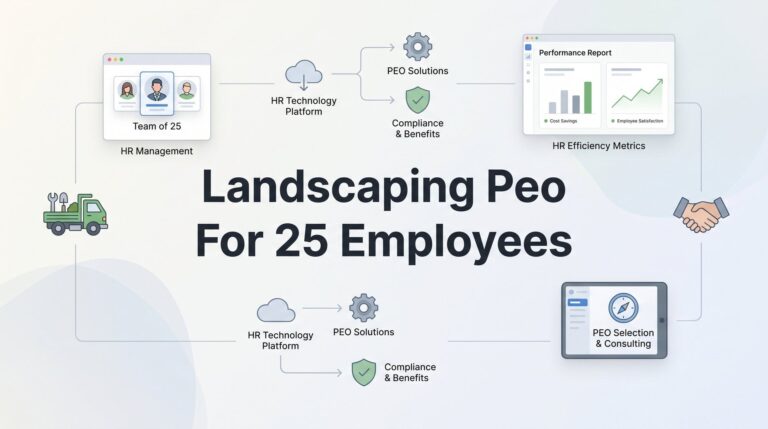
Landscaping companies with 25 employees face unique HR challenges including seasonal workforce fluctuations, high workers’ comp premiums, and multi-state compliance issues that make a landscaping PEO for 25 employees an ideal solution. The right PEO partnership can streamline payroll, reduce insurance costs, and handle complex compliance requirements specific to the landscaping industry’s risk classifications and seasonal scaling needs.
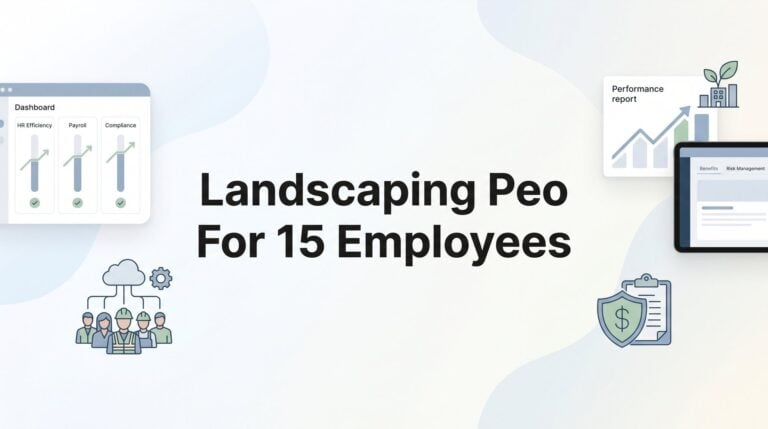
Landscaping companies with 15 employees face unique HR challenges including seasonal workforce management, high workers’ comp rates, and multi-state compliance issues. This guide reveals seven strategic approaches to selecting a landscaping PEO for 15 employees that actually understands field operations—from mobile time tracking for job sites to managing workers’ comp mods and navigating cross-state project compliance requirements that generic PEOs often miss.
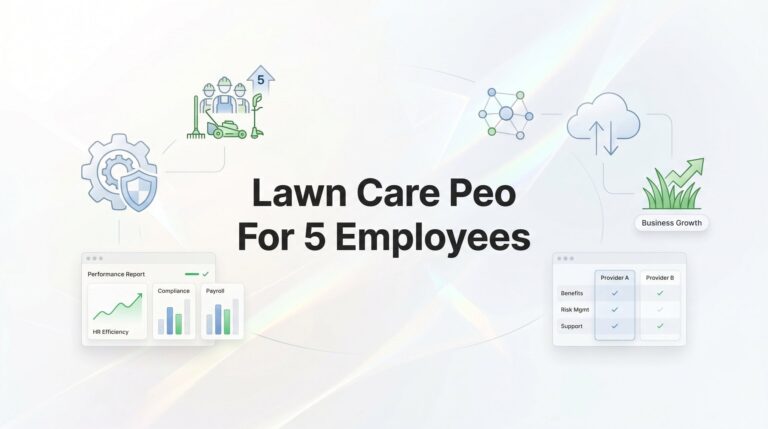
Lawn care businesses with five employees face unique HR challenges including seasonal staffing, high workers’ comp exposure, and overtime compliance—but may not need a full PEO solution. This guide examines whether a lawn care PEO for 5 employees makes financial sense at this scale, or if simpler alternatives better address equipment risks, seasonal fluctuations, and field crew management without the overhead of enterprise-level co-employment arrangements.
When landscaping companies reach 50 employees, they face new federal compliance requirements, escalating workers’ comp costs, and seasonal staffing challenges that demand specialized HR support. This guide outlines seven targeted strategies for selecting a landscaping PEO for 50 employees that understands industry-specific class codes, rapid crew onboarding needs, and fluctuating headcount—avoiding generic providers whose standard models fail to accommodate the unique operational realities of…

Lawn care businesses face unique payroll challenges with seasonal staffing fluctuations, variable hours, and industry-specific workers’ comp requirements that standard providers often can’t handle. This comprehensive guide compares the top 7 PEO and payroll solutions for 2026, helping lawn care operators choose between full-service PEOs that manage everything and cost-effective standalone payroll providers based on their specific operational needs and seasonal workforce patterns.
When landscaping companies reach 100 employees, they face a critical HR inflection point with seasonal workforce management, workers’ comp exposure, and compliance demands that overwhelm operations but don’t justify a full in-house HR team. This guide outlines seven strategic considerations for selecting a landscaping PEO for 100 employees that understands your industry’s unique challenges—from experience modification rates to seasonal payroll fluctuations—ensuring the partnership reduces ove…
Landscaping companies considering a PEO face specific tradeoffs beyond the standard sales pitch of better workers’ comp rates and HR support. This guide examines seven critical decision factors—including seasonal fee structures, control over hiring, and hidden costs—that directly impact your bottom line and crew management, helping you determine whether a PEO actually makes financial and operational sense for your landscaping business.