
A CFO is reviewing PEO proposals. An HR manager is cleaning up the employee census before sending it out. At the same…
Calling a PEO directly can be a useful step in your evaluation, but understanding the real Call PEO pros and cons beforehand helps you ask sharper questions, spot what reps won’t volunteer, and determine whether a PEO is genuinely the right fit before committing to a contract.
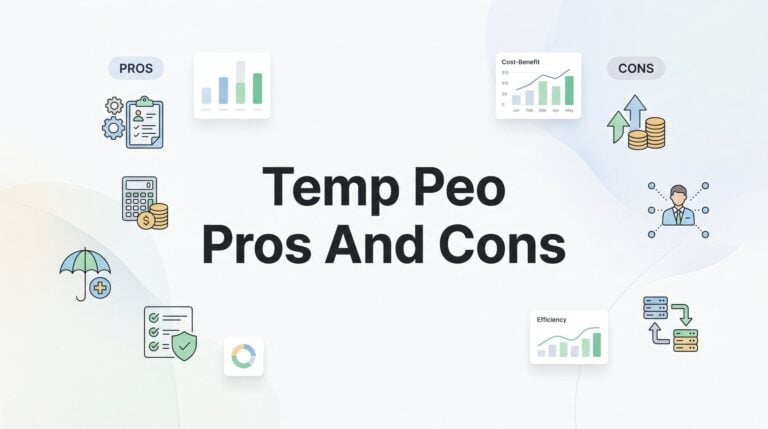
Using a PEO with temporary or variable workers offers real compliance and HR benefits, but the operational reality is far more complex than most providers advertise. This breakdown covers the genuine temp PEO pros and cons — including hidden costs, contract risks, and how to determine whether the model actually fits your workforce before you commit.
Staffing agencies considering a PEO partnership face a unique set of tradeoffs that differ significantly from standard business arrangements, including co-employment complexity, workers’ comp exposure, and fee structures that don’t always favor high-turnover workforces. This breakdown of staffing PEO pros and cons covers the operational realities agencies need to evaluate before signing a contract.
Switching healthcare practices to a PEO can reduce the complex HR, compliance, and payroll burdens unique to clinical environments, but the transition requires careful planning to avoid disruptions that carry greater consequences in medical settings than in most industries.
Switching medical practices to a PEO involves more complexity than a standard HR transition, requiring careful sequencing across HIPAA compliance, credentialing timelines, and clinical-administrative workforce differences. This step-by-step guide covers the operational realities of making the switch, from pre-transition audits and healthcare-specific vendor selection to data migration risks and the critical 90-day stabilization period.
A finance team approves a PEO because the pricing works, the benefits package looks competitive, and the sales demo checks the usual…
Private schools reaching 50 employees face a critical HR inflection point where informal management no longer works but a full internal department isn’t yet justified. This guide outlines seven targeted strategies for evaluating a Schools and Private Education PEO for 50 Employees, helping administrators find a provider that genuinely understands academic calendars, mixed staff classifications, and education-specific compliance demands.
Private schools reaching 100 employees face compounding HR complexity — from academic calendar payroll swings to mixed staff classifications and credentialing compliance — that generic PEO guidance rarely addresses. This guide offers seven practical strategies specifically for education operators evaluating a Schools and Private Education PEO for 100 Employees, covering how to assess, select, and structure a PEO partnership that fits the real demands of running a private school.
Small childcare businesses with five employees face complex HR, compliance, and workers’ comp demands that generic solutions rarely handle well. This guide covers seven practical strategies for evaluating and maximizing a childcare and daycare PEO for 5 employees, helping owners avoid overpaying, underutilizing their platform, or partnering with a provider that doesn’t understand the industry’s specific risk profile.
Nonprofits face unique HR and compliance challenges that standard PEO contracts often fail to address, making it critical to evaluate providers through a nonprofit-specific lens. This guide offers seven practical strategies for identifying the best PEO for nonprofit organizations based on mission-aligned pricing, compliance fit, and operational structure rather than generic brand comparisons.
Switching staffing agencies to a PEO involves more than a vendor change—it restructures your employment model, cost structure, and employer obligations. This practical guide walks through the deliberate steps required to transition successfully, from timing the switch to managing the employment relationship changes that come with it.